


“If the Eby government can quietly give one Indigenous body this level of control over such a large portion of Crown land, there is nothing preventing it from doing the same elsewhere.”
—Warren Mirko
After repeatedly telling British Columbians it would not give First Nations a veto over land use development, the B.C. government has, without a public mandate, outsourced its authority and done just that.
In the province’s first exclusive decision-making agreement with a First Nation, Premier David Eby’s government conferred a veto to the Tahltan Central Government over development of an open pit gold and silver mine in its claimed territory. The project is one of several multi-billion resource development projects located in the Tahltan’s vast claimed, but legally unproven, territory in the mineral-rich northwest.
The Eskay Creek gold and silver mine is estimated to produce 3.6 million tonnes of ore or 320,000 oz. gold-equivalent annually over 12 years of operation, contributing more than $14 billion to B.C.’s Gross Domestic Product and $3.6 billion in tax revenue for the provincial and federal governments.
In a 2022 Declaration Act Consent Decision-Making Agreement between the BC NDP government and the Tahltan Central Government for Eskay Creek Project, the province has given the Indigenous nation the power to kill development of the Skeena Resources (also known as Skeena Gold + Silver) mine while insisting no veto has been handed out.
Under the agreement, the Tahltan are defined as an Indigenous governing body within the meaning of subsection 7(1)(b) of the Declaration on the Rights of Indigenous Peoples Act (DRIPA) which stipulates joint statutory decision-making with the provincial Crown, and that consent of the Tahltan Nation is required before a decision can be made.
“The consent of [Tahltan Central Government], provided in accordance with this Agreement, is required for the Project to proceed within the Consent Area,” states the agreement.
Tahltan claimed territory and consent area
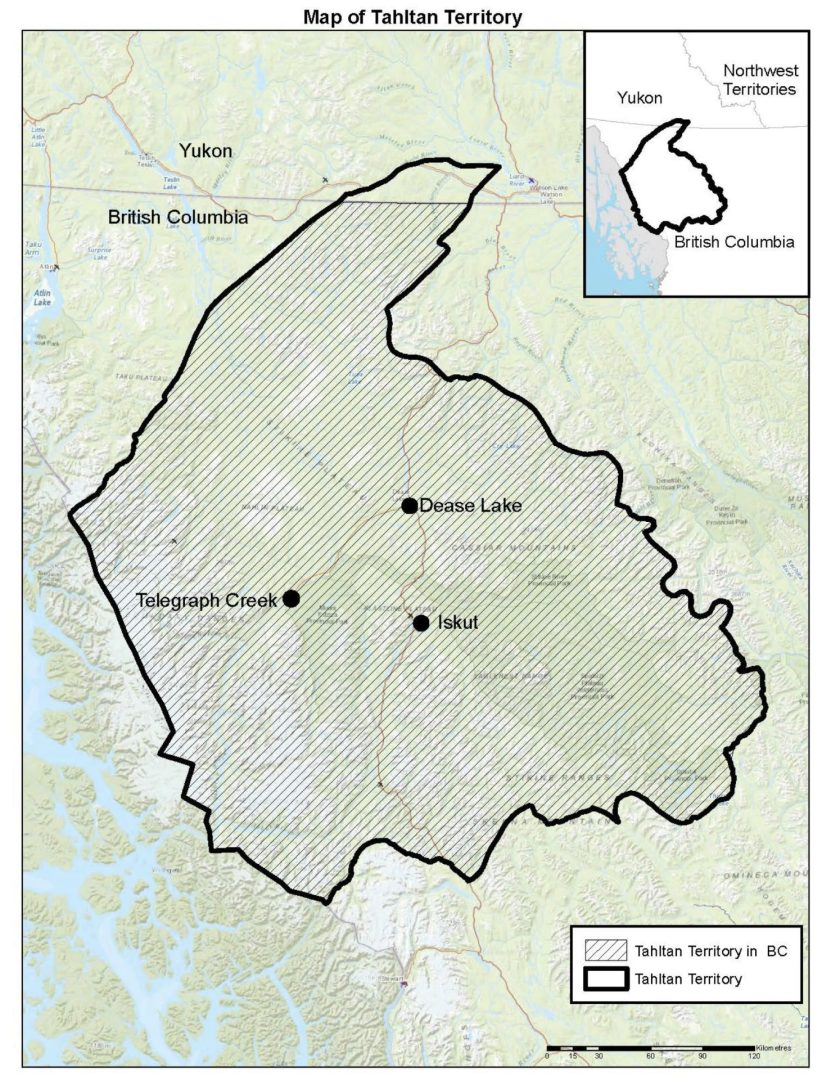
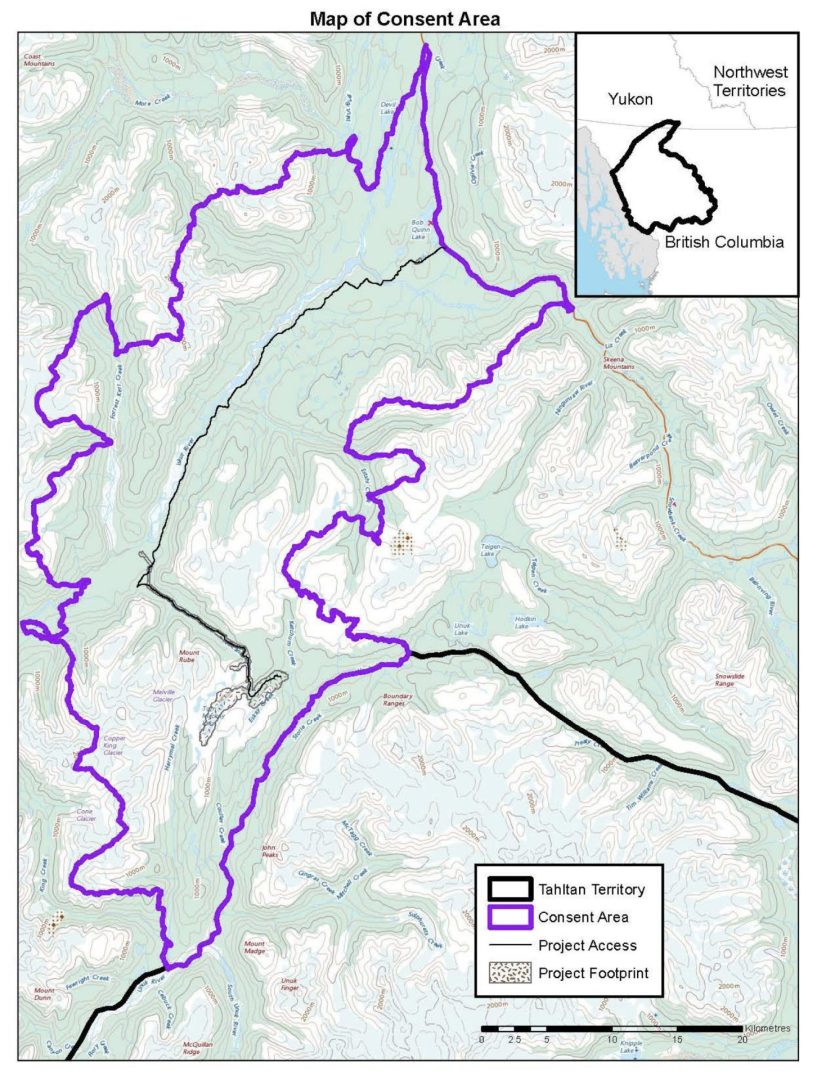
Since then, a confidential impact benefit agreement was negotiated between the Tahltan and Skeena Resources. And now, just before Tahltan community members vote on whether to accept this agreement, which will determine the mine’s future, eligible Tahltan voters are reportedly receiving $10,000 each as part of an upfront $40 million payment to the nation’s government.
Tahltan Central Government president Terry Carrick reportedly told the BIV‘s Stefan Lambé as part of the agreement, his community will gain $1.2 billion in cash and $570 million in contracts and wages over the life of the mine. As well, community members who work at the mine under a company newly formed by Skeena Resources and the Indigenous nation, may be allowed to retain all their earnings tax-free if they retain a primary address on reserve land.
Just prior to a community vote to determine the mine’s future, each eligible Tahltan voter will receive a pre-payment of $10,000.
The province calls this reconciliation. Others call it vote buying and the inevitable outcome of replacing transparent statutory negotiating processes with political deals agreed to behind closed doors.
Giving away government decision-making authority in place since confederation, without public consultation, oversight or clear safeguards has created a condition where financial inducements are possible and where dissenting voices inside Indigenous communities can be silenced.
This is not an internal Tahltan matter; it is a warning for every British Columbian whose rights rely on fair, transparent governance and democratically accountable management of Crown land.
Secret negotiations reveal Eby government double speak
The Gitxaała case makes the contradiction between the Eby government’s words and actions clear.
In court, the province argued that its own DRIPA is merely aspirational and creates no legal duty to obtain consent. Yet outside the courtroom, government uses its DRIPA commitments to justify exclusive decision-making agreements that hand Indigenous bodies a veto.
The provincial government is denying in law what it is actively doing in practice, and that inconsistency is now defining Crown-land governance policy in British Columbia.
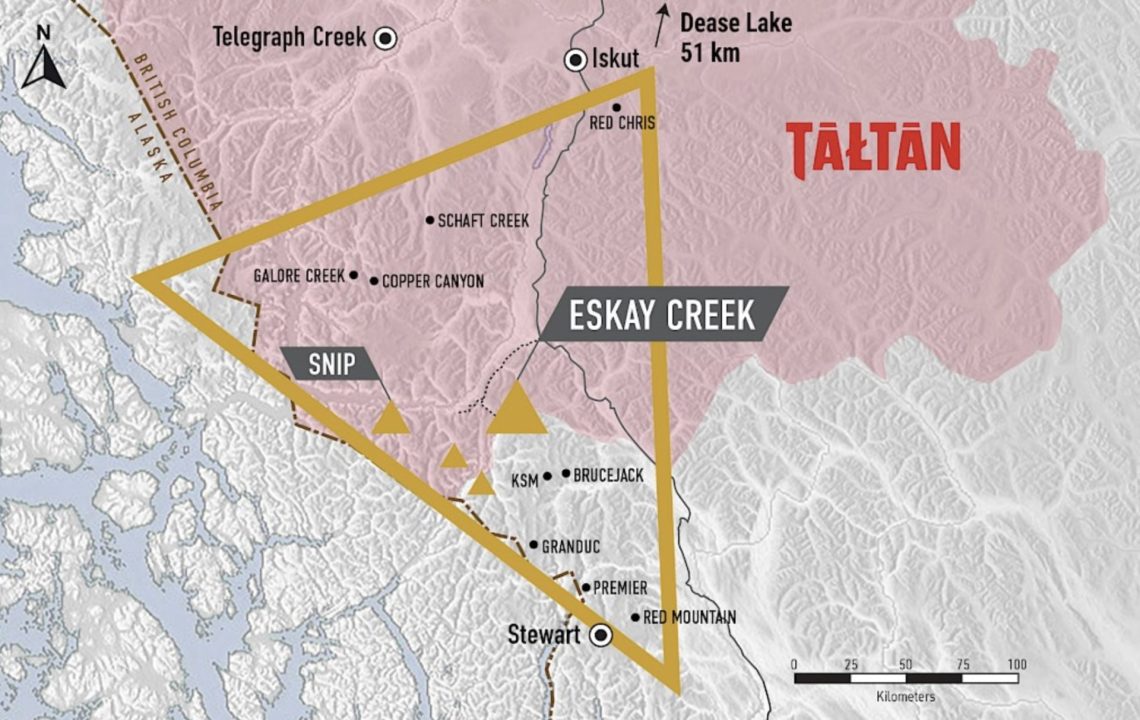
The Eskay Creek agreement itself was negotiated in secret between the province and the Tahltan Central Government. It precedes a similar 2023 provincial agreement that gave the Indigenous nation consent-based authority over the Red Chris gold and copper mine, which then Tahltan president Chad Norman Day said “acknowledges and respects Tahltan title, rights and jurisdiction.”
The message was unmistakable: the Tahltan are asserting decision-making authority across their entire claimed territory, which represents more than 10 per cent of the province, and has not been legally proven under constitutional law. According to Tahltan documentation, their claimed territory hosts more than 85 active mineral exploration permits across 4,672 registered mineral tenures, encompassing 41 per cent of B.C.’s total exploration.
Regardless, Tahltan leaders declared that mining in their territory will “either happen the Tahltan way or not at all.” In 2023, the Tahltan government issued a statement saying it expected the province “to ensure that mining companies are not granted any further permits or interests within Tahltan Territory without Tahltan consent.”
These assertions have gone unchallenged by Premier Eby. Indeed, the government’s latest agreement with the Tahltan appears to have met the nation’s demands. Rather than defend and reaffirm public interests in Crown land, Eby’s government endorsed language, including in its own news releases, that suggests Indigenous groups can exercise unilateral control over areas where title has never been legally determined.
Veto contradicts Supreme Court and province’s own laws
This stands in direct conflict with Supreme Court of Canada, which like the province’s own Guide to First Nations Engagement on Local Government Statutory Approvals, unequivocally states that “First Nations do not have a veto or approval function over Crown decisions.” It also flagrantly subverts decades of hard-earned Canadian constitutional case law which painstakingly built a legal process for determining Aboriginal title.
Instead, the government continues to unilaterally engage land use agreements with various Indigenous bodies, recognizing legally unproven Aboriginal title and validating veto-like powers through its negotiated terms and public communications.
This raises a fundamental question that no elected official has answered: when did the government inform British Columbians it was transferring to First Nations the practical and statutory authority to approve or reject major projects on Crown land?
There has been no legislation, no debate and no public process.
Instead, there have been private, politically motivated negotiations with select Indigenous governments, answerable only to their limited membership, who then exercise exclusive power over land that belongs to the entire province.
Asserted Aboriginal title is not legally proven
This matters because the argument for exclusive authority is being justified on the basis that projects like Eskay Creek sit within Tahltan “territory.”
That word is doing a lot of work.
One hundred per cent of British Columbia is covered by asserted territories. First Nations throughout the province claim every mountain, lake, watershed and valley. But an assertion is not proof. Aboriginal title has been proven in only limited places in British Columbia. The Tahltan have not proven Aboriginal title. Yet the government is recognizing their claim on one tenth of the total land base.
Assertion does not, and should not, determine legal jurisdiction, nor should it assign a veto. Even legally recognized Aboriginal title under Constitutional law doesn’t confer unequivocal statutory veto equal to the federal Crown. If all it took was a “claim” on territory, every public land decision would be handed over to whichever group drew the most ambitious map.
Torr Metals reveals secret negotiations gave Tahltan veto
It’s unclear why the government secretly negotiating away the rights of five million British Columbians, but the consequences and potential risks are already apparent.
In a petition filed last year in the Supreme Court of British Columbia, Torr Metals Inc accused the province’s then-Chief Inspector of Mines of delegating decision-making authority to the Tahltan when she denied an exploratory drilling permit for copper and gold within the Golden Triangle.
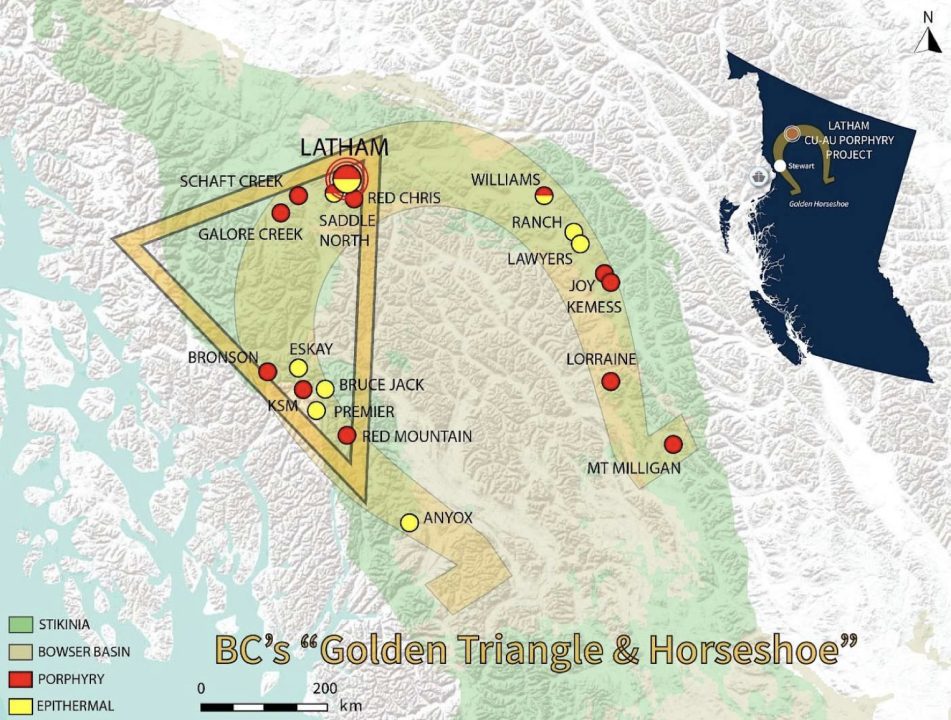
The company’s court petition stated the Chief Inspector “erred in law by failing to undertake the required balancing of aboriginal and non-aboriginal interests, as mandated by the Supreme Court of Canada in Haida Nation v. Canada…” and that there were no terms under which the B.C. government would issue a permit without Tahltan consent “regardless of the merits… thereby giving the [Tahltan Central Government] a de facto veto.”
Torr Metals also revealed the B.C. government had negotiated additional undisclosed agreements with the Tahltan that were never shared with the public or the company. These arrangements give the Tahltan Central Government a de facto veto, it is argued, even though the province has not ceded ownership of Crown land and has never publicly signalled an intention to do so.
Every British Columbian and First Nation should be concerned. If the Eby government can quietly give one Indigenous body this level of control over such a large portion of Crown land, there is nothing preventing it from doing the same elsewhere.
Under these circumstances, would industry spend millions developing projects if outcomes can be predetermined behind closed doors through political arrangements unrelated to the merits of the project?
The government cannot disregard current law simply because it prefers a future system where title is treated as though it has already been proven. When the province chooses to negotiate with only some First Nations and excludes others, excluding the wider public, it invites litigation from every direction.
Off-loading land use decision making is undemocratic
British Columbia is a province where almost every resident relies on Crown land for economic opportunity, recreation, conservation, public access and community life.
Decisions that shape the future of those public lands cannot be made in covert meetings between the government and select Indigenous leaders who are not bound to act in the public interest. They cannot be driven by undisclosed agreements or financial inducements. And they cannot be built on a legal fiction that transforms unproven assertions into binding authority.
Land use decisions can’t be built on a legal fiction that transforms unproven title assertions into binding authority.
The current situation in Tahltan territory is only the beginning.
The Kaska-B.C. Land Use Planning project and others are following the same model, and many more are being prepared behind closed doors. Taken together, these two arrangements alone effectively hand over land use on roughly 20 per cent of British Columbia’s land mass to unelected bodies through deals the public never saw or approved.
We are now seeing exactly what happens when governments offload decision-making power without transparency, accountability or clear legal authority. The result is economic and societal instability that devolves resource development decision-making on Crown land into an undemocratic pay-to-play system.
British Columbians deserve open processes, fair standards and a provincial government that respects both Indigenous rights and the broader public interest. Until that becomes the rule rather than the exception, the risks to the future of Crown land, investment certainty and democratic oversight will only intensify.