

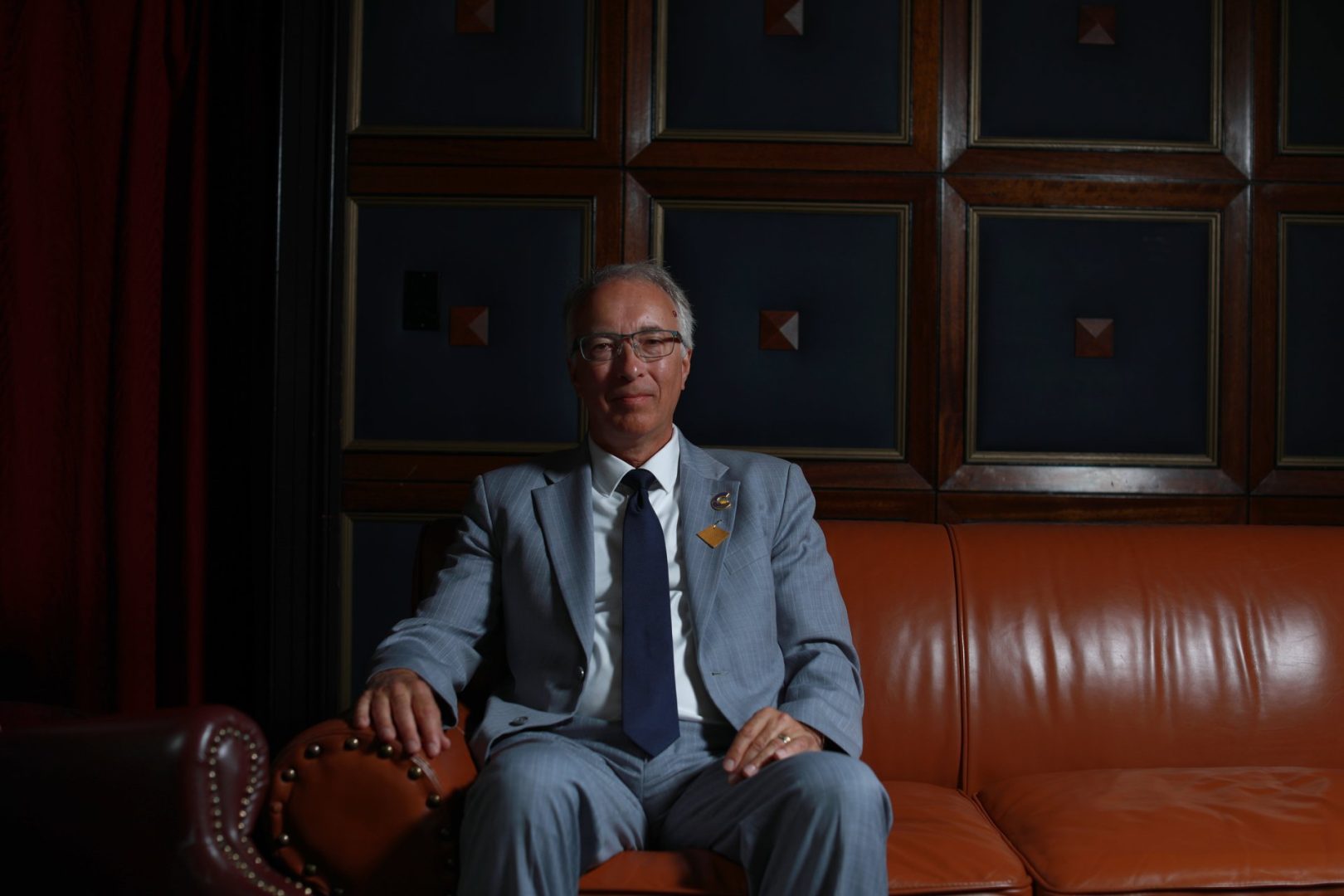
After months of internal unrest in the BC Conservative Party, John Rustad resigned as leader and the party appointed Surrey-White Rock MLA Trevor Halford to temporarily take his place.
In his resignation statement, Rustad called for “a strong and unified opposition that is ready to hold the government to account and defeat it.”
If the BC Conservatives were operating as a healthy opposition party, these would be easy marching orders because the party would be well ahead of the New Democratic government in the polls.
Premier David Eby is unpopular. The economy is weak, the province’s finances are deteriorating, and voters are confused and angry at the fallout from the Cowichan Tribes Aboriginal title decision.
Yet the BC Conservatives are, at best, only tied in polling with the NDP. According to his critics, the key factor has been party leader Rustad.
This week, a majority of BC Conservative MLAs signed a letter declaring they had lost confidence in Rustad. The party’s board followed with a resolution to remove Rustad on “incapacity” grounds and announced that Halford had been selected as interim leader.
Initially, Rustad refused to resign, calling party management’s bluff, saying the demand was counter to the party’s own constitution. The party is vested with the power to remove a leader in a formal leadership review, but whether by board fiat was a matter of some debate, and a now moot point. Either way, the schism within caucus and party has now been laid bare.
Voters unhappy with Rustad and Eby government performance
For months, public polling numbers had painted a case against Rustad’s leadership. The Angus Reid Institute found that about two-thirds of British Columbians held an unfavourable view of Rustad. Even among those who voted Conservative in the 2024 provincial election, nearly half now say they would tell him to step down.
At the same time, a majority of British Columbians say the province is on the wrong track under Eby and are dissatisfied with his government’s performance. With sliding personal approval ratings, Eby is now tied as the second least popular premier in Canada.
On paper, this should be a nightmare scenario for Eby’s government.
Premier Eby inherited an enviable surplus and comparatively modest debt from his predecessor the late John Horgan. In just three years, Eby has overseen a swing from a multi-billion-dollar surplus to projected double-digit-billion deficits, and provincial debt has surged to the point that credit-rating agencies have downgraded B.C., driving up interest costs.
Under Eby’s watch, property rights and reconciliation have become intertwined politically explosive files. The Cowichan Tribes BC Supreme Court ruling in August recognized Aboriginal title over more than 800 acres of land in Richmond, including private property. The court also recognized Cowichan title as a “prior and senior right” to other property title interests, leaving many British Columbians worried about the future implications for their home ownership and savings.
Polling has found that most residents, especially property owners, view the Cowichan ruling as serious and believe it will harm relations between Indigenous groups and the rest of the province. Many now think Victoria has become “too focused” on reconciliation under the NDP, as questions of legal clarity and economic security loom larger for them.
Internal turmoil dominates Conservatives’ narrative
In an ordinary world, B.C. should be fertile ground for a Conservative opposition promising to protect property rights and take a more pragmatic approach to Indigenous partnerships. Instead, the BC Conservatives have spent much of their time since the last election talking about themselves.
Last March, three MLAs were expelled or left the Conservative caucus, then a scandal erupted during Rustad’s leadership race this summer, forcing the expulsion of several party members and the firing of two legislative staffers.
In October, the Conservative Party management committee, led by president Aisha Estey, called for Rustad to step down in a letter describing a “state of chaos” and warning that his decisions had destabilized the party and undermined its credibility.
Critics blamed the party’s sagging poll numbers, shrinking caucus, stagnant membership and poor fundraising on Rustad, but some riding association representatives said senior party management has invested minimal resources, guidance or leadership to help build administrative, managerial or fundraising capacity in local constituencies.
Another faction of riding association representatives, largely from districts without an elected Conservative MLA, warned that with Rustad as leader, winning an election was “virtually impossible.”
Last month, Rustad spoke about various competing political factions within the party and caucus that were vying for control of the organization and leadership. In the past year, five Conservative MLAs have been ejected or voluntarily departed since the 2024 election. Dallas Brodie and Tara Armstrong subsequently launched the province’s fourth official party, OneBC, while Jordan Kealy, Amelia Boultbee and Elenore Sturko, one of the Conservatives’ most effective legislators, are sitting as Independents.
This week, after months of grumbling over Rustad’s leadership, just over half of the now 39-member caucus escalated into open revolt. Twenty MLAs signed a letter saying they had “lost confidence” in Rustad, calling for an interim leader to be installed. Then, on Dec. 4 Rustad suddenly resigned as leader.
Rustad had previously tried to parry criticisms by pointing to the 71 percent of party members who supported his leadership. Out of an estimated 8,000 party members, 1,268 cast ballots. By comparison, Eby won 83 per cent support, or 609 of 740 delegate ballots cast, from a total estimated membership of 11,000.
But the Conservative voting process was marred by accusations of fake memberships and ballot stuffing, resulting in more than 2,000 sign-ups in Kelowna being voided by party officials after irregularities were discovered.
Now the market has delivered its own verdict. Fundraising numbers for the Conservatives have collapsed. After raising about $723,000 in the first quarter of 2025, the party pulled in only just over $350,000 between April and June – less than half of what the NDP raised and much closer to the B.C. Greens’ total.
Commentators and party insiders now speak of a “fundraising drought,” with reports that money for daily operations, rent, salaries and software could run out within months. Would-be successors, on the other hand, are drawing crowds, signaling a hunger for a clearer vision and a stronger opposition.
Big-tent divisions over-shadow opposition successes
Rustad was a relatively obscure MLA when he took over the moribund B.C. Conservatives in 2023 and helped lift them from less than two per cent of the vote in the previous election to the brink of forming government in 2024. Many factors powered this seismic political shift, but it is an underdog triumph by any definition.
Then, as with every big-tent party, it was after the election that the real challenges began. Rustad led the energized, but mostly inexperienced and politically rambunctious, MLAs against a tired NDP government. Opposition scored a few key victories out-the-gate, forcing government to backtrack on safe supply, the Land Act amendments, and several bills of extreme government overreach, before internal divisions began to spectacularly implode the caucus from within.
Instead of stepping aside when fissures appeared in caucus and party ranks and questions about his leadership arose, Rustad chose to interpret his leadership endorsement as a blank cheque. Which escalated to an untenable dilemma this week. To stay on as leader, John Rustad had to defy the wishes of a majority of his MLAs and his party board. For Conservatives to survive as a viable opposition, they had to have Rustad gone.
It was a zero-sum stand-off. And Rustad broke the impasse.
BC NDP vulnerable if Conservatives can seize the moment
Right now, the NDP have provided little evidence they deserve another term in office. Eby’s government is vulnerable on pocketbook issues, on property rights and on basic competence. Voters are hungry for a serious alternative that will speak up for homeowners and families without degenerating into bitterness.
The only thing stopping that alternative was the man who insisted only he could lead it.
Now that the way is cleared, the Conservatives must seize the day and pick a strong leader able to carry opposition into government. If senior party and caucus officials truly believe they can prevent another lost decade in B.C., they must know time is of the essence.
Because this is as good a time as any for David Eby to test a divided, weakened, effectively leaderless opposition in an election.