

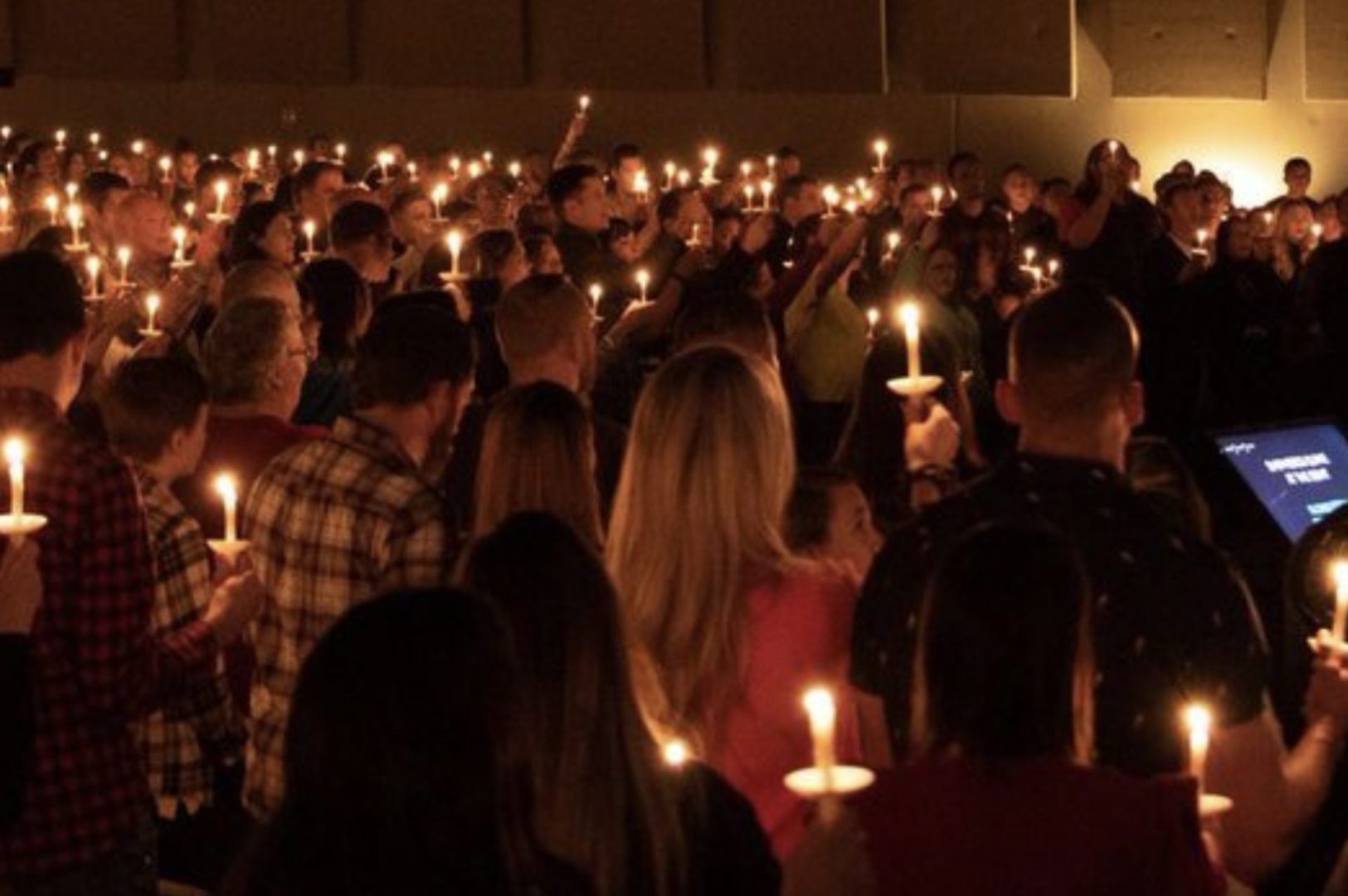
In the midst of all the shopping and gatherings associated with this holiday season, the meaning of Christmas is often overshadowed by carefully crafted consumerism messaging. But this year has a different feel.
It’s Christ’s birth, not Santa’s, that appears to be on full display. Even Canada Post issued a Nativity stamp. People are unabashedly wishing one another “Merry Christmas”—heralding a shift from previous years’ push toward the more politically correct “Happy Holidays.”
It’s a welcome ceasefire in the long running war against Christmas.
A November UK survey by Tearfund and Savanta found that 45 per cent of adults plan to attend a church or religious event this Christmas, up from 40 per cent last year. Generation Z leads with 60 per cent planning to participate, followed by Millennials at 59 per cent, Gen X at 36 per cent, 30 per cent of Baby Boomers, and 24 per cent of the Silent Generation.
Gen Z, born between 1997 and 2012, are known as the smartphone generation, followed by Millennials, born between 1981 and 1996, Gen X at 1965 to 1980, Boomers, from 1946 to 1964, and the Silent Generation, born between 1928 to 1945.
But it’s the Gen Z’s who are putting Christ back in Christmas.
In the United States, attendance at churches is dropping overall, even as it’s rising among the 18 to 24-year-olds. A documentary by the Christian Broadcasting Network tracks evangelism on college campuses in a film entitled “The Revival Generation: Gen Z Turning to Jesus.”
And in Canada, youth programs are on the rise in churches. According to an Angus Reid poll, more young people are attending church than their elders. Those who attend church were reportedly attending an average of 23 services a year, followed by Millennials at 22 visits per year.
For a generation that grew up under the shadow of political unrest, a global pandemic, apocalyptic climate change messaging and performative social media posturing, religion may deliver a sense of certainty and “deeper purpose” otherwise lacking, according to some sources.
My experience at a recent baptism service held by Central Heights Church in Abbotsford, suggests a similar trend is happening there. In November, a whopping 15 people signed up to be baptized, nearly triple the usual number participants hosted at most baptismal services.
Of the 15 people who were baptised, 14 were under the age of 30, a far cry from the early 2000’s when Central Heights was “a sea of grey hair,” as one congregant put it. Twenty-five years later, it’s a new scene. The church is bustling with young people, namely, Gen Z’s.
Searching for the ‘real Jesus’
One of the 15 young people baptized, Braydon Tessier, said he was introduced to the “real Jesus” by a YouTube preacher and was prompted to get baptized as a symbol of his faith and commitment to live a righteous life. Like many of his peers, Tessier chose a socially conservative congregation rather than a mainline liberal church.
Tessier began attending church services at Central Heights after he was shaken by the public assassination of Charlie Kirk, a conservative American public debater and co-founder of Turning Point USA. Tessier hadn’t paid attention to Kirk until the shocking footage of his death made its way into his social media feed. It was the gleeful reaction videos by people celebrating his murder that caused Tessier to dig deeper.
“I watched hours of videos”, he said. “I didn’t find evidence of hate. He spoke about his faith and was killed for his beliefs.”
What was especially troubling was the lack of sympathy for a father who was gunned down in front of his young children. It reminded Tessier of a Bible verse he heard when he was little.
“Woe to those who call evil good and good evil, who put darkness for light and light for darkness, who put bitter for sweet and sweet for bitter.” — Isaiah 5:20 (NIV)
This growing curiosity among young people about figures like Kirk has been described by some pastors as the Charlie Kirk effect. For many Gen Zs, exposure to outspoken Christian influencers, whether through controversy or curiosity, has prompted deeper exploration of their own beliefs. In an age defined by skepticism and screens, the public clash of values is leading some to discover or rediscover faith, not abandon it.
A revival of faith
Aiden O’Mahony, a first-year seminary student from Columbia Bible College smiled when I inquired about the large number of young people. “You should see the AMEN, young adult’s bible study, held mid-week. People need to get here early. They run out of seats!”
The church seats up to 1100 people.
Abbotsford sits in the heart of what is often called British Columbia’s Bible Belt. With three seminaries nearby — Columbia Bible College, Summit Pacific, and Trinity Western University– it stands to reason that churches in the area would see an uptick in younger attendees, many of whom have moved to the city to pursue their studies.
And this trend isn’t limited to Abbotsford.
A recent article in the Winnipeg Free Press reported similar surges in attendance observed across Canada, the United Kingdom, and the United States, with rising memberships described as a “quiet revival.”
In a society accepting recreational drug use, sexual expression and moral relativity, why would young people be drawn to a religion seen as restrictive or outdated?
“Restrictions produce freedom” explained O’Mahony, who is contemplating trading in his iphone for a flip phone. Too much of Gen Z’s time has been consumed by addicting, unlimited access to online content and young people want to focus on being present, he said. The seminarian often leaves his phone in his car or at home to avoid the temptation of doom scrolling.
How does this relate to Christianity?
Christianity, at its core, is a faith of moderation, O’Mahony explained. It’s the balance – in his case, restricting his access to his phone – that brings about freedom from the manipulation of online addiction and freedom to be present.
A new generation steps up
In recent years, Christianity has experienced an upswing in persecution both at home and abroad. From church arsons across Canada to the outright slaughter of believers in Nigeria, Iraq and Syria, places of worship and the worshippers themselves are being systemically targeted.
Some media reporting dismissed the extermination of African Christians as “complex.” While the horrific abduction of 300 Nigerian Christian school children – their villages set ablaze and believers beheaded – was downplayed as a “competition of resources” according to analysts quoted by the BBC.
Despite this, a new generation is stepping forward. Young people are bucking the drop in church attendance by their elders, pushing back on critics of Christianity and finding faith in religions across the spectrum, notwithstanding predictions of their demise.
Five years ago, a good friend told me Christianity was coming to an end. The next generation may prove otherwise.