

As Prime Minister Mark Carney reportedly prepares to meet with west coast Indigenous groups in Prince Rupert tomorrow, nobody should waste their time waiting for Premier David Eby’s “come to Jesus” moment on a second oil pipeline.
Eby does not support a new interprovincial crude-oil pipeline, or a new infrastructure corridor in British Columbia, and his mind is not going to change. Talk of “diversification,” “economic sovereignty,” and “national unity” will not sway this premier.
The evidence of his intransigence is neither scarce nor subtle, and the anti-pipeline convictions of British Columbia’s New Democratic Party have been apparent during its near-decade of government.
When the BC NDP formed government in 2017, then leader, the late John Horgan explicitly pledged to try to stop expansion of the Trans Mountain pipeline. He promised his government would use “every tool in the toolbox” to stop the project.
Keeping that promise, Horgan led the NDP into litigation, delays, and regulatory roadblocks to impede TMX.
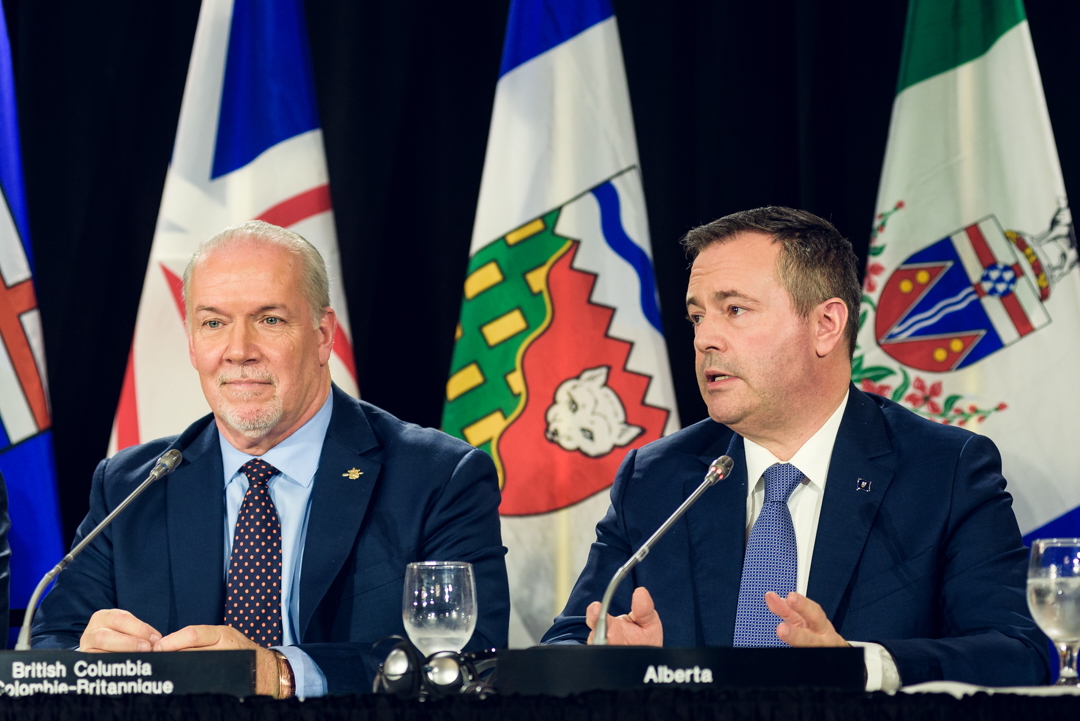
The Horgan government was eventually dealt a decisive defeat by the British Columbia Court of Appeal, which cleared the way for TMX to proceed, and the Supreme Court of Canada later dismissed B.C.’s appeal.
Even so, the NDP would never endorse the project.
Ottawa has jurisdiction over interprovincial pipelines, which ultimately forced the hand of the BC NDP in the courts.
Eby led legal fight against Trans Mountain pipeline
Although only a cabinet minister during the fight against the Trans Mountain pipeline expansion, Eby was attorney general and so, the tip of the spear for Horgan’s legal battle.
At the time, Eby’s office portrayed TMX as a grave environmental threat and argued the province should be empowered to regulate the diluted bitumen that would flow through its jurisdiction.
Eby’s convictions did not change with defeat, which helps explain his government’s continued political opposition to pipelines ever since. While the TMX project was eventually completed, it faced considerable added costs and construction delays related to political opposition.
After succeeding Horgan in 2022, Eby continued opposing all crude-oil pipeline proposals requiring new routes or exemptions to the north coast tanker ban, instituted by the federal Liberal government under former prime minister, Justin Trudeau.
Whether it’s a route through the north to Prince Rupert or Kitimat, a revival of the Northern Gateway project, or any other pipeline proposal, Eby has said no, despite the courts having ruled against this position in the past.
Whether it’s a route through the north, a revival of the Northern Gateway project, or any other pipeline proposal, Eby has said no.
Most recently, in response to the pipeline proposal from Alberta Premier Danielle Smith, Eby has described it as “fictional” and an “energy vampire.”
His energy minister, Adrian Dix, has described the idea as “performative politics.”
At the end of last November, when Alberta and Ottawa signed a memorandum of understanding to work toward a northern pipeline concept, Eby remained resolutely opposed.
He did not pivot to supporting a new northern oil export line, and instead signalled that any discussion on oil should focus on expanding capacity within the existing Trans Mountain corridor, which both he and Dix have presented—apparently without irony—as a costly, delay-ridden, boondoggle of an investment.
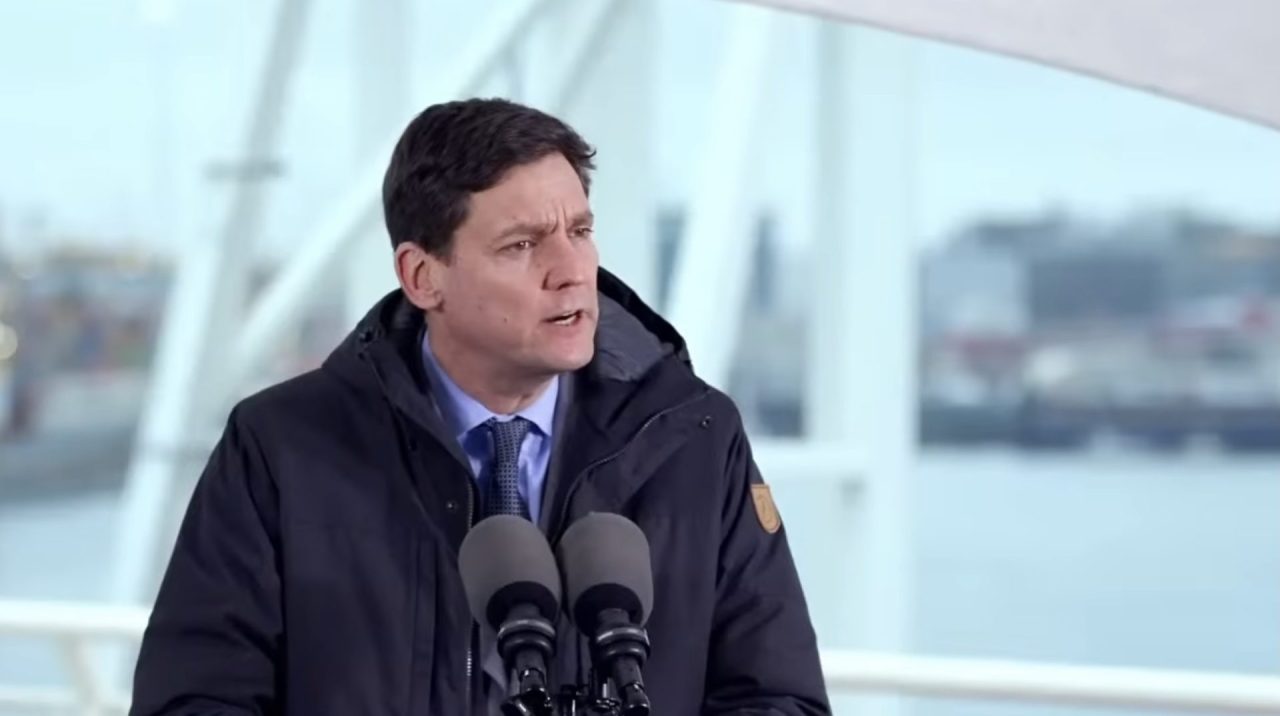
Last week, Eby pledged cooperation with Alberta and the federal government at “ensuring access to tidewater,” yet said he couldn’t support taxpayers footing the bill.
The Premier acknowledged Ottawa could impose a pipeline on B.C. if it wished, and said his government would not return to court. He has however repeatedly said any pipeline would have to have approval of coastal First Nations, some of which have spoken publicly against the proposal. And he floated the unproven assertion that approving a new pipeline would somehow jeopardize Indigenous support for energy and mining projects his government says it is currently attempting to negotiate.
All of which is a loud signal to pipeline advocates in B.C. that they should prepare for more delays and roadblocks from the provincial government
The proposed oil refinery is just another word for ‘No’
Then came Eby’s announcement last week that he would prefer public investment in new Canadian oil refining capacity instead of a second pipeline. Although, he said any refining should happen in Alberta, not B.C.
The idea to build a refinery is neither pragmatic nor sound.
Refineries may sound politically convenient, as a nationalistic, job-creating project, but a new refinery is economically implausible.
Independent analysts have bluntly warned that such a facility would cost tens of billions of dollars and take many years to plan and construct, and that is before factoring in market risk.
The entire project is a non-starter, and Eby most certainly knows it.
If the NDP government truly believed Canada needed further refining capacity, it would spend its time courting investors instead of musing about grand, unrealistic projects at press conferences.
Proposing a refinery nobody wants to build is another way to deflect the pipeline debate without genuinely engaging in it. It’s an attempt to shift the conversation away from finding the best pipeline route through B.C. to Canada’s coast, towards a purely theoretical discussion on the economics of fantastical refineries.
It’s a waste of time and energy and perfectly suits the objective of scuttling serious consideration of new pipelines.
There is a pattern here.
When a northern pipeline is proposed, Eby brings up the tanker ban. If tanker-ban exceptions are discussed, Eby flags the opposition by some Indigenous bodies and conjures the supposed risk to LNG, mining and electricity transmission projects.
When pressed for a compromise, Eby suggests expanding the already-expanded Trans Mountain pipeline, instead of building a new one.
And the latest, when the topic became politically charged following the American military operation to arrest the Venezuelan president and seize the country’s oil, Eby pivots towards an oil refinery.
It’s another synonym for “No.”
Even voters can’t sway the Premier’s opinion
Even public opinion can’t seem to change the premier’s calculus.
National polling shows that a majority of Canadians support a new Alberta-to-B.C. pipeline, including 53 per cent in British Columbia and 74 per cent in Alberta. In B.C., half of those surveyed want the tanker-ban repealed or an except made for the pipeline, and 55 and 51 per cent respectively support Indigenous consent and ownership in the project.
Respondents were asked about another important live issue–whether any one province should have veto over a project deemed of national importance. Predictably perhaps, support for a veto was strongest in Quebec and B.C. and weakest in Alberta, Saskatchewan, and elsewhere.
Opposition to a northern pipeline, directly mirrors the NDP’s pockets of supporters. Opposition is strongest among residents of Vancouver Island and Metro Vancouver, where concerns of northern residents and B.C.’s rural economy are as mentally remote as Middle Earth.
Eby is an experienced politician who understands his base, but as the courts demonstrated when they struck down his predecessor’s legal challenge to the TMX pipeline, a pipeline decision is not solely up to the premier.
Politics still matter, however, and Eby knows how delaying a project can drive up risk and costs, and scare away investors, killing momentum for a new pipeline. Even without a veto, the provincial government can be the most effective of disruptors.
That’s why counting on a conversion from the NDP is a waste of time.
There will be no good-faith negotiations to obtain his government’s endorsement. Eby‘s opposition to the project is, once again, conveyed by his government’s political resistance and third-party legal challenges, rather than provincial litigation.
Bottom line, the talk of a refinery is not a breakthrough in any way.
It is part of the same strategy.
If the federal government and Alberta want another pipeline, they will have to get it built in spite of the B.C. NDP leadership, not in collaboration with them.
David Eby has made that politically explicit, and we should take him at his word.