

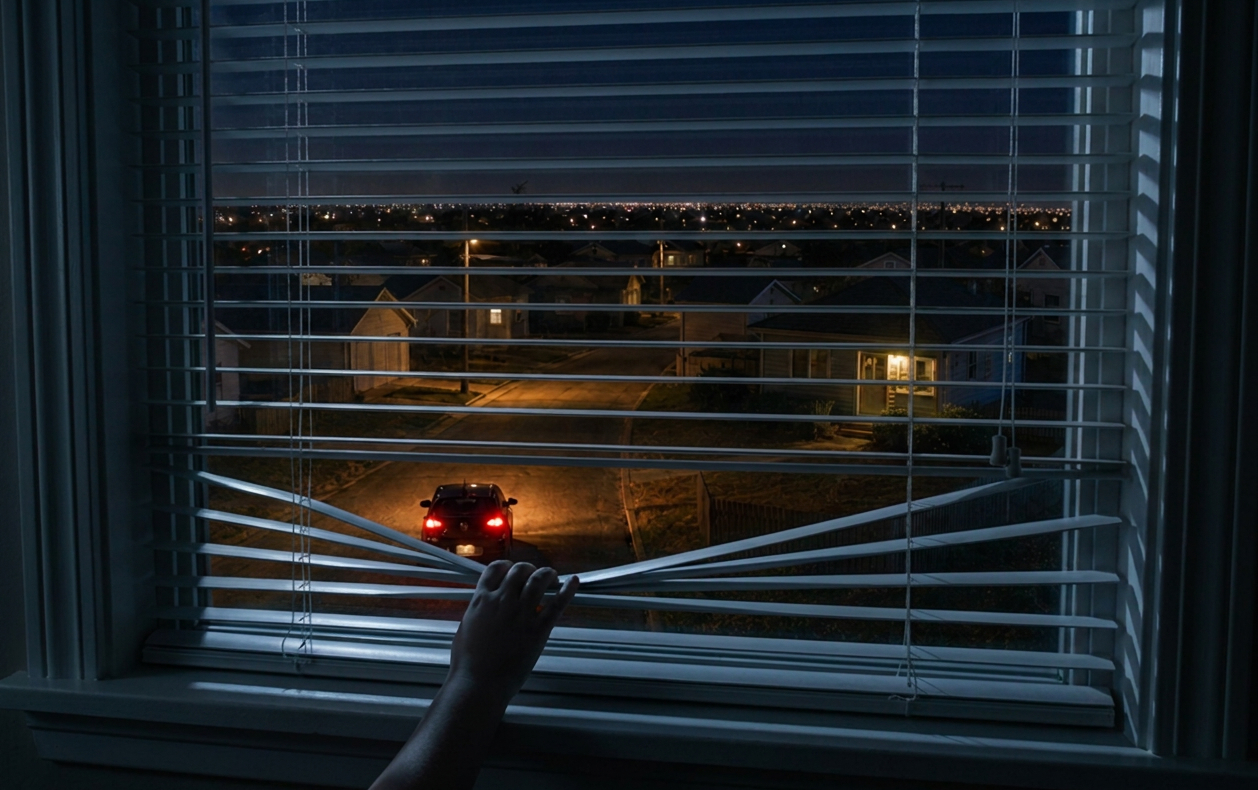
“It took me years to understand that those headlights disappearing up the road were more than my mom leaving for another shift.”
—Brad West
It must have been an internal clock I subconsciously set, or maybe just the connection between mother and son. Whatever the reason, I’d pop my head up from my bed and peer through the blinds. Five, four, three, two… and I see the bright glow of the headlights on my mom’s Honda Civic as she heads to London Drugs. It’s just after 4 a.m. and she needs to get the store ready for the day. She’ll print new labels and go aisle by aisle, placing new price tags, making sure everything is just right. I keep watching as the rear lights of her car wind up the road and as they disappear I roll back into bed for a few more hours of sleep before it’s time to get up.
As a kid, I didn’t understand what I was watching. I didn’t know what an hourly wage was, or what things cost, or how carefully a single mother had to stretch a paycheque. I didn’t understand why someone would willingly leave a warm house in the early hours of the morning.
I just knew my mom was going to work.
It took me years to understand that those headlights disappearing up the road were more than my mom leaving for another shift. They were the reason the mortgage got paid. The reason there was food in the fridge. The reason my sister and I could play sports and have birthday parties.
I was experiencing one of the great acts of love working parents perform every day: they carry the worry so their children don’t have to.
Mom followed this same routine day in and day out. In fact, one time she did it for 43 days straight. No weekends, no days off. But you would never have known it when she got home. The moment she walked through the door, she was all ours: asking about my day and my younger sister’s, participating in whatever activity we had going on, all while somehow getting dinner prepared.
On many occasions, those were 12-plus hour days at work for mom, as she picked up casual shifts at a second job. She would finish work, quickly change uniforms, and then head to the other.
I never heard my mom complain. Not once. I never heard her say she was too tired or too sore to be part of whatever her kids were up to. After losing our dad when I was 10, mom did it all on her own with a quiet determination, or if you know our family, stubbornness. Her family was her everything. And her work ethic gave us dignity and a life.
There is, after all, a profound dignity in work.
It’s not found in titles or status. It’s in the showing up. It’s in the sacrifice. It’s in putting your head down and doing what needs to be done because other people are counting on you.
‘It was my responsibility’
When I’ve asked my mom in later years about that time in our lives, about how she did it—working herself to the bone, raising her two kids—she explained it simply: “It was my responsibility.”
That word has stayed with me all my life: responsibility. It is one of the most powerful forces in our society. Responsibility is what steadies families when tragedy strikes. Responsibility is what pushes people out of bed before dawn to put food on the table and pay the bills. Responsibility is what drives people to keep promises to their children, to their neighbours, to their communities.
You can see it everywhere if you look. In the nurse who stays late because another patient needs care. In the bus driver who makes sure the last run of the night is safe for every passenger. In the tradesperson who works through pouring rain to keep a project on schedule. In the grocery clerk who quietly helps a senior find what they need. These are acts of responsibility that are quiet and unheralded, but essential.
Personal responsibility may not be glamorous, but it remains the bedrock of our country. It’s the heartbeat of millions of Canadians. They drive the buses, stock the shelves, care for our seniors, fix the pipes, keep the lights on, build the homes, clean the offices, serve the food, fight fires, uphold the law, and do a thousand other things that too often go unnoticed or unappreciated. They meet their responsibilities. And in doing so, working people don’t just build our society—they build a life for their families. Always with the hope that their labour means their children start a little further ahead than they did.
That was the hope that carried my grandfather to work every day as an electrician and proud member of the International Brotherhood of Electrical Workers, and my grandmother as a school district support staff with the Canadian Union of Public Employees.
But that hope, once as certain as the sun rising, that hard work and good choices would mean the next generation will be better off than the last is more challenged today than ever before.
The bargain that shaped families
Once upon a time, it was the most fundamental bargain of our country.
Nobody promised you would be rich. Nobody promised life would be easy. The promise was more modest than that, and more important: if you worked hard, made responsible choices, and did your part, you could build a decent life.
You could afford a home. Raise your kids. Put something away. Maybe take them on a vacation once in a while. And after a lifetime of work, you could retire with some security and look at your children knowing they had opportunities you never did.
That bargain shaped families like mine.
We should be very careful… when responsible people begin to believe responsibility no longer pays.
Today, too many people who are doing everything we asked of them are wondering whether the bargain still holds.
They are working. Sometimes two jobs. They are paying their taxes. Raising their kids. Showing up. Doing their part.
And still the house gets further out of reach. The grocery bill climbs. The rent goes up. The paycheque disappears faster. Parents who have done everything right find themselves wondering whether their children will actually have the opportunities they had.
We should be very careful about what happens to a country when responsible people begin to believe responsibility no longer pays.
Because people can endure hardship. What is much harder to endure is the feeling that no matter how hard you work, you cannot get ahead.
Respect and prosperity has to run both ways
My mom eventually found that same path to a better quality of life as my grandparents, landing a full-time union job. It meant a fair wage, real benefits and, most importantly to her family, that she only had to work one job instead of two.
That changed our lives.
And I think that’s something that can get lost when we talk about unions and collective bargaining in abstract terms. For my family, there was nothing abstract about it.
A union meant my mom could come home after one shift instead of changing uniforms and heading to another. It meant more time around the dinner table. More time at our games and activities. More certainty when the bills arrived. More confidence that one bad break wouldn’t send everything tumbling down.
But what never changed was Mom.
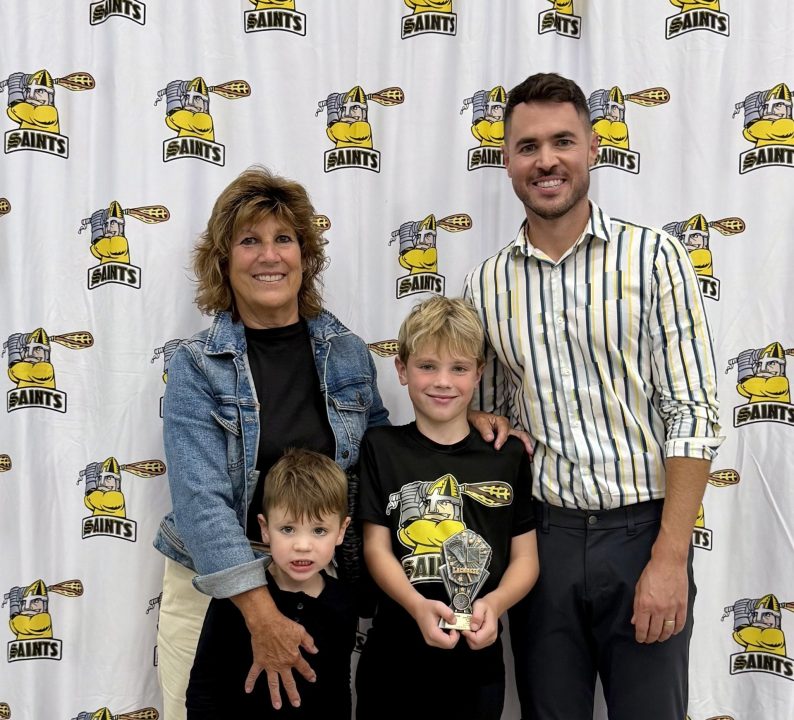
My family taught me personal responsibility. You show up. You work hard. You take care of your family. You keep your word.
But responsibility runs both ways. There is also a collective responsibility to make sure the people who do the work share fairly in the prosperity their work creates.
That is what the labour movement has understood from the beginning.
The weekend. The eight-hour workday. Safer workplaces. Pensions. Benefits. Fair wages. The ability to retire with dignity. None of these things simply appeared. Generations of workers organized, stood together, sacrificed and fought for them.
Eventually my mom experienced for herself what generations of union families have known: collective bargaining can change the trajectory of a family.
It can give a kid more time with his mom.
And when you multiply that story by millions of working families over generations, you begin to understand what organized labour has meant to Canada.
Unions helped build our middle class
Unions haven’t just built better jobs, they built the middle class. They helped create a country where an ordinary person doing an ordinary job could build an extraordinary life for their family. Where you didn’t need wealth, connections or a prestigious title to own a home, raise your kids with some security and eventually retire with dignity.
The foundation of this country has always rested on the sweat, sacrifice and responsibility of working people. And the rising tide of collective bargaining helped ensure that as Canada became more prosperous, the people whose work created that prosperity shared in it.
That bargain helped build Canada.
And through it, we learned something important: responsibility is both deeply personal and deeply collective. We owe something to ourselves and our families. But we owe something to each other, too.
That’s why I believe as strongly as I ever have in unions and collective bargaining.
Not because I read about their importance in a textbook, but because I watched what they did for my family. Years later, I watched my family’s story play out over and over again as a member of the United Steelworkers. My work with the Steelworkers brought me to mines, mills and industrial sites all over British Columbia. Everywhere I went, I saw a version of my mom: ordinary people working hard, meeting their responsibilities and finding dignity, and opportunity for their families.
Canada must keep its promise
As we mark Labour Day, my heart is with every person who has carried the weight of responsibility on their shoulders, who has worked not for status but for love of family, love of community, love of country.
And my hope is for a Canada that once again delivers on its promise: that hard work will be rewarded, that responsibility will be respected, and that every parent’s dream—that their children’s tomorrow will be brighter than their own—remains not just possible, but certain.
Because a country has responsibilities too.
If Canadians have responsibilities to work, contribute, care for family and community, our institutions have a reciprocal responsibility to make sure work is rewarded and opportunity remains real.
In the meantime, mom is still hard at work. And when she’s finished for the day and comes through the door, she can’t wait to hear what the grandkids have been up to.
Happy Labour Day!
Note: This story originally appeared as a social media post by Brad West.