

The BC Conservatives have shocked the country by coming to power for the first time in a century. Boasting a powerful majority in the legislature, they have a generational chance to remake the province and inaugurate a new, post-BC NDP era.
Reviving B.C.’s moribund economy is vital, but equally important is freeing institutions from the grip of ultra-progressive, decolonial ideology and launching a new, optimistic cultural vision.
This starts with depoliticizing classrooms, where the 600,000 public school students in B.C. are regularly instructed in the ideology known colloquially as “woke” or “political correctness.”
During the campaign BC Conservative Leader and now Premier-Designate, Lorne Doerkson, promised to end the controversial sexual orientation and identity (SOGI) education framework, saying, “I think the province needs to get back to teaching arithmetic and reading.”
The BC Conservative election platform pledged a “back to basics” plan that includes restoring standardised tests and report card letter grades.
This is a good start, but in order to truly depoliticize schools, reforms to the curriculum itself are needed. To be blunt, some courses should be abolished.
Social Justice 12 focuses on such issues as “privilege and power,” “inclusive and non-inclusive language,” and “marginalized” groups. I took this elective in high school, and one of our first “lessons” was to line up and take steps forward or back according to how much “privilege” we had, an exercise meant to illuminate supposed systemic flaws in Canadian society that stokes shame in some students for being who they are.
While an extreme example, the ideology in this course is representative of what’s being promoted in classrooms writ large. A good example is the four credits of “Indigenous-focused coursework” mandated by the BC NDP for all students as a graduation requirement. Some of the qualifying courses are manifestly political in nature.
The Teacher Resource Guide for B.C. First Peoples 12 features terminology befitting a wokefied UVic sociology course: “white saviourism,” “systemic racism,” “decolonization,” “all land in B.C. is First Nations Traditional Territory.”
The resource guide for another course, English First Peoples 10-12, notes that an “informal discussion” on the “Canada-First Peoples Relationship” must be “carefully organized” so that students do not “end up perpetuating stereotypes, racism, or ill-informed perspectives.”
Conservatives should honour ‘back to basics’ pledge
Allowing unproven and fringe political ideologies to continue to dominate taxpayer-funded public schools would fly in the face of the BC Conservative “back to basics” pledge. An overview of the curriculum should be undertaken with a view to excising ideology from all courses, and phasing out those courses too politicized to salvage.
The new Conservative government could also seek to pass legislation modelled on Alberta’s Act to Remove Politics and Ideology from Classrooms and Amend the Education Act, which mandates that lessons be “fair, impartial, neutral and free of personal bias.”
The new government also has an opportunity to turn universities into centres of knowledge and inquiry instead of stale ideological conformity.
Both Alberta and Ontario have forced universities to adopt policies aligning with the Chicago Principles, the famous guiding principles from the University of Chicago endorsing untrammelled free speech in academia. B.C. could go a step further, requiring “institutional neutrality,” forbidding universities from taking stances on political or cultural issues, a move currently being considered in Alberta.
The BC Conservatives promised in their platform to “celebrate B.C.’s rich history and the stories of the people who built B.C. in our museums and institutions,” and Lorne Doerkson held up the Fraser Gold Rush as a symbol of the province’s “trailblazing spirit” in his hyper-caffeinated victory speech.
Rhetoric that glorifies our province’s history is a welcome change from the efforts of ideologues to inculcate shame, but reviving provincial pride can and must go beyond lip service.
Restore the Royal BC Museum
It is within the power of the new Conservative government to restore the Royal BC Museum in Victoria to its former glory.
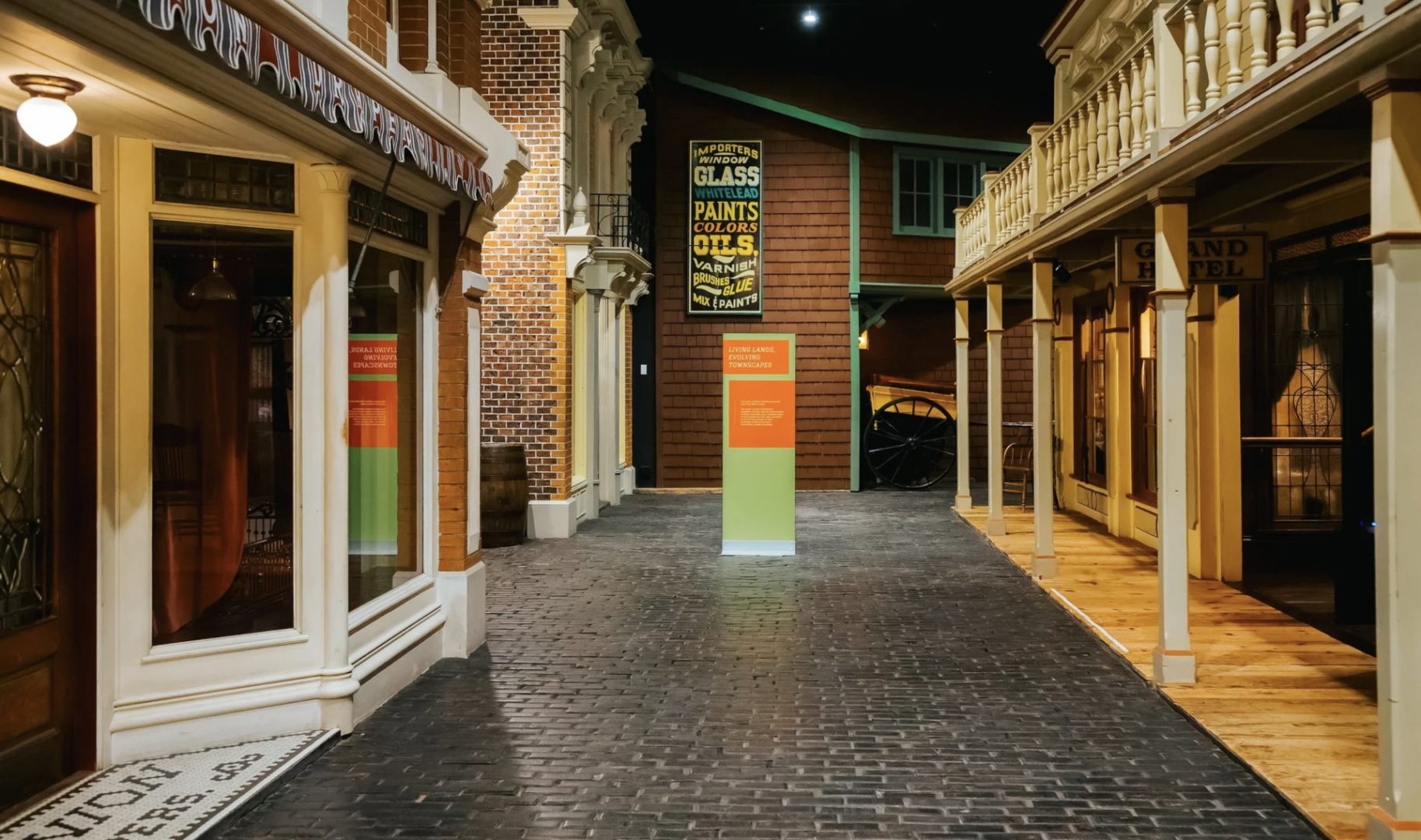
An attempt to “decolonize” the museum came close to killing the third floor with its charming recreations of B.C. settler life, including Old Town, the life-sized turn-of-the-century town beloved by young and old for decades.
The decolonization effort ran aground following public backlash, but the museum is a shell of its former self. The coal mine, sawmill, and homestead exhibits are shuttered, while bizarre red signage alerting visitors to the systemic injustices in B.C. history are scattered in a jarring fashion throughout Old Town. I can only imagine the confusion of foreign tourists.
The good news? The B.C. government can reverse all these changes.
The Royal BC Museum is a Crown corporation, with the province appointing a board of directors and issuing mandate letters. It can again become a point of pride. It can be made better instead of worse.
Build more statues
The new Conservative government could also push back against the ideological capture of place names by ending the trend of naming places in Indigenous languages spoken by a handful of people.
Upon replacing the Patullo Bridge in Vancouver, honouring B.C. Premier Thomas “Duff” Patullo, the BC NDP christened the new one stal̕əw̓asəm (in English, “Riverview”) Bridge. Future names should honour provincial history, not cater to the ideology of decolonization.
Similarly, B.C.’s era of monument toppling, epitomized by an unruly mob of protestors who tossed Captain Cook into the Victoria Harbour in 2021, should be replaced with monument-building.
Constructing beautiful statues of great British Columbians on provincial land, or using community grants to fund statues in municipalities seeking to build them, would represent a highly visible break from our guilt-ridden past. From Amor de Cosmos, who brought B.C. into Confederation, to Social Credit Premier W.A.C. “Wacky” Bennett, whose industrial expansion and highway building brought the province into the modern era, there is no shortage of figures to choose from.
Purge ideology from the public service
Implementing all of the above reforms will be difficult if the bureaucracy is at odds with the BC Conservative agenda. The ultra-progressive ideology which suffused government departments under the BC NDP reign will have to be expunged.
A B.C. government writing guide, still online at the moment of writing, recommends not using the term “British Columbians” because it excludes “Indigenous Peoples who may not identify with it” as well as “newcomers and refugees.” A remarkable document from the B.C. Ministry of Health claims that “Between 2015-2021, life expectancy for Status First Nations people decreased by 7.1 years as a result of systemic racism and White supremacy.”
Just as the curriculum should be systematically reviewed to sweep out ideology that has crept in, ministry departments, projects, and initiatives should be similarly examined. As writer Geoff Russ has recommended, the new government should appoint “Conservative allies and capable non-NDP professionals” to replace the 2,000 government-appointed directors in B.C., particularly any who are determined to be avid promoters of the BC NDP’s hard-left ideology.
Purging ideology from the bureaucracy can help to pare down the deficit, a key BC Conservative election pledge.
One small example is the 31 pages of multiculturalism grants dispensed by the province in 2023-2024, which include numerous strange projects such as “Melanin Magic,” an afterschool program “to engage middle schoolers in conversations about race.”
During the campaign, the Conservatives pledged spending reviews to find savings. These reviews should include a special focus on defunding expenditures which advance ideological pet projects.
Bad policies permitted the ideological capture of our institutions. Good policies can retake them. The BC Conservatives must seize this rare opportunity to implement them.