

The forest industry and related associations, unions, and community leaders have now coalesced behind the banner “forestry is a solution.”
Their purpose, they say, is “to address the urgent challenges, from building affordable housing to reducing wildfire risks in our backyards” and to “rally British Columbians to support forestry workers and their families.”
They will roll out the old dogma that B.C. practices the most sustainable forestry in the world, and that only their forest professionals know how to keep us safe from wildfires, keep families employed, and make housing more affordable.
Noble intentions, except, the real purpose is likely that the coalition wants to continue the old model of clearcut logging despite the new reality that our forests can no longer support this intensive industrial approach.
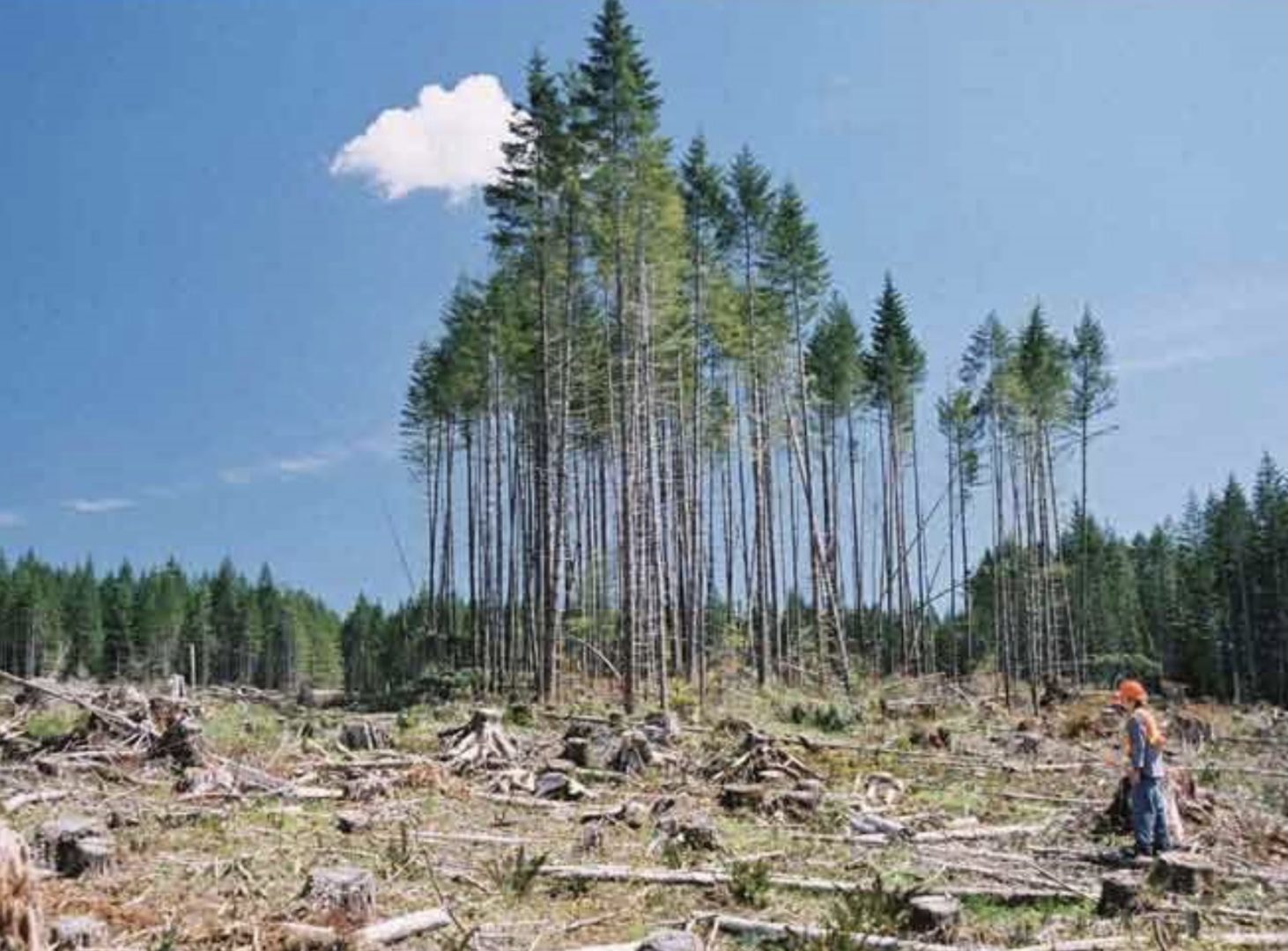
In 2003, in an address to the faculty of forestry at UBC, the chief forester of the day, Larry Pedersen, said the forest industry’s plan was to harvest primary forests in British Columbia as quickly as possible and convert them into densely planted, managed forests.
Today they have achieved that vision.
There is an estimated three per cent of high productivity old growth left scattered throughout the province. The forest industry says it needs access to the remaining primary forests, as well as protected areas, because the millions of hectares of replanted managed forests don’t have the volume necessary to satisfy the old model of intensive industrial forestry.
Managed forests have been planted so densely that large machines can no longer maneuver without having to cut massive swaths – referred to as commercial thinning.
The results are expensive and ineffective.
The diameter of the young trees makes it largely unsuitable for lumber manufacturing. And the cost of harvesting and transporting that fibre is too expensive to convert to wood pellets or use in other manufacturing processes.
Industrial logging increases risk of flooding and wildfires
Which brings us to the massive liability associated with decades of clearcut logging and the detrimental impacts on B.C. watersheds.
Decades of research conducted by the University of British Columbia’s faculty of forestry have determined that clearcut logging significantly increases the frequency, magnitude, and duration of floods, landslides, and drought. Increased drought then leads to increased wildfire risks, which are amplified because of densely planted mono-crops of conifer trees that make up managed forest plantations.
The intensity of industrial forestry over the past 30 years has led to millions of hectares of clearcut watersheds. The loss of the forest canopies, necessary to disperse the snow, results in greater snowpacks accumulating on the ground. Without shade, the sun’s radiation quickly melts the snow in the spring, causing creeks and rivers to overflow. In areas where significant rain falls, without the cover provided by the canopy to disperse the rain, it causes the snow to melt even faster.
The rapid melting prevents moisture from penetrating the earth, necessary in replenishing water tables. This leads to depleted moisture levels in the ground when it is needed most—during the summer and dry seasons. Successive seasons increases the dryness.
Loss of forest canopies eliminates roots, destabilizes ground
Because lower elevations have already been harvested, most clearcutting in the last three decades took place in the higher elevations of our watersheds. The loss of these higher elevation forest canopies synchronizes the melting of snow with the lower elevations, which substantially increases the magnitude of spring runoffs.
Adding to this already volatile outcome is the density of logging roads carved across the hillsides and valleys, redirecting water flows through ditches and culverts into already overflowing creeks and rivers. There are over 700,000 kilometres of resource roads in the province.
Clearcutting not only removes the mature forest canopies that disperse rain and snow but also eliminates the root systems that stabilizes the ground.
It takes 80 to 100 years for conifer trees to grow tall enough, with the root structure necessary, to reduce these risks.
Now consider for a moment, that BC didn’t start clearcut logging until about 60 years ago. That means none of B.C.’s managed forests have recovered enough to reduce flooding, landslides and wildfire risks. The headwaters of every tributary to the entire 1400-km-long Fraser River basin has been clearcut, and the only outlet is at Vancouver and Richmond.
BC government must protect public from clearcutting risks
British Columbians have died from floods, landslides and wildfires, with many more sustaining life-long injuries. People have lost their businesses, their farms and ranches. Thousands of livestock have been killed, crops destroyed, our food security threatened.
Billions of dollars of public infrastructure have been destroyed, placing generations of taxpayers on the hook to pay for the replacement of our bridges, highways, schools and hospitals.
Railway corridors were destroyed, increasing costs to shippers to pay the millions of dollars for repairs. Insurance premiums have increased dramatically. Some people can no longer even get insurance.
In 2023, government introduced amendments to the Forest Act that gave decision makers the authority to cancel or not approve cutting permits if the proposed logging would create a public safety issue.
Yet clearcutting continues.
And this new coalition of forest industry players continues to pursue intensive industrial forestry practices that escalate public safety risks.
With the year-upon-year increase in frequency, magnitude, and duration of floods, landslides, drought, and wildfires across our province, government must protect the public and the environment, and act against these ominous risks.
The province has the statutory ability to stop clearcut logging. Now is the time to do it.
Note: The estimate of remaining high productivity old growth was updated on Feb. 26, 2026.