

The BC NDP government’s unfolding reconciliation agenda to resolve historic disputes over Aboriginal title and rights has deep roots.
Under former premier Gordon Campbell’s BC Liberal government, the province agreed to pay compensation for a piece of developed land in Richmond and transfer title to another valuable municipal tract in Vancouver. As well, a prestigious property in Campbell’s Point Grey constituency was offered up for transfer, while compensation of more than $30 million was paid for a 10-acre parcel in Victoria that had been originally set aside as a reserve, but then developed.
Then, in the spring of 2009, Campbell and his Aboriginal relations minister Mike de Jong crafted the Recognition and Reconciliation Act for tabling in the legislature, only to pull it back before the 2009 election amid discord among Aboriginal communities.
The Richmond property was not the 800 acres recently recognized as Aboriginal title by a B.C. Supreme Court judge in the Cowichan Tribes v. Canada ruling, but rather the site of what is now the River Rock Casino. The Point Grey property Campbell’s government offered up was the University Golf Course and the Victoria property is where the B.C. legislature now stands. The legislative land was initially set aside as the James Bay Reserve by colonial governor James Douglas, then later illegally used for the provincial capital buildings. It was belatedly bought for $31.5 million in an out-of-court settlement with the Songhees and Esquimalt First Nations in 2006.
Canada’s historic Aboriginal land settlement program faded away after the numbered treaties covered the prairies. The last one was signed in 1899 with the Treaty 8 bands, extending to the B.C. Peace region.
Modern efforts began with the establishment of the B.C. Treaty Commission in 1992. Under that framework, treaties with the Nisga’a, Tsawwassen and a few others have been signed, but the process has dragged on for decades with dozens of others.
Campbell’s Recognition and Reconciliation Act would have declared Aboriginal title to be recognized across the province, based on around 20 historical tribal areas. Its effect would have been similar to Premier David Eby’s recent proposal to implement Land Act changes to allow what was gently labelled “shared decision-making” on land use.
Eby’s legislative attempt was also abruptly curtailed before the 2024 election, after non-indigenous people mounted a protest. But the current BC NDP government has since negotiated several agreements with First Nations, conferring joint, and in some cases sole, decision-making on land use, as well as, recognizing title on Crown land and private property.
The province’s latest efforts come after Ottawa and Victoria legal teams have apparently decided that large-scale surrender of Crown rights to Aboriginal title is the only way forward. It’s billed as shared decision-making, but so far it seems that Indigenous people make most of the decisions.
No clear path out of mining maze
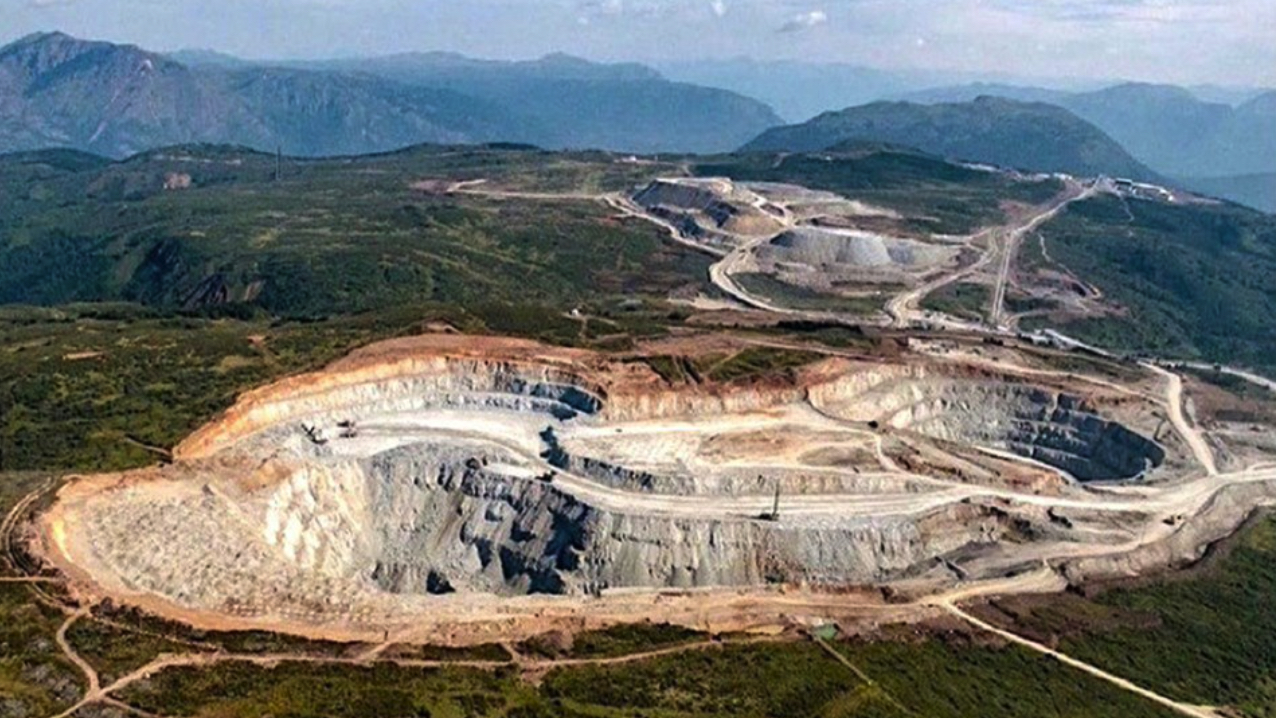
Today the Eby government’s focus is not on the population-rich southwest, but on the mineral-rich north. The “shared decision-making” agenda marches on, but on a regional basis, led by negotiations for a land use plan for a vast northwest ‘golden triangle’ where the Red Chris copper and Brucejack gold mines have actually made it through the current maze of government and First Nations regulations.
In June, the B.C. government suspended mining exploration for a year over 16,000 hectares of the northwest, to complete the land use plan. The area represents about a sixth of the entire province and is estimated to contain about 75 per cent of Canada’s copper reserves.
This came after B.C. and Ontario, in concert with Prime Minister Mark Carney’s federal government, both moved to fast-track major project approvals by overruling local governments. Ontario followed B.C.’s lead to push through multi-family housing without rezoning single-family lots. Eby promised “an approach to mining development in the northwest that combines economic growth, reconciliation and conservation” that he promised will attract billions in new investment.
Eby’s land-use planning exercise was supported by the Tahltan, Taku River Tlingit and Kaska Dena First Nations. But in true B.C. tradition, it also includes consultation with the Gitanyow and Nisga’a Nations as well.
Red Chris itself is on Tahltan territory, with access through lands claimed by the Gitanyow, whose Aboriginal title claim dates back to 1910. Gitanyow hereditary chiefs started their own impact assessment this past June, studying the proposed expansion of Red Chris to an underground phase for its traffic, greenhouse gas, “socio-cultural” and other effects.
Brucejack operates on Nisga’a territory, but the access road passes through Tahltan territory.
Another complication is that the Gitanyow and Nisga’a nations are locked in a lengthy court battle over overlapping territories, despite their many historical and family connections. This involves borders described by Gitanyow leaders at the McKenna-McBride Royal Commission of 1915, which the hereditary chiefs say were repeatedly pushed back by the Nisga’a since the 1960s.
Eby has given his government one year to sort all this out, an ambitious target to say the least.
Meanwhile, the number of new mineral claims in B.C. is expected to have plummeted since March, when the NDP government obeyed a 2023 B.C. Supreme Court ruling that consultation with First Nations is required before any mineral or placer claim is recognized.
Prospectors are notorious for not talking about where they might have found gold, silver or other minerals, but now they have to. Even in areas where exploration is not suspended, this is not an ideal formula for new mines.
Former Campbell government advisor now counsels Eby
There’s another link between Gordon Campbell’s sweeping Aboriginal title effort 16 years ago and the one currently underway under the guidance of David Eby.
The province is making huge legislative change with amendments to the Heritage Conservation Act, giving First Nations more authority over culturally significant sites that could be affected by development. Co-chair of the joint working group on First Nations Heritage Conservation is Judith Sayers, recently re-elected as the president of the Nuu-chah-nulth Tribal Council on Vancouver Island.
Sayers performed a similar advisory role for Campbell’s master plan to restore pre-contact Indigenous nations. Back in 2009, Sayers was known as a lawyer, independent power executive, elected chief of the Hupacasath First Nation in the Alberni Valley, treaty negotiator and one of the architects of Campbell’s fragile “new relationship” with First Nations.
How big is the Heritage Conservation Act review? After push-back from local governments at the recent Union of B.C. Municipalities convention, the province hastily extended its consultation period on the act to the new year.
Land use plans under Eby’s “shared decision-making” have begun revealing many sites deemed culturally significant by First Nations, in some cases without revealing their exact locations.
The Eby government has just presented legislation to allow municipalities to have closed-door meetings with First Nations so they can be told about these new heritage conservation sites. If this plays out like the rest of the land use negotiation process, local governments can expect to be “consulted” after the province and First Nations have reached agreement in earlier closed-door meetings.
There are currently about 65,000 protected heritage areas in B.C., with 90 per cent of them First Nations sites.
BC‘s reconciliation strategy rooted in European labour movement
In 2009, Sayers was the first person I encountered who described Aboriginal title as existing on fee-simple lands. This includes not only private lands but forest and other tenures, as set out in the Hupacasath and Delgamuukw court cases. The lands are not forfeited, but Ottawa and Victoria can buy private land from willing sellers if it’s needed for a treaty or other agreement, Sayers told me then.
This is similar to the B.C. Supreme Court Cowichan Tribes ruling that recognized Aboriginal title on 800 acres of private, industrial and Crown land and offshore waters in Richmond, B.C., after the longest trial in Canadian history.
A biography of Sayers on the Raven Trust website notes that her law career began by working for inclusion of Aboriginal rights in the Canadian constitution.
“A large part of her early career was in international law,” the article says. “She travelled to Geneva, Switzerland two or three times a year, working on the Draft Declaration of Indigenous Rights through the International Labour Organization.”
That’s a United Nations agency started in 1919 that describes itself as “devoted to promoting social justice and internationally recognized human and labour rights, pursuing its founding mission that social justice is essential to universal and lasting peace.”
This is where the UN Declaration on the Rights of Indigenous People (UNDRIP) got its start.