

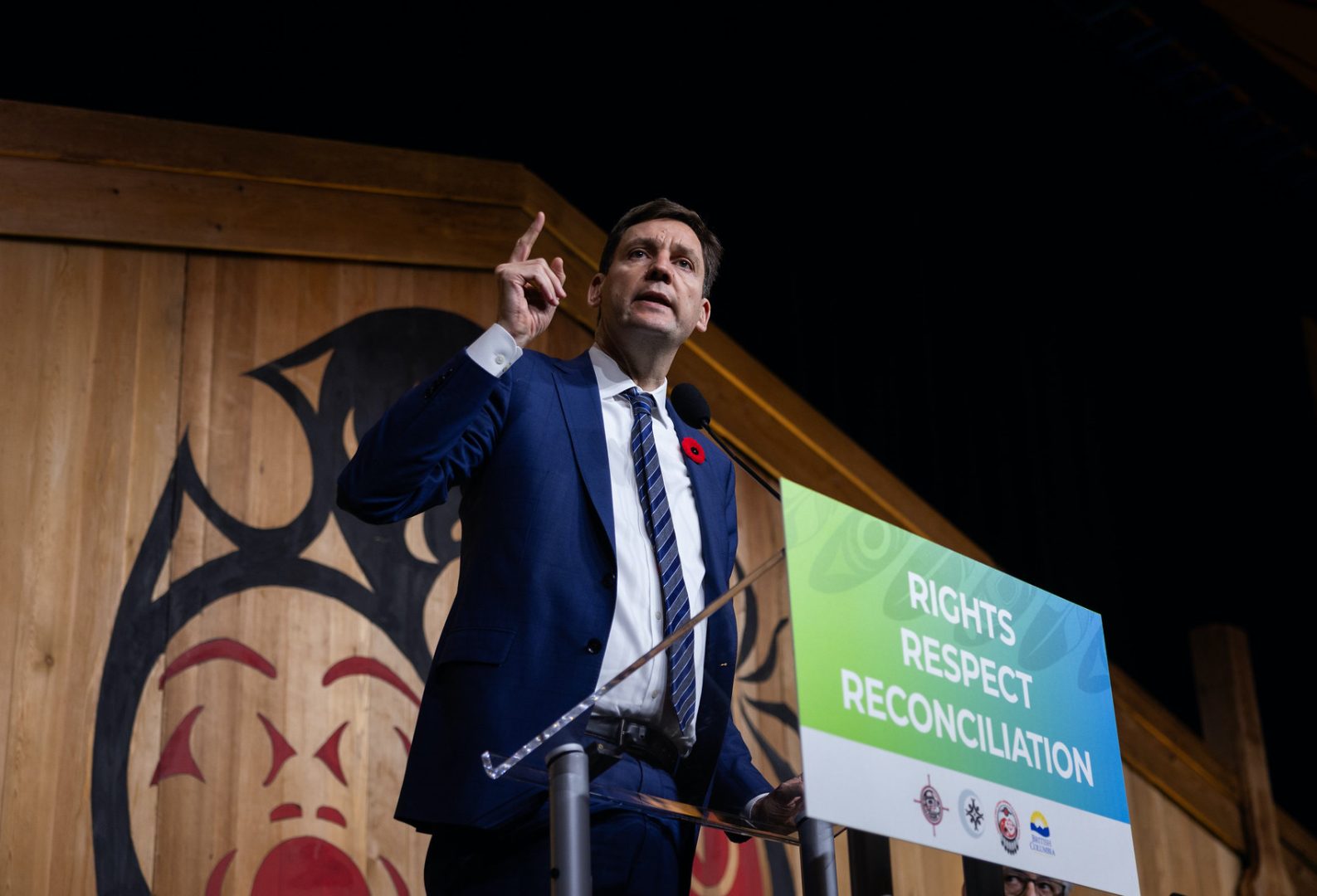
“When a government quietly experiments with new forms of “co-title” and “consent-based decision-making” over big chunks of B.C…. it’s playing Jenga with the legal foundation of our economy.”
—Chris Gardner
A recent letter to David Eby, his cabinet and the business community from Brixton Metals should send a chill down the spine of anyone who cares about jobs, investment, and fairness in British Columbia.
Over the past 15 years, Brixton has invested more than $70 million in its Thorn critical minerals project in northwest B.C. They followed the rules, worked with local communities, paid fees to the Tahltan and B.C. governments, and worked with local First Nations.
Now, in a new land-use planning process rolled out by the provincial government, they find themselves shut out of meaningful consultation, relegated to a single workshop dominated by conservation groups – treated as a problem, not a partner or investor.
This is the real-world face of the Tahltan–B.C. Planning Project, a land-use process in northwest B.C. that could hand effective control over an area larger than Portugal to a small Indigenous group. The area in question covers roughly 11 per cent of the province’s land mass, yet the NDP government says the process will be wrapped up within the year, essentially in secret.
Proponents like Brixton are only now being invited at the eleventh hour, years after the planning process began, when “material decisions may already have been negotiated” between B.C. and the Tahltan.
“Rather than meaningfully engaged,” industry partners feel as if they are “being managed” and “being informed about decision that appeared to have already been made,” stated the Brixton letter, which was also cc’d to several BC Conservative Opposition critics.
Think about the message that sends to investors and the wider community.
“There is an inherent bias in having an interested party – the Tahltan Nation, which is directly involved in several mining projects in the area – co‐develop a plan that will govern third‐party interests.”
Brixton Metals Corporation legal counsel
You can spend a decade and tens of millions of dollars only to discover that the rules are being rewritten and a land-use deal struck without your knowledge or participation. Your access can simply be cut off or your tenure ended. This is expropriation by stealth, dressed up as reconciliation and embedded in an ill-conceived, rushed and unbalanced land-use planning exercise.
Brixton also noted concerns with the potential conflict of interest of the benefiting Indigenous body acting as land-use decision maker, as well as the need for “impartial provincial leadership.”
“There is an inherent bias in having an interested party – the Tahltan Nation, which is directly involved in several mining projects in the area – co‐develop a plan that will govern third‐party interests,” wrote Brixton. “Failure to address this perceived [partiality] undermines democratic principles and erodes investor confidence.”
Secret agenda creates uncertainty, risks prosperity
Unfortunately, this is not a one-off example.
This ‘consultation process’ is part of a wider pattern of how the Eby government is handling Indigenous reconciliation and shifting land-use decision-making on Crown land.
Premier Eby is hiding his “land back” agenda for Indigenous ownership, as he did with the Haida Gwaii land title agreement, the proposed amendments to the Land Act, the shíshálh Nation land use agreement, and more.
When a government quietly experiments with new forms of “co-title” and “consent-based decision-making” over big chunks of B.C., without any meaningful public engagement, it isn’t tinkering at the margins. It’s playing Jenga with the legal foundation of our economy, and our prosperity will inevitably collapse.
This is all part of the confusion created by the BC NDP and the complete lack of transparency in its reconciliation strategy.
As a result of Eby’s reckless agenda, all B.C. laws must now be brought into compliance with the United Nations Declaration on the Rights of Indigenous Peoples (UNDRIP). No other jurisdiction outside of Canada has seen fit to subjugate its legal system to a non-binding UN resolution.
“This is expropriation by stealth, dressed up as reconciliation and embedded in an ill-conceived, rushed and unbalanced land-use planning exercise.”
As we saw just before Christmas, courts are now reading B.C. statutes through this cracked lens, and the result is an erosion of private property and other rights for landowners. The separate Cowichan Tribes v. Canada title ruling was a warning shot that even long-standing private titles to land will now be questioned. Far from being open for business, B.C. risks becoming essentially un-investable, and potentially ungovernable.
First Nations can and should benefit from responsible resource development – and many already are, with jobs, contracts, revenue-sharing, and ownership stakes in projects. But it’s wrong for Eby to use that goal as cover for his secretive game-plan to rewrite who controls and effectively governs huge swaths of Crown land, and in the process put private property rights at risk. And it’s disingenuous to do it without any straight talk with British Columbians.
Time to hit ‘pause’ on reconciliation strategy
A prudent government would hit pause, engage the public, and set a clear land-use framework rooted in modern treaties that protect private property and deliver certainty.
Instead, Premier David Eby is charging ahead with closed-door, land-use deals that are penalizing people and businesses who have been acting in good faith, causing widespread uncertainty across our economy, and instilling unnecessary animosity within communities. This strategy has sidelined the public – along with MLAs in Victoria – and is putting B.C.’s economic future in peril.
The stakes are enormous.
In B.C., 95 per cent of all land is owned by the government. As the Brixton case in the northwest shows, Eby is now tinkering with 11 per cent of the province. But what the NDP is planning will effectively cede control over much of the province to Indigenous groups, driven by a radical “land-back” ideology that voters weren’t informed of and didn’t mandate.
What the NDP is planning will effectively cede control over much of the province to Indigenous groups.
Eby must immediately repeal the Declaration on the Rights of Indigenous Peoples Act (DRIPA) and its requirement that all B.C. laws be brought into compliance and be interpreted by the courts in a manner consistent with UNDRIP.
Reconciliation cannot rest on vague language that allows the courts to decide on B.C.’s future case-by-case. It must be rooted in clear laws that protect everyone’s rights, while fostering the certainty that workers, entrepreneurs, small business owners, investors, homeowners, and local governments need to plan for the future.
Government must abandon its opaque “co-development” processes where one party is both negotiator and beneficiary. All framework, Aboriginal title and land-use agreements, internal mandates, and draft plans affecting Crown and private land must be made public. The legislature should be recalled to honestly and fully debate these changes in the open.
British Columbia must develop economic prosperity for everyone. Secrecy, legal ambiguity, and quiet giveaways of property rights and Crown land control are not reconciliation – this must end.