

After foisting a snap election onto British Columbians, the NDP have suddenly found themselves on the wrong end of a volatile election narrative they likely didn’t envision. The Conservatives, for all their oft-bickering factions and recent unhinged leadership issues, have rebounded from the brink of dissolution, united around a popular new leader, and are surging in the polls.
David Eby thought he would break the opposition by calling a snap election, taking advantage of the scandal-ridden reign of former leader Kerry-Lynne Findlay. Then, Findlay suddenly resigned on Sept. 20. And instead of altering his plan, Eby forged ahead and called it two days later.
Eby had almost certainly hoped to campaign against Trump, timing the election with the United States midterms, using Findlay as the stand-in. Having already given the orders to prepare for the “Eby or Trump” election, Findlay’s departure came too late to stop what he’d already set in motion.
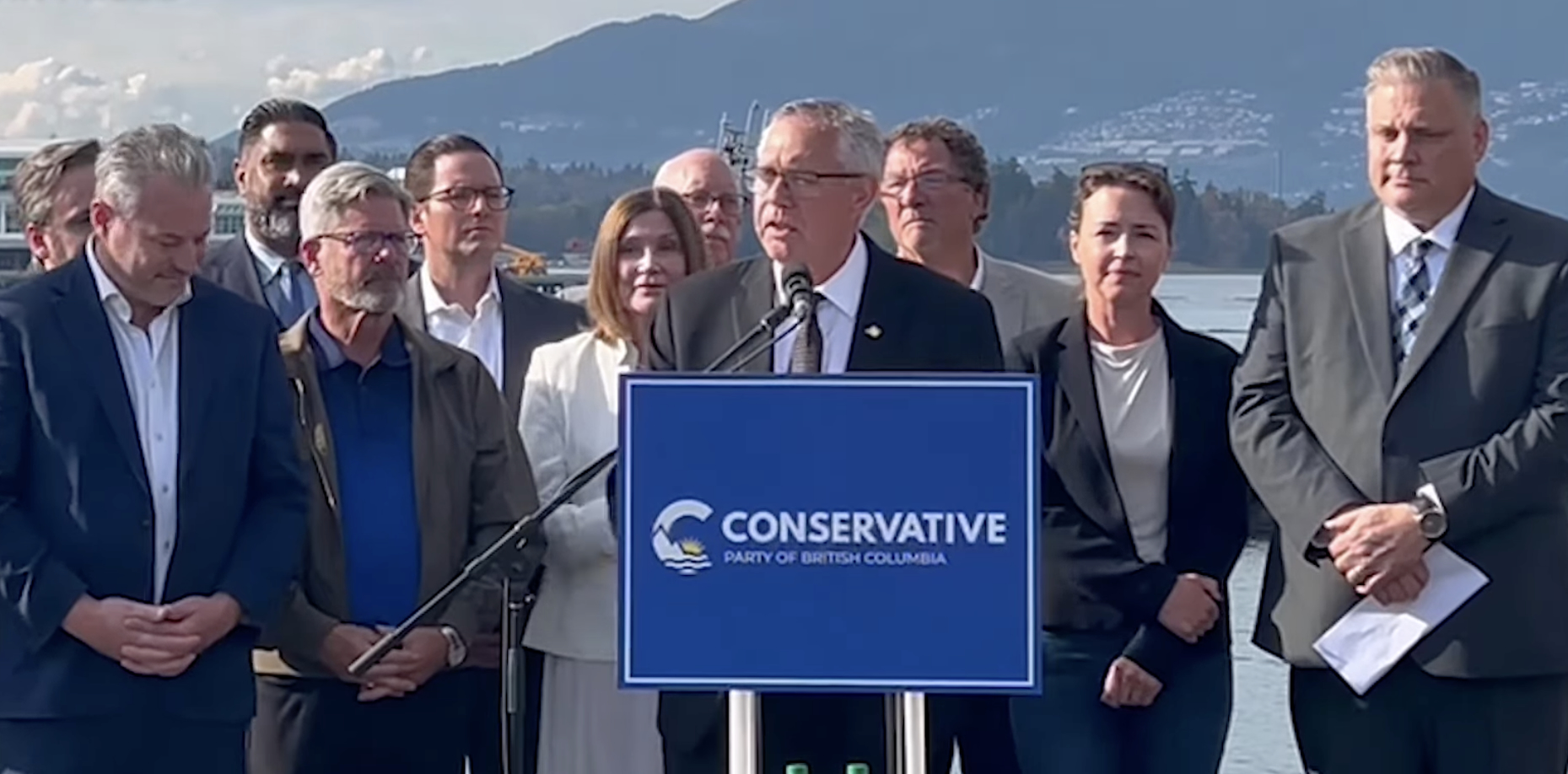
Suddenly Eby found himself up against a rapidly recalibrated and re-energized Conservative Party led by interim leader Lorne Doerkson. Weeks of MLA departures under Findlay had ended, with all the rebel legislators welcomed back into the Conservative caucus fold.
Only former Conservative MLA Elenore Sturko declined an offer from Doerkson to return caucus. Sturko stayed put with CentreBC and was appointed leader by the party’s board. Independent MLAs Dallas Brodie and Tara Armstrong burned too many bridges to get invited back into the tent, and two other former Conservative MLAs are facing criminal charges and won’t be running under the party banner, if at all.
Doerkson’s leadership pulls ranks together
At Doerkson’s first press conference as interim leader, MLAs who briefly fled Findlay’s leadership to the promise of a more moderate, upstart CentreBC party, found themselves back standing shoulder-to-shoulder with colleagues and former Conservative leadership candidates Caroline Elliott and Iain Black. Party unity, barely existent two weeks ago, was now stronger than it had been for months, maybe ever.
Longtime party staff whom Findlay dismissed, unofficially or officially, were back in, including former executive director Angelo Isidorou and others who were put to work, trying to recruit and vet candidates enough to fill 93 ridings.
Interim leader Doerkson is perhaps ideal to lead such a formerly fractious party. In a social media post, former BC Liberal leader Christy Clark attended a BC Lions game with both Doerkson and Saskatchewan Premier Scott Moe, calling them “plain spoken, dependable men who do what they say they’ll do.”
A long-time deputy speaker of the legislature, Doerkson is unusually well-regarded by his peers on both sides of the chamber. When he speaks up in question period, his messages are short, direct and focussed on his constituents’s issues in Cariboo-Chilcotin, without being overly partisan. He is a small-c conservative, a former newspaper publisher and businessmen, who raised a family with his wife in the northern interior. His core priorities seem to be resource development, housing, healthcare, fiscal prudence, and affordability are perhaps ideal for a party containing so many different flavours of conservatism.
Well-liked within the caucus, Doerkson has been described as hard-working and sensible, which may explain the speed at which the formerly-fractious right has rallied around him. There seems no bad blood with Doerkson to poison the well, so to speak.
Repealing DRIPA a common goal
Longtime conservative operators like Katy Merrifield, Poilievre’s former communications director who helped lead Elliott’s leadership campaign, is now managing the BC Conservative election campaign. Also joining her is Dimitri Pantazopoulos, Iain Black’s former leadership campaign manager and a respected pollster.
Ben Woodfinden, Pierre Poilievre’s former communications director and high-profile conservative writer, has also returned after working on Elliott’s campaign in the spring. He is not alone. Conservatives from across Canada are either paying attention or getting actively involved in the quest to unseat the BC NDP.
While many Findlay supporters have publicly condemned her exit, and pledged their loyalty to the right-wing dissident OneBC Party, many others have accepted Findlay’s failures as leader and called for unity to defeat the NDP.
All five former leadership candidates pledged to repeal DRIPA, one of the most contentious pieces of legislation in living memory. That has become a raison d’etre of sorts for the BC Conservatives. While Eby has attacked this position as part of a “culture war,” the Conservatives themselves have connected DRIPA to private property and home values. A recent survey revealed a majority of British Columbians polled are concerned about the effects of DRIPA and other fallout from how the NDP are implementing reconciliation.
Regarding culture wars, Eby has repeatedly accused the Conservatives of being toadies for Donald Trump, but Doerkson has parried early by condemning the American president. Overall, the NDP campaign has focused on Trump at a time when polling repeatedly suggests that voters are overwhelmingly concerned with economic issues like the cost of living.
Conservative support up, but voters don’t know Doerkson
Polling has also found that voters are decidedly irritated with Eby for calling an early election.
Angus Reid released the results of an online survey conducted between September 22 and 24, finding support for the Conservatives sitting at 43 percent, and the new Democrats at 35 percent. Many on the right celebrated these results, justifiably, but there are caveats.
Of those polled, 40 per cent said they knew too little about Doerkson, something the Conservatives will need to work hard to remedy, while 56 per cent considered the Conservatives unready to govern.
That same survey also found that Eby’s preferred Trump issue is not a top priority, with healthcare, public safety, and the cost of living ranking well ahead. The NDP cannot escape the fact that they have governed B.C. since 2017. At one point, they will have to own the fact of shuttering ERs, the rise in drug abuse and resulting disorder, the fact that most young people have little hope of owning property.
B.C. can once again be a case study for a conservative movement containing so many different currents and factions, although no one’s quite sure what that coalition will look like in government under a revived party and after so many years in opposition.
For both the Conservatives and the public at-large, Lorne Doerkson is still relatively unknown, but given the state of the province, he may be the biggest breath of fresh air on offer.