

Even as atmospheric rivers rumble off the Pacific, dousing B.C.’s south coast with rain and dumping snow on the mountains, thoughts of the coming wildfire season are not far away.
Knowing that the five worst wildfire years in the province’s history have been in the last decade, fire-wary residents of rural B.C.are already preparing for whatever may come. That means replacing flammable building materials, scooping leaves from rain gutters, trimming brush, and clearing undergrowth.
Officially, there’s no panic.
The B.C. Wildfire Service will release its seasonal forecast in April. The snowpack as of early March is close to normal. But it’s not evenly spread, and it’s been a warm winter and early spring in much of the province. Temperatures this month are already hitting the high teens and low twenties in the Okanagan.
“It’s hard to truly understand the impact of climate change,” says Jonathan Boyd, a hydrologist at the River Forecast Centre in Victoria. “You have to look at every weather station. Certainly, what we’ve seen is that winters every year seem to be warmer than normal, because they’re just being compared to this normal period from 1991 to 2020. But if you compare it to the historical record, at a lot of the weather stations, the winters are much warmer than normal.”
This winter, much of the precipitation in the lower elevations fell as rain, leaving bare hillsides behind.
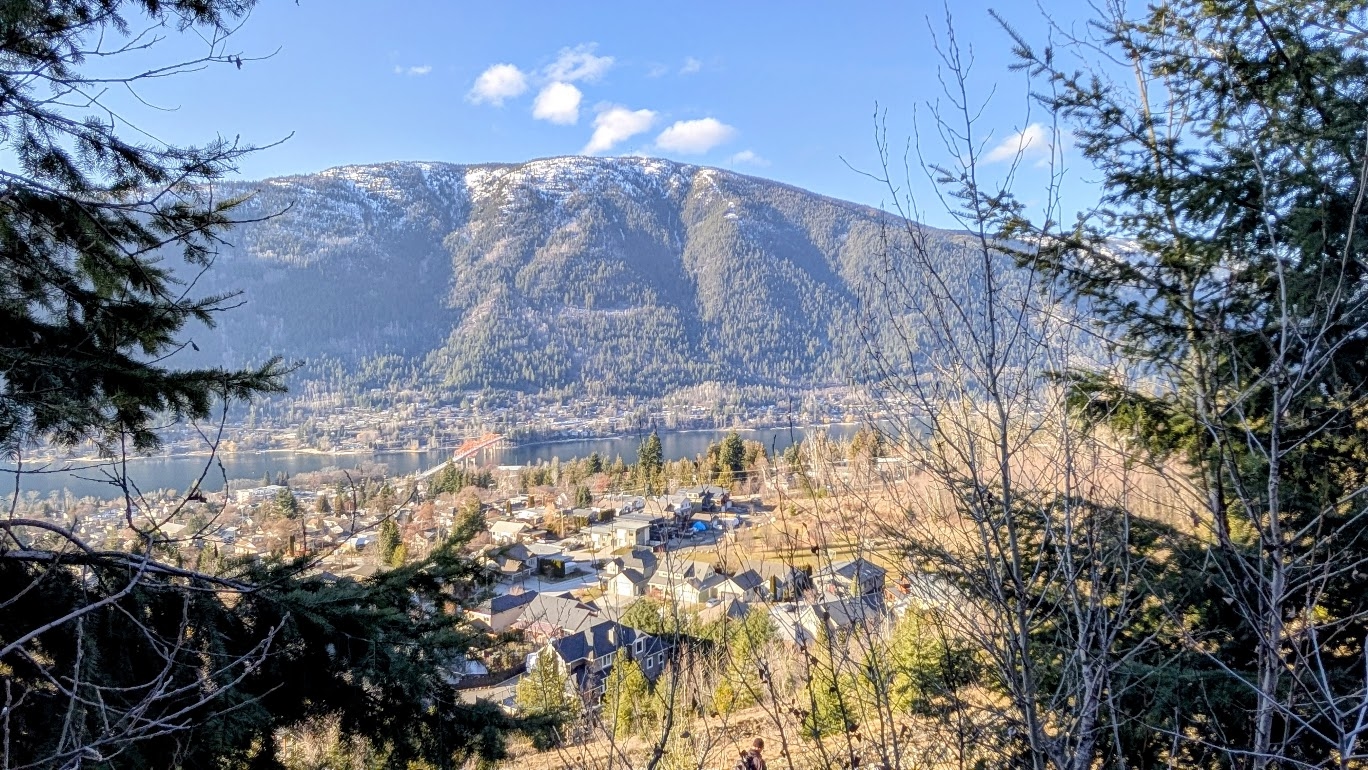
In Queens Bay, on the forested mountainside above Kootenay Lake, John Betts is already readying his firefighting gear.
“It’s so weather dependent,” says Betts, a veteran silviculturist and longtime executive director of the Western Forest Contractors Association.
He’s spent about $60,000 dollars over the years retrofitting and equipping his property with reservoirs, pumps, and firehoses. He and his neighbours have taken a basic firefighting course. This year, with bare slopes all around them, some are renewing their certification. They’re also setting up a reservoir to protect their local church.
“It looks like conditions may well be setting themselves up for a very dry year, which will have an effect on the seedlings,” says Betts.
‘It’s just a powder keg’
In Chilliwack, wildfire ecologist Robert Gray looks at the big picture and the long-term. He’s reviewing the historical weather data and wildfire statistics and issuing ominous warnings, as he has for more than 20 years, since he served on a provincial commission that said B.C. forests are full of fuel.
“It’s just a powder keg,” he says. “It’s just ready for the right conditions, and, you know, the kind of fire behaviour we’ve seen, we don’t have systems in place that can handle it…. because we’ve created a condition where fires are going to be explosive, and then there are the consequences on our environment, society and human health and everything else out there.”
Gray is sharply critical of B.C.’s forest management: “We’ve got overstocked landscapes. We continue to plant ridiculous numbers of trees, which with these conditions we’re talking about, are ripe for soil moisture deficits and droughts.”
He has little faith that the provincial government will do the extensive work of raking, thinning, clearing, and prescribed burning needed to reduce the fuel load and fire risk on the landscape.
“We don’t have a system in place, funding-wise or program-wise, where we have clear outcomes that are attainable. We’re just throwing money at something with no clear objectives.”
Wildfire catastrophe still a fresh memory in Okanagan
In the Okanagan, meanwhile, memories are still fresh of the catastrophic 2023 wildfire season, the worst in B.C.’s, and Canada’s, history. Fires in West Kelowna, Kelowna, and Lake Country ripped through homes and businesses, causing $480 million in insured losses, according to the Insurance Bureau of Canada.
Farther east, in the Shuswap Lake area, hundreds of homes were destroyed at a cost of $240 million. Volunteer firefighters were so hard-pressed that some even lost their own homes to fire as they battled blazes nearby.
Three years later, the Okanagan-Similkameen region is still suffering through a prolonged drought.
“A lot of the ground is very dry,” says Erick Thompson, the senior manager of communications and engagement for the Regional District of Okanagan-Similkameen.
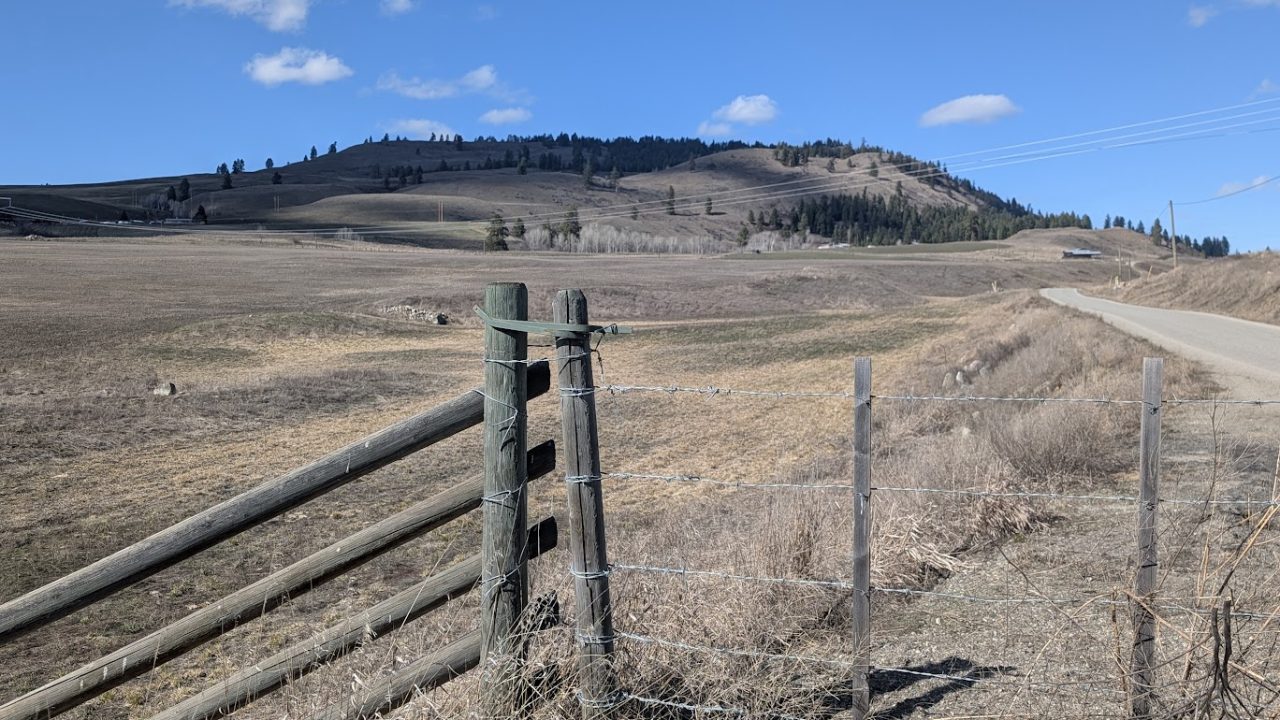
There’s snow in the mountains, but the region’s snowpack is below normal, and “when you get past the surface, it’s very dry, so what happens with that is it’s not necessarily soaking up any water.”
In Victoria, the B.C. government is under pressure to fund both fire suppression and prevention, while struggling with a projected $13-billion deficit.
In February, the FireSmart program, which issues grants to communities for fireproofing, ran out of money, causing alarm among municipal leaders.
In this year’s budget, the government came up with a $15 million top-up, but the rules have changed. There’s what officials are calling a “closed intake” now. The grants will no longer be issued on a first come/first served basis. It will be a competitive process, with funding awarded on the basis of merit and priority. And the community grants will no longer go towards fuel management, although the work will continue through other programs.
Forests minister preparing for worst, hoping for best
There’s no indication of any cuts in funding for wildfire prevention, says John Paolozzi, a communications officer with the BC Wildfire Service in Nelson. As for firefighting, he says “wildfire suppression costs vary significantly from year to year and cannot be predicted with certainty, as they depend on seasonal and climatic conditions.”
Wildfire fighting costs over the past decade have ranged from a low of about $200 million in 2020 to a high of nearly $1.1 billion in 2023.
Meanwhile, Forests Minister Ravi Parmar says the government is reviewing 2400 applications for 600 firefighting positions. He says he’s hoping for the best but preparing for the worst.
Weather in May and June will determine fire season
It’s still early, and the weather in May and June will likely determine how the fire season unfolds. The River Forecast Centre in Victoria says as of Mar. 2, the snowpack in B.C. is 91 per cent of normal, higher than this time last year.
But, of course, there are huge regional variations and cycles in this province of cities and hamlets, rainforests and desert, mountains and valleys. As British Columbians have learned, big snowpacks can cause flooding later if the spring brings prolonged heat and the snow melts too quickly. Then the floodwaters may feed vegetation, which dries out and becomes potential fuel for wildfires.
The snowpack in B.C. was above normal in 2018 in much of the interior. In some areas, such as Grand Forks, there was serious flooding later as snowmelt flowed down the mountains. Then, as the waters receded and temperatures rose across the province, it became the worst wildfire year on record at the time.
Then there was the apocalyptic year of 2021; a heat dome in late June left more than 600 people dead and sparked fires such as the one that leveled the community of Lytton in the Fraser Canyon. Less than five months later, there was flooding in southern B.C. caused by an atmospheric river that devastated some of the same parched landscapes that had just been hit by fire.
This year, the snowpack is bigger than normal in the north. Some areas, such as the Peace River region, which suffered snow drought and several brutal fire seasons in recent years, are in much better shape.
On the south coast, particularly on Vancouver Island, there’s been a lower-than-normal snowpack this year, although the March storms may provide some relief. Meanwhile, in the southern interior, you could, for most of this winter, drive hundreds of kilometers through bare valley bottoms and hillsides all the way from the Fraser Valley to the Alberta border.
There’s snow, in some cases lots of it, but it’s at high elevations, in the alpine and subalpine. You have to look up, way up, to see it.
High snowpack, dry valley bottoms
“This is the first year that individual members of the River Forecast Centre have been contacted by members of the public, particularly in the west Kootenay, saying that the snow bulletin must be wrong, because there’s no snow in the Kootenay,” says Jonathan Boyd.
Take the case of the Redfish weather station high in the Selkirk Mountains above Kootenay Lake. The snowpack above 2000 meters is at near-record levels. But downstream, where Redfish Creek runs into the west arm of Kootenay Lake, it’s been free of snow and ice most of the winter. In Nelson, the snowpack is the lowest it’s been in 80 years of record-keeping.
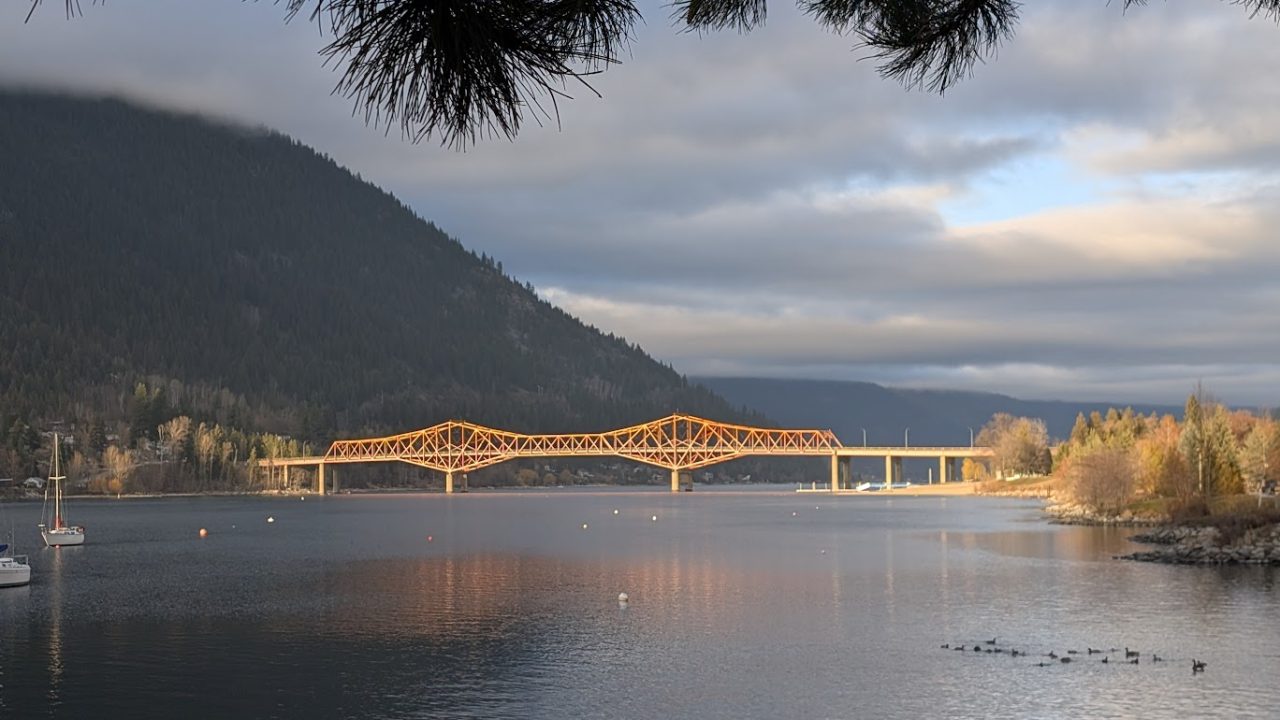
The fact that there’s a snowpack high in the mountains of the southern interior may offer some comfort to the forested communities and valley bottoms below, but again, it depends on the weather and the melting conditions. A cool, wet spring is preferable; warm weather can cause problems.
The record-setting wildfire conditions of 2023 were triggered by the extreme heat in May, says Boyd. “In particular, May and June can have huge impacts, and we do get the warm weather. It’s just that when we have warm weather in March, the overnight lows are still fairly low. The days aren’t long enough. The sun angle isn’t quite as intense.”
So, it’s a waiting game, part of the daily reality of living and working in rural B.C., with an eye on the sky and an ear to the weather forecasts.
‘Fires can move fast’
In Squamish, Jordan Tesluk works as a forest safety auditor, trying to ensure silviculturists and loggers make it home safely at the end of the day.
“I think the immediate concerns are the same as anybody that lives out there.” he says. “If you’re out there working in the woods, there’s a chance that you get cut off or overtaken by fire. That’s a reality. It hasn’t happened, but it could happen. Fires can move fast. You look at Lytton – people barely had enough time to get out. One couple didn’t. Forestry workers, they’re more likely to be down a dead end somewhere, so they’re more vulnerable.”
Tesluk says there’s nothing that forestry workers can do to prepare. “You train your workers. You make people aware. You do everything you can to mitigate risks and have very struct rules around smoking and open fires…
“If you’re out there working in the woods, you have to do a fire watch. You have to have people that stay behind every day for several hours to watch, to make sure that your work hasn’t created fire. But there’s not really a whole lot that they can do. I think workers incrementally adjust. Like people have been learning new tricks, you know.
“Living in a tent, what can you do to make that a little bit more tolerable? Yeah, there’s not much, right?”