

US donors fund Coastal First Nations, ‘tar sands campaign,’ BC oil tanker ban
For more than 20 years, wealthy American donors have funded anti-resource development activism in B.C., from anti-logging and anti-pipeline protests, to the oil tanker ban, to helping launch the “Tar Sands Campaign” and create the Coastal First Nations group. All the while, U.S. domestic oil production and exports to international markets have expanded and flourished.
It started in the 1990s, before the newly formed David Suzuki Foundation began receiving significant support from U.S. charitable foundations for environmental work in B.C.
Suzuki, his wife and former Harvard professor Tara Cullis, and Miles Richardson started the foundation in 1990 to protect the coast from further logging. Richardson was then president of the Council of the Haida Nation. His term was noted for introducing Haida passports to symbolize the island group’s asserted status as an independent nation.
By 2001, the organization Turning Point was established, co-chaired by Art Sterritt, a Gitga’at carver from Hartley Bay, who also served as executive director when the name changed to the current Coastal First Nations–Great Bear Initiative. The early Turning Point meetings produced a protocol document intended to stop logging on the north coast, “affirming that ecosystem-based management should guide land-use planning,” according to Suzuki Foundation records. The terms “ecosystem-based management” and “land-use planning” have since evolved into today’s large-scale shift in governance of Crown land and marine areas from government to Indigenous groups.
The Turning Point document was presented to Gordon Wilson, the last forests minister under the Glen Clark and Ujjal Dosanjh BC NDP governments. Dosanjh signed an initial agreement to protect a portion of the coastal forest. But before Wilson could act on the agreement, the NDP lost its majority and was reduced to two East Vancouver seats in the biggest landslide loss in provincial history.
In April 2002, then-premier Gordon Campbell sealed the deal, signing a “general protocol agreement on land-use planning and interim measures” with eight coastal First Nations, and another with 65 representatives from environmental groups, the logging industry, tourism operators and First Nations, recalled Suzuki Foundation co-founder, Cullis, in an article published on the organization’s website in 2020.
From there, “land-use planning” and “marine planning” gained life through the B.C. Liberal government’s 16-year run, with Christy Clark strengthening protections a year before her administration fell in 2017.
Twenty-some years later, David Eby’s BC NDP government has amplified these land and marine-planning concepts in a multitude of “shared decision-making” and “co-governance” or “co-management” agreements. These land-use planning deals are largely out-of-court settlements with what government lawyers concede is the strongest Indigenous rights and title claimants in each overlapping area.
Two of the most significant of these deals negotiated by the province on Eby’s watch are the not-yet-finalized “foundation agreement” with the Tahltan Nation, covering 11 per cent of the province and most of the trillion-dollar metal mining region of the northwest, and the Rising Tide land title agreement with the Haida, which granted Aboriginal title to the entire one million-hectare archipelago.
‘We wanted people to hear the name and be mad as hell’
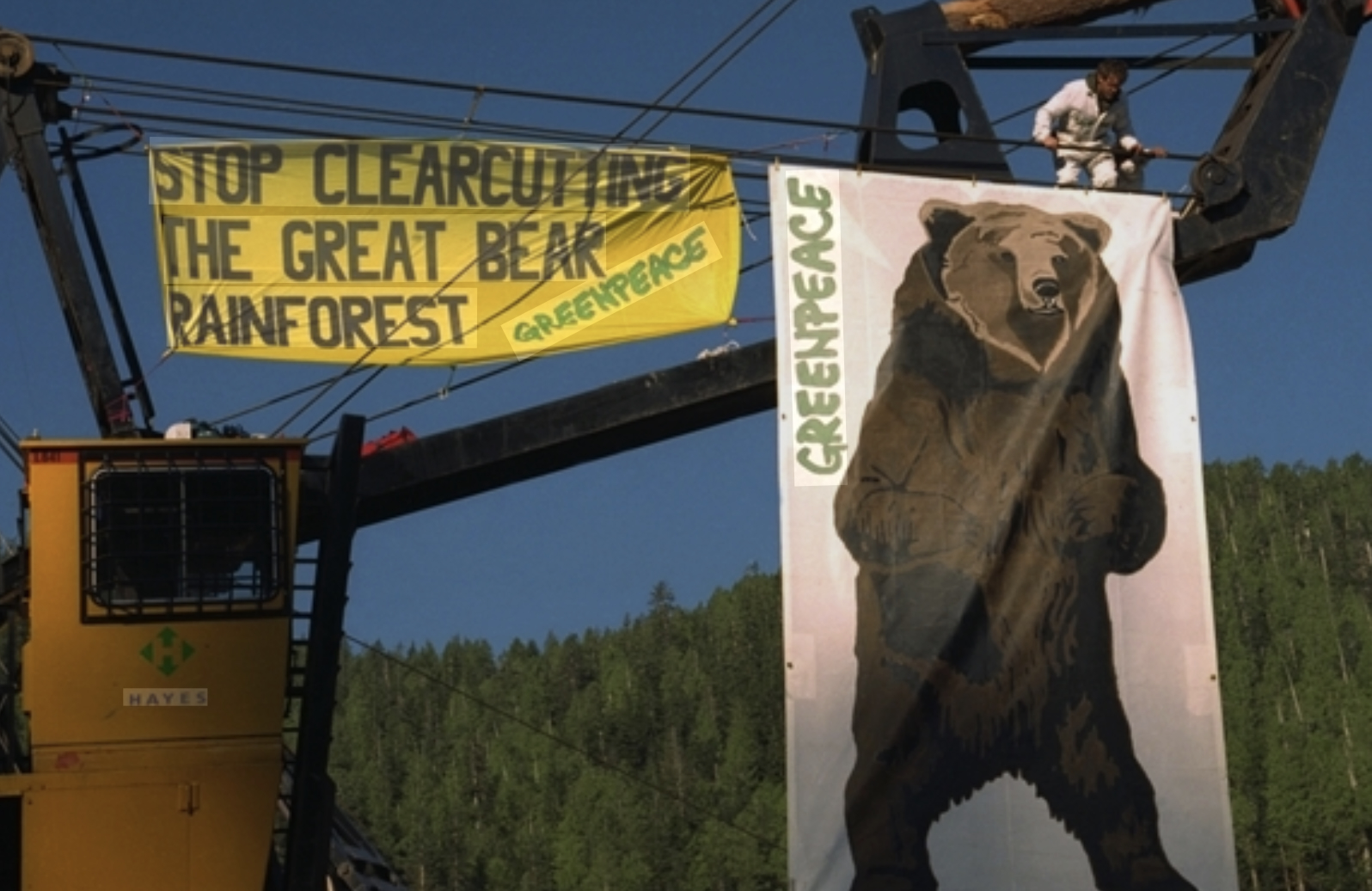
Back in the early days of Turning Point, American donors funded activist operations to stop logging on the north coast. Former Greenpeace activist Tzeporah Berman is a key figure in the environmental movement’s transition from anti-logging to anti-oil. Berman says in her 2011 memoir she and fellow protesters met at a “cheap Italian restaurant” in San Francisco in the 1990s and brainstormed the name Great Bear Rainforest to gain public support for their anti-logging protest.
“We needed a name that immediately defined the [coastal forest] area. We wanted people to hear the name and be mad as hell that anybody could turn it into toilet paper,” Berman recounted, according to political journalist Vaughn Palmer in his Vancouver Sun column in 2016, after protesters achieved their goal and the region was declared a protected zone.
A year earlier, then-premier Christy Clark declared the Great Bear Rainforest a protected area following years of work by former forests minister Pat Bell, Turning Point executive director, Sterritt, and mid-coast tribal council leader, Dallas Smith, to make the area B.C.’s second Indigenous-governed region. A year later, Great Bear Rainforest was marked with a visit from Prince William and Catherine, the Duchess of Cambridge.
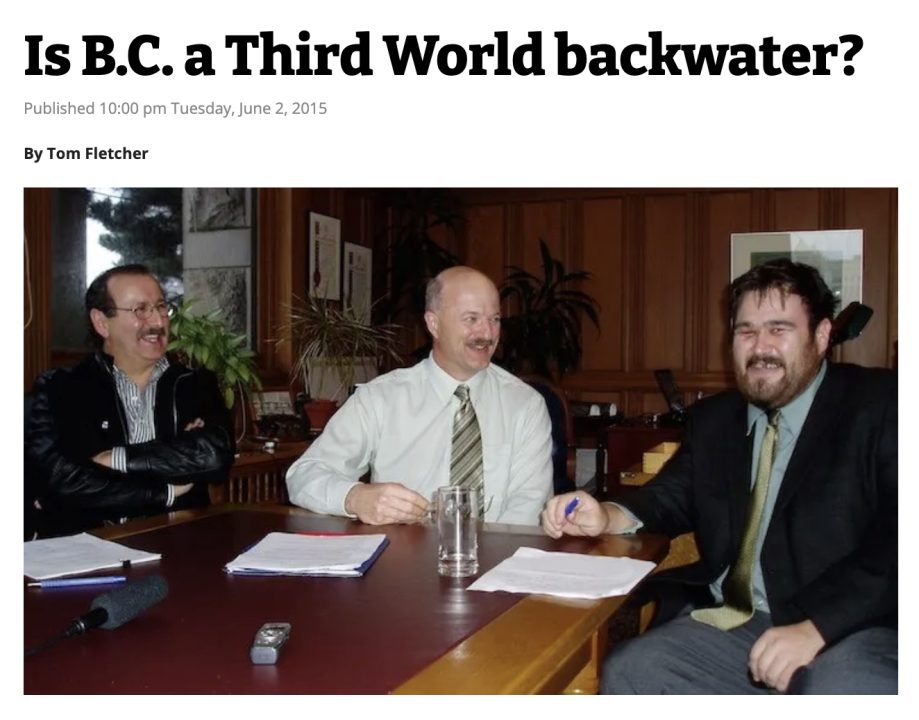
Read Tom Fletcher’s story from 2015 about the “colonial primitive backwater in need of ‘saving.'”
The only Indigenous-governed area prior to the Great Bear declaration was Gwaii Haanas, 138 islands on the south end of Haida Gwaii, which was declared a national park under Haida control in 1988. Today, no physical passports are required, but access is strictly controlled in what is now an official park and UNESCO heritage site.
Fast-forward to 2025 when the governments of David Eby and Prime Minister Mark Carney joined forces to hand over more governance control to Haida, recognizing aboriginal title to the group’s entire asserted, if legally unproven, asserted territorial claim across the 200-island Haida Gwaii archipelago. Both governments then also accompanied Haida in BC Supreme Court to secure constitutional protection over the aboriginal title to prevent future governments from undoing the agreement.
American money backed Great Bear Rainforest anti-logging initiative
Tides Canada and its long-time executive director Ross McMillan were among those instrumental in knitting together environmental charities, Indigenous leaders and governments. McMillan made one appearance at the B.C. legislature in 2015, when the Great Bear Rainforest agreement was declared complete with a Hall of Honour ceremony and plans for a Royal Visit began.
McMillan was also there on Jan. 22, 2007 when the Canadian government came on board with the Great Bear Rainforest land-use agreement. Then-federal environment minister John Baird announced in Vancouver that Ottawa’s share of a $120 million Great Bear Rainforest fund would be $30 million. Billed as the biggest conservation agreement in Canadian history, it included Haida Gwaii and the ocean in between, a total area twice as large as Vancouver Island. The ocean region is now known as the Great Bear Sea.
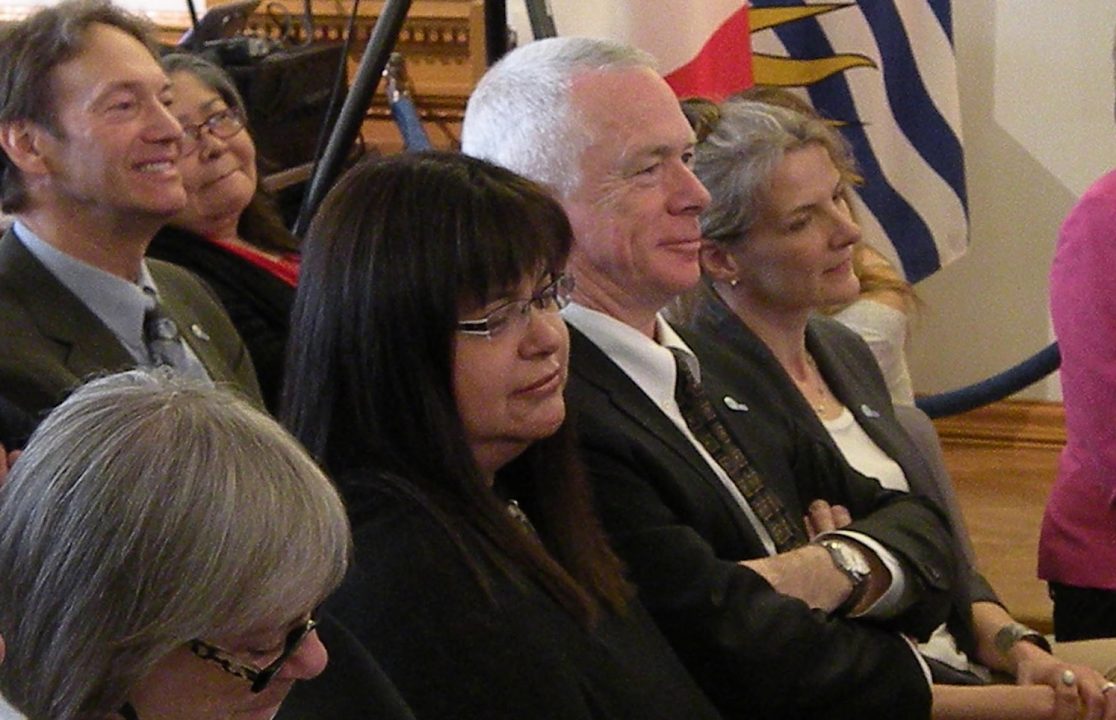
In 2007, McMillan described how Tides Canada led Canadian fundraising, and credited the “alternative vision” crafted by B.C. First Nations to protect the coastal forest. He thanked the U.S. charitable foundations that pitched in to make the Great Bear Rainforest happen: the David and Lucille Packard Foundation, the Wilberforce Foundation, the William and Flora Hewlett Foundation, the Rockefeller Brothers Fund and the Gordon and Betty Moore Foundation.
Then-Haida Nation president Guujaw was in attendance, along with Sterritt, who credited the U.S. Nature Conservancy with bringing the U.S. foundations on board.
“The Nature Conservancy was just an absolute fundraising machine,” Sterritt said.
Critics panned involvement of outside environmental interests
Advocates, elected officials and many in the public praised the land protection achievements, but the “ecosystem-based management” concept wasn’t unanimously embraced by the forest industry.
“My personal view is that it’s a bunch of bullshit and it’s not going to work,” Mill and Timber Products Ltd. vice president, David Gray, told the Truck Loggers Association convention in Vancouver in 2007.
And there were many detractors of the final Great Bear Rainforest agreement. Some environmentalists outside the negotiations complained the deal didn’t protect enough land, while other critics panned it for ignoring the interests of local residents, Indigenous and non-Indigenous alike.
“These environmentalists are happy to make a park in somebody else’s backyard,” north coast Indigenous lawyer and author, Calvin Helin, reportedly told the Financial Post. “Well, screw that. You are talking about people where there is 90 per cent unemployment.”
Some local governments were also unimpressed.
“…non-aboriginal forestry dependent communities reacted strongly to news that ENGOs and forestry companies were negotiating about resource management on public lands,” wrote Justin Page in his 2000 doctoral thesis on the Great Bear Rainforest investment negotiations. “From the perspective of some non-aboriginal community members, local workers’ interests have not been protected by the agreement, and have been ignored in the interests of achieving First Nations’ cooperation.”
US funding shifts to oil production protests
In the years since, the public face of the B.C. environmental movement included Berman for Greenpeace and later co-founder of ForestEthics; Sierra Club organizer and later ForestEthics program director, Merran Smith, who has since moved to Clean Energy Canada and SFU; and George Heyman for Sierra Club BC, who later served as BC NDP environment minister from 2017 to 2024.
Berman is best known for pivoting the environmental protest away from the forests to Canadian oilfields. After organizing the Clayoquot Sound “war in the woods” logging protests in 1993, she led San Francisco-based ForestEthics through a transition to Stand.Earth that took aim at the Alberta “tar sands.” In 2016, Berman was named to then-Alberta premier Rachel Notley’s climate change advisory group, famously describing the oil sands as “Mordor,” a reference to J.R.R. Tolkien’s fictional land of fire and death.
The change of focus for protesters coincided with an unprecedented surge of charitable foundation funding towards new activism targets, namely oil extraction and production. Around this time, there were some dramatic advances in the oil sector south of the border: the U.S. pioneered hydraulic fracturing for shale oil and gas, it lifted its oil export ban in 2015, and rose to become the world’s largest exporter of oil, including Alberta oil processed in Gulf Coast refineries.
Filmmaker follows money from fish farms to Coastal First Nations to ‘tar sands’
Vivian Krause is an activist-turned-documentary filmmaker who spent a decade working in charities in Guatemala and Indonesia before returning to B.C. to work in the growing salmon farming sector. Initially drawn to the industry by coastal chiefs who saw it as an economic lifeline, Krause soon uncovered what she said were exaggerated claims by the Suzuki Foundation of farmed salmon contamination.
Digging into the contamination claim, Krause discovered flimsy research, along with funding connections to another de-marketing push called the “Tar Sands Campaign.” She recounts her findings and the paper trail of U.S. charitable tax documents she followed in her 2019 documentary, “Over a Barrel.”
“Back in 2004, the Rockefeller Brothers Fund paid $1 million for the capital to create Coastal First Nations and another $100,000 for startup,” Krause relates. Coastal First Nations was formed with the help of the Suzuki Foundation and while some government officials and media reports present the group a representative of coastal First Nations, it has deep ties to environmental groups and counts just eight of the 70 or so Indigenous communities on the B.C. coast among its members.
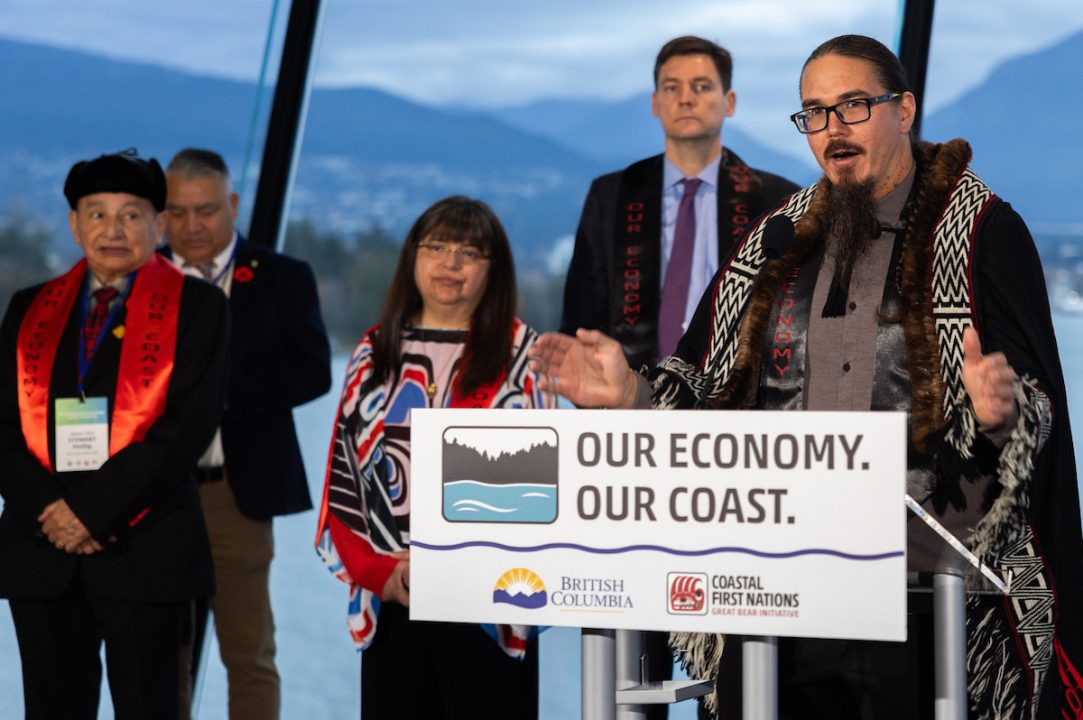
Around that time, the spin-off non-profit Coast Economic Development Society was incorporated, and after a three-year dormancy, got financial backing from multiple donors, including the Gordon and Betty Moore Foundation, which funded the campaign against salmon farming, and has since poured about $270 million into activism in Canada, according to Krause.
Of that $270 million, $30 million went to Coastal First Nations with $85 million diverted to Tides Canada, including one grant in 2015 for $10 million “to strengthen the durability of protection measures for wild salmon ecosystems of British Columbia.”
Coast Economic Development is now one of two related societies focused on environmental conservation financing for First Nations on the coast, managing annual revenue and an endowment fund totalling $120 million thanks to private donor funding, and subsidies from the B.C. and federal governments. Enduring private donors continue to be the Moore, Hewlett and Packard foundations, Tides Canada (MakeWay), the Nature Conservancy (Nature United) and the Rockefeller Brothers Fund.
Similar to other donors, the Rockefeller Brothers’ funding spanned activist causes from the Coastal First Nations start-up, to launching the tar sands campaign, which ultimately drew condemnation from a myriad of celebrities and corporations around the globe based on massively overstating the oil production as “the most destructive project on earth.”
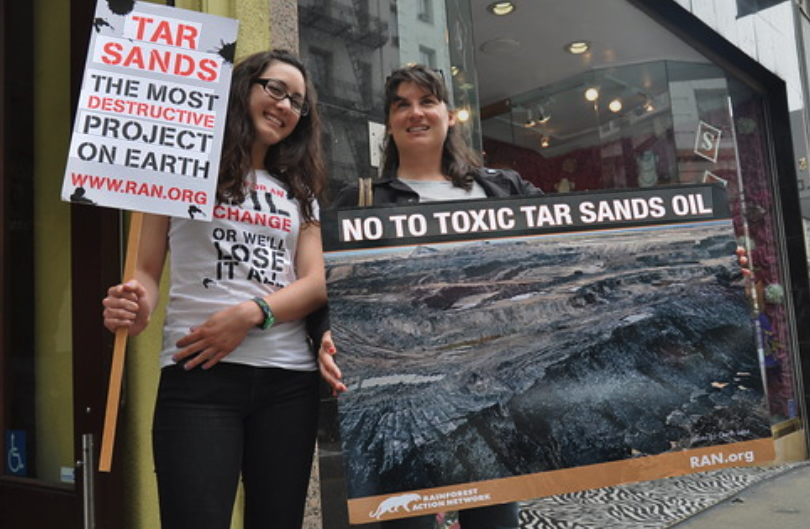
“It’s so hypocritical that the funders from the United States who made their fortune on oil and gas now send money into Canada to shut down oil and gas,” said Conservative MP and environment critic, Ellis Ross, a former Haisla Nation chief councillor, in Krause’ documentary.
A fierce proponent of using natural resource development to create community prosperity, Ross was instrumental in inking a myriad of deals across the sectors during his time as chief councillor, including with LNG Canada, that have brought financial sustainability to his Kitimaat village community.
“The more sickening thing for me is that these people who oppose development in Canada truly believe they win when they defeat a project,” Ross told the Financial Post in 2017. “Actually, you don’t win. It’s just that the United States buys the Canadian product at a discount and sells it on the international market.”
The Rockefeller brothers built a billion-dollar empire from Standard Oil, which lined California coastal areas with oil derricks in the early days of the industry. Fellow donor Gordon Moore founded the San Francisco-based computer chip maker Intel Corporation and dedicated much of his fortune to salmon conservation, first in Russia, then elsewhere. He died in 2023 and his foundation now focuses on broader marine preservation efforts in B.C.
Key activist joins Trudeau government, approves marine plans and tanker ban
Another significant funder that turned up in Krause’ investigation was the U.S. Tides Foundation. Started in San Francisco in 1976 by philanthropist Drummond Pike, the foundation was intended to connect wealthy donors with environmental and social justice causes while allowing donors to remain anonymous. Tides Canada was a branch plant of the American foundation, and became a flow-through funding source for the Great Bear Rainforest deal advocated by the B.C. government with the help of ForestEthics, the Sierra Club and Greenpeace.
The World Wildlife Fund Canada also appeared on Krause’s radar during the tenure of Gerald Butts, who headed the organization prior to his term as chief-of-staff to former prime minister Justin Trudeau. Butts was CEO of World Wildlife Fund Canada from 2008 to 2012 and remains a director of the global parent organization. Krause’s documents show that one of the last grants received from the Moore Foundation by World Wildlife Fund Canada while Butts was president was $2 million “specifically for achieving the conditions and relationships conducive to marine planning.”
Butts left WWF Canada to work on Trudeau’s Liberal leadership, then his 2015 election campaign, before serving in the prime minister’s office. One of the Trudeau government’s first acts was to approve marine plans that had been developed with the Great Bear Rainforest funding, environmentalists’ input, and published by the B.C. government for North Vancouver Island, Central Coast, Haida Gwaii and North Coast.
A federal ban on marine transportation in the north and central coast soon followed.
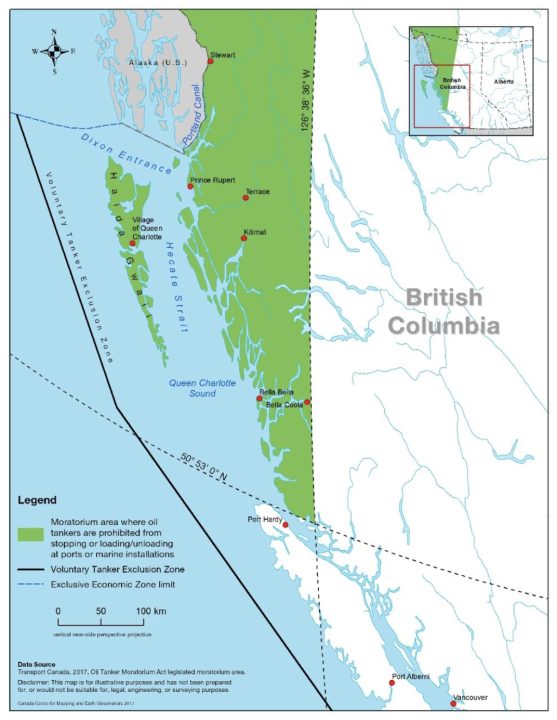
Bill C-48, referred to as the tanker ban, is actually an export ban that stops tankers from docking or loading Canadian crude oil for foreign markets. Meanwhile, crude oil tankers from Valdez, Alaska continue to sail west of Haida Gwaii to reach refineries in Washington and California, since oil was discovered in Prudhoe Bay in 1968 and an Alaska pipeline was completed in 1977.
Philanthropic funding redirects to oil tanker ban, marine protected areas
Today the Moore Foundation continues to support Coastal First Nations projects that aim to restrict shipping and other industry-related activities on the B.C. coast.
“Through direct grants, the Gordon and Betty Moore Foundation has supported Coastal First Nations communities to develop marine-use plans, which have been used at different negotiation tables with the provincial and federal governments,” according to Meaghan Calcari Campbell, who has been working with the foundation for more than 16 years and serves as program officer for its marine conservation initiative.
Tides Canada has since re-branded as MakeWay but continues to channel funds to B.C. Indigenous communities. The current listing of MakeWay projects is mostly for small initiatives, furthering its stated goal to “implement sustainable land and water governance models, and the UN Declaration on the Rights of Indigenous Peoples.”
The largest grant so far in 2026 is for $665,585 to its own MakeWay Charitable Society “to support the Pathways to Conservation project, in particular, work around communications for Marine Protected Areas.”
One of MakeWay’s most significant supporters is MacKenzie Scott, the ex-wife of Amazon founder Jeff Bezos, who has emerged as one of the largest philanthropic donors in the world. Scott has donated a total of $86 million to MakeWay since 2022.
Coastal First Nations, meanwhile, continues to represent 10 per cent of Indigenous communities on the B.C. coast. Supported by a staff of 32 people, the group advertises multiple partnerships with environmental groups and appears integrally reliant on U.S. donors for operations. Privately funded marine planning flowing from this and other activist groups is now integrated into federal and provincial programs, as it was on land with the Great Bear Rainforest.
Accordingly, the B.C. government recently renamed the central coast marine region Mia-yaltwa Ha’lidzogm hoon to mark “the beginning of a new and exciting chapter” for B.C.’s central coast.
“Mia-yaltwa Ha’lidzogm hoon is part of the Great Bear Sea Project Finance for Permanence initiative supporting Indigenous-led stewardship on the West Coast of Canada,” states the press release.