

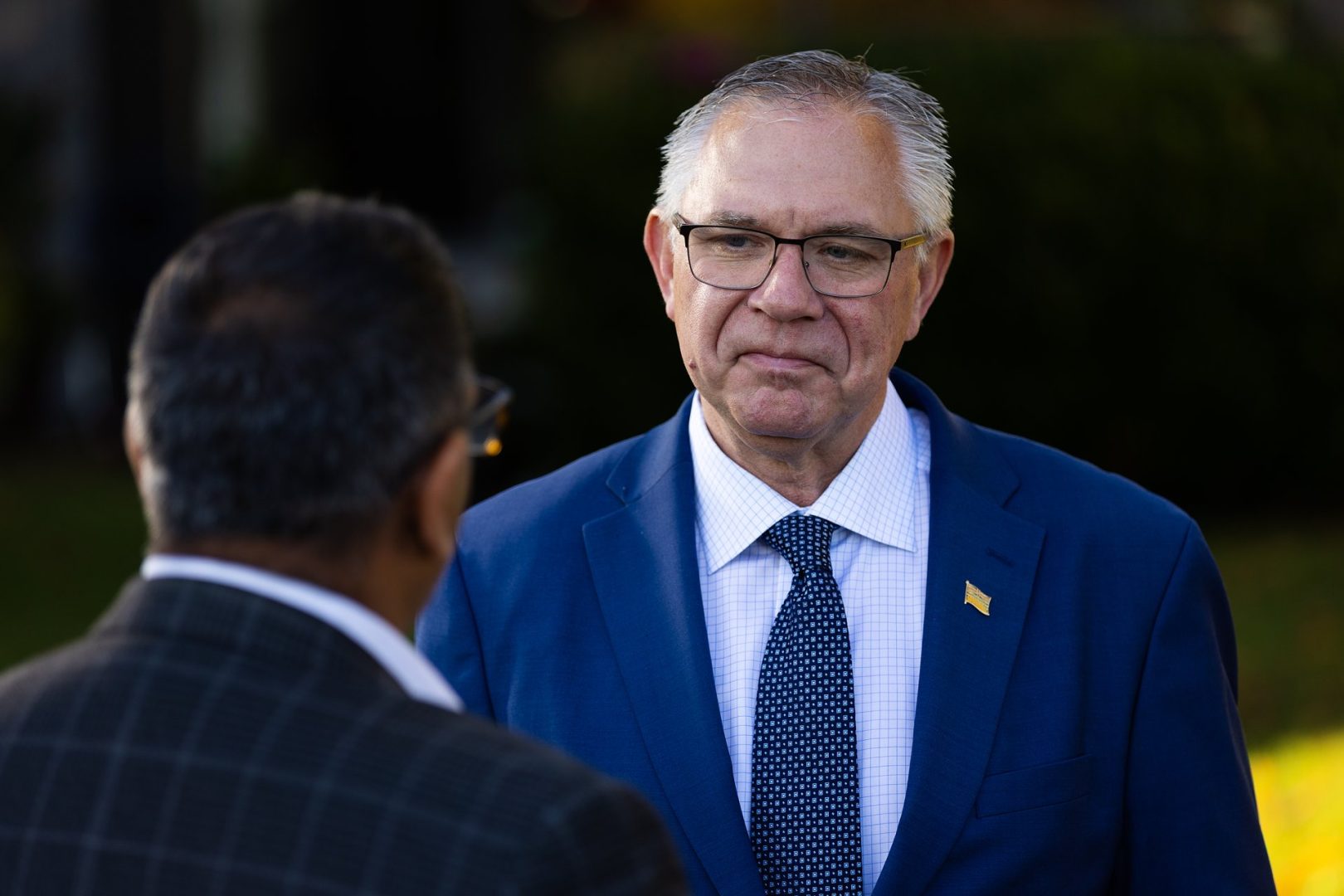
When David Eby called a snap election, he clearly hoped he would face a BC Conservative Party in disarray, beset by infighting and focused on niche ‘culture war’ issues. Instead, the party quickly appointed Lorne Doerkson, and with caucus already lined up behind him, the various conservative factions followed.
The Conservative campaign mostly focused on the economy, healthcare, and public safety. Throughout, the party was remarkably united. While competing camps within the party appear to have been at least temporarily mollified by the extraordinary victory at the ballot box, beneath the surface, they are still pulling in several directions.
The battle over so-called ‘culture war’ issues continues to percolate with ultra-progressive ideology in schools, sex-rejecting medical procedures for children, and race and identity-based policies in the public sector. And the previous government’s quest to “decolonize” B.C. and implement its radical “land back” agenda has thrown property rights into question and all but paralyzed land use decision-making.
In B.C.’s conservative membership base, several broad camps can be generalized. On one side, there are people who advocate for free enterprise, fiscal conservatism and oppose some of the more extreme manifestations of so-called ‘woke’ policy (such as the distribution of “safe supply” drugs, the revolving door of justice for repeat offenders), but on the whole actually accept most core doctrines. Elenore Sturko, the former Conservative MLA who stepped down as leader of CentreBC, exemplifies this camp.
In the middle are people who may reject the more extreme doctrines but believe focussing on them is a distraction best dealt with by civil society, and that politicians should focus on “pocketbook” issues and avoid getting caught in the culture war weeds. Peter Milobar, former BC Conservative leadership candidate, turned-CentreBC leader, turned-BC Conservative MLA (keep up, people!) represents this group.
On the other side, there are people who reject all the dogmatic doctrines implemented by the BC NDP and think culture war issues should be a central political focus. They see them as the sources of both cultural division and the economic, fiscal, and public safety problems facing B.C. OneBC leader Dallas Brodie, defeated in last month’s election, represented this group. These are the so-called “extremists” the NDP highlighted during both the 2024 and 2026 elections.
I fall squarely into the “extremist” camp.
Tinkering with the details won’t
I voted for Kerry-Lynne Findlay to lead the BC Conservatives because I wanted a leader who would get to the root of these problems, not play whack-a-mole with the destructive policies progressive ideologies will continually spawn. I also wanted a leader who could communicate why these issues are important, realize they need to meet a skeptical public where they are at, and propose solutions that work for all British Columbians. And while Findlay and Brodie accurately identified many problems, they clearly did not succeed in effectively communicating them, nor did they have the leadership skills necessary to hold their caucus together.
Doerkson, on the other hand, has done both. He has committed to repealing DRIPA, the Legal Professions Act, the Health Professions and Occupations Act, SOGI, and more, but without getting into a culture-war dust-up. Partly because he presents as a “grandfatherly figure” with a calm speaking style, and because, despite the public’s skepticism of “extremists” like Brodie and Findlay, the majority of people support pushing back against woke policies.
According to a 2024 Leger poll commissioned by the Fraser Institu, 86 per cent of B.C. parents think teachers should focus on teaching facts rather than opinions and 76 per cent think teachers should teach both sides of controversial issues or avoid them entirely. Eighty-one per cent think parents should have the option of opting kids out of controversial topics.
In another 2024 Leger poll, almost half of Canadians support banning gender reassignment surgeries and drugs for children and 68 per cent are against allowing athletes born male to compete in women’s sports. In a third Leger poll from 2024, 57 per cent of British Columbians believe “equity” shouldn’t be a factor in hiring.
On the United Nations Declaration on the Rights of Indigenous Peoples, a Research Co. poll in August of this year showed British Columbians support the UN resolution by a two-to-one margin, down from six-to-one in November of 2025. And a year after the BC Supreme Court Cowichan Tribes decision that found Aboriginal title on private fee simple land in Richmond, 70 per cent of British Columbians said property owners should be concerned, including 76 per cent of people over 55.
The new government will need to do more than tinker with policies. Failing to push back on the ideologies that underpin them will deal only with the symptoms, not the disease. The same problems will keep popping up, while solutions slip through our fingers. Most importantly, if we don’t reclaim the impartiality of our public institutions from the ‘progressive’ institutional capture they have undergone, they will continue to produce the same outcomes. I know, I used to be a B.C. civil servant.
Take the so-called “safe supply” policy of helping addicts by giving them free drugs, which BC Conservatives have promised to end. That program is based on the assumption that addiction is purely a function of trauma and oppression, in the face of which addicts are helpless victims forced to self-medicate with meth and fentanyl. Unless you reject this logic, providing a pure and reliable source of drugs makes sense. You can tinker with details or even cancel the program, but a bureaucracy with a woke operating system will keep giving us the same results in whatever policies that replace it.
Then there’s DRIPA. It’s underpinned by a guilt-ridden view of history that casts people as either victims or oppressors, with the modern descendants of oppressors carrying an inter-generational debt they must repay to the descendants of their ancestors’ victims. If you accept this train of thought, it’s impossible to mount a coherent defence of private property in Richmond (or anywhere else). You can cancel DRIPA, but until we stop ritualistically stating that our province is illegitimate and some of us are uninvited guests in the places we live, we can’t expect much progress on reconciliation, economic or otherwise.
The snap election call and Doerkson’s credibility caused BC Conservatives from all camps to rally together, with most of the more activist members and other supporters agreeing to keep their powder dry and stand behind the new leader. Only Brodie, Sturko and their parties refused to work together in a broader coalition. The result was a stunning victory for Doerkson and the Conservatives, and very few votes (and no seats) for OneBC and CentreBC.
With OneBC and CentreBC shut out of the legislature, it is clear the BC Conservatives are the only game in town for right-leaning politicians and activists who want to actually govern or influence policy. And people are starting to become more vocal about the directions they think the party should take.
Doerkson has said his top priorities are a review of the province’s finances and implementing a promised tax cut. This will likely please Jason Kenney, a former federal cabinet minister and premier of Alberta, who has encouraged the new government to take the election as a sign that “slopulist right influencers” are unpopular and should be ignored, and the focus should be on reforms that appeal to the mainstream.
Others are calling for Doerkson to engage with the culture war. Geoff Russ, a conservative commentator and close associate of newly elected MLAs Caroline Elliot and Margareta Dovgal, recommended purging the public sector of not only the NDP’s political appointees, but also the language, mandates, and training programs that embed the NDP’s identity politics-infused ideology into B.C.’s public service.
Duelling calls for action have also appeared in the National Post. Amy Hamm, a Vancouver nurse who has been hounded out of her profession and punished by its regulator for her outspoken opposition to gender ideology, encouraged Doerkson to “radically overhaul the culture of wokeness” in public institutions, protect women’s spaces in sports, and abolish the BC Human Rights Tribunal, among other things.
The Post’s Kelly McParland encouraged Doerkson to follow Kenney’s advice, suggesting that problems faced by Pierre Poillievre federally and Danielle Smith in Alberta stem from failures to reign in “hardliners.”
Doerkson was chosen unanimously by his caucus for a reason. He is respected by all camps. As Heather Maahs, Findlay’s hand-chosened interim leader, told Northern Beat, “when Kerry-Lynne resigned, there was only one choice for our caucus. It had to be Premier-designate Lorne.”
During the election, Doerkson came under fire for harbouring candidates with extreme views. Two, he fired immediately, but he resisted calls to dismiss others, including Maahs, for what he characterized was in some cases merely a “difference in opinion.” He refused to be drawn into litigating previous statements he deemed in the latter category.
Instead, he said, going forward all MLAs would be expected to treat everyone with respect and dignity. Which may reveal at least part of his strategy for keeping the alliance strong—so far, his top staffing choices are a mix of people associated with various conservative factions.
Whether their competing visions can remain harmonized will determine the party’s political future and B.C.’s long-term success.