

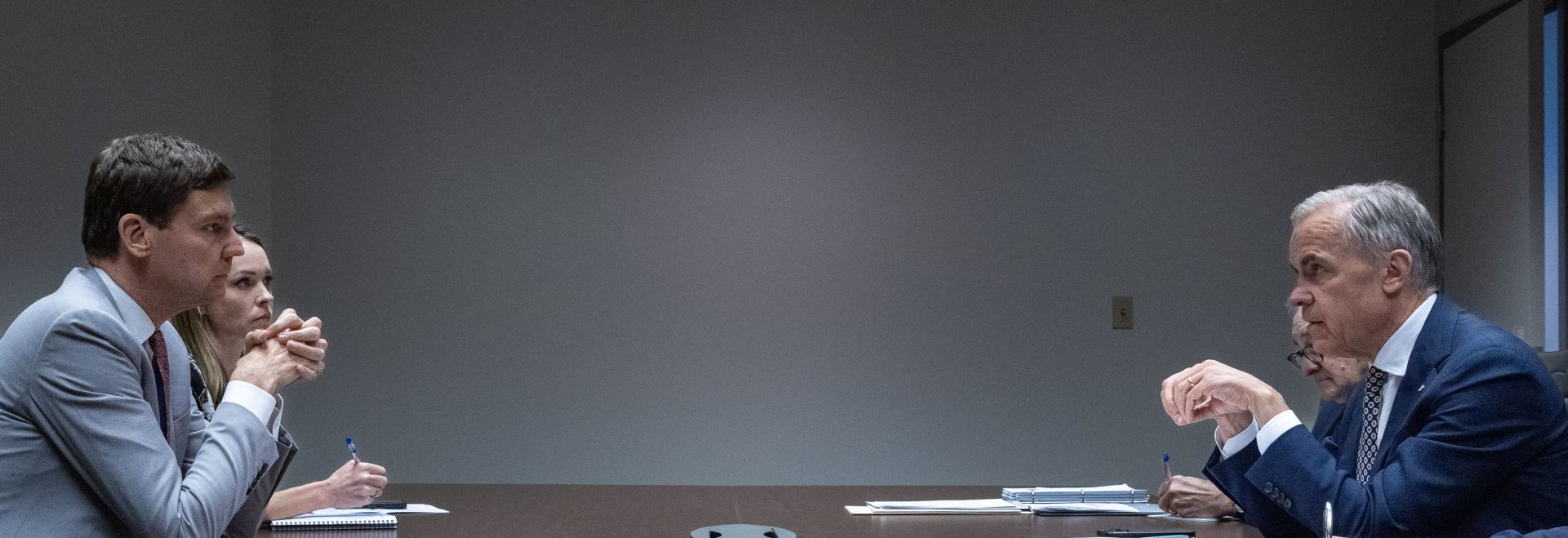
Secret agreement aims to recognize 11 per cent of province as Tahltan title
Without legislative approval or a public mandate, the BC NDP government—apparently enabled by the federal government—is negotiating a secret agreement with a tiny, remote Indigenous community that aims to recognize legally unproven Aboriginal title, transfer lands, share revenue and cede unprecdented governance authority over 11 per cent of the province in one of Canada’s most mineral-rich districts, containing an estimated value of known deposits exceeding C$1 trillion.
That’s trillion with a ‘t.’
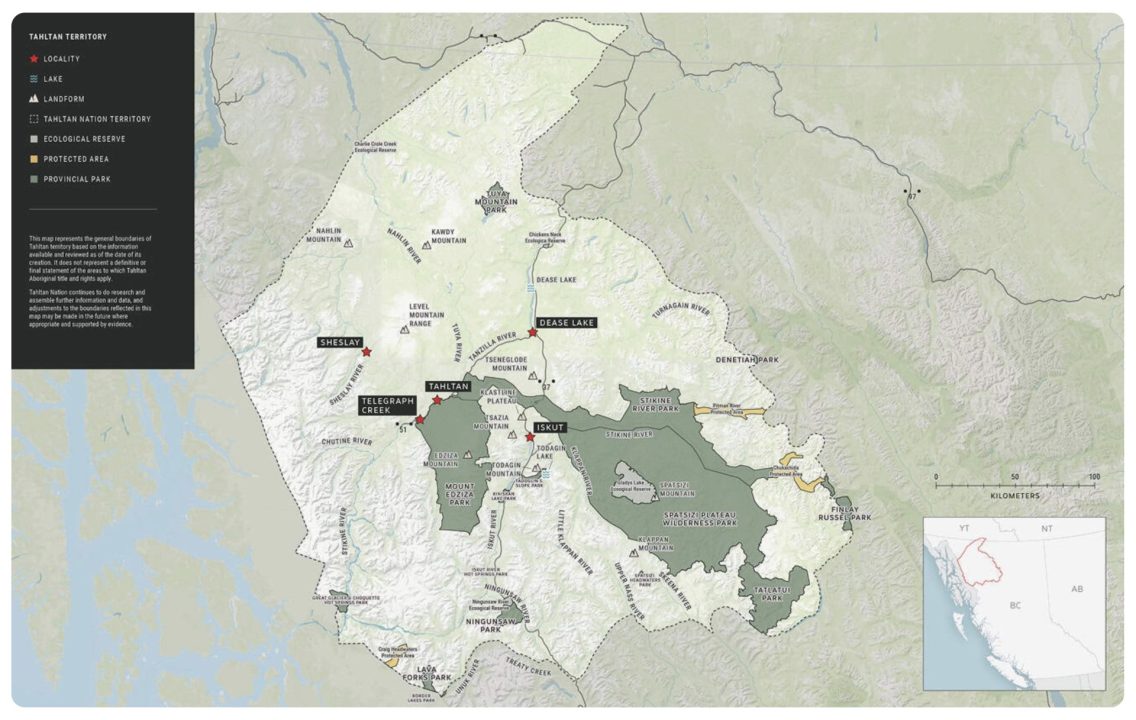
The end goal of the so-called “foundation agreement” is the recognition of Tahltan Nation rights and title over “Tahltan territory,” defined repeatedly as its entire legally unproven territorial claim spanning 96,000 square kilometres, according to public documents and other heavily redacted files obtained under a Freedom of Information request by the Public Land Use Society.
“The [foundation agreement] negotiations will be based upon recognition of Tahltan Aboriginal Title and Rights in Tahltan Territory,” reads a 2020 “shared prosperity agreement” that defines the geographic area as “the traditional territory identified by the Tahltan.”
Tahltan’s territorial claim spans an area larger than Portugal, including 70 per cent of the Golden Triangle, one of the richest mineral districts in Canada, which the BC Geological Survey estimated in 2021 to hold a total contained metal value of C$1.28 trillion.
In a statement last November after meeting with the premier, the Tahltan reaffirmed the scope and the need to finalize and implement the agreement “to embed consent-based and shared decision-making across all resource, land, and environmental governance systems, and to invest in housing, health, and essential services in our communities.”
The foundation agreement goals are also apparently shared by the federal government, according to an agreement announced on July 2 between Ottawa and B.C. that commits the Carney government to determining “mechanisms to participate in and contribute to the Tahltan Foundation Agreement… including through separate agreements or arrangements.”
Six years in the making, with no signed foundation agreement yet, the BC NDP government has already handed unprecedented jurisdiction to Tahltan with the province’s first consent-based decision-making agreements over approval of two multi-billion-dollar mining projects—Eskay Creek gold and silver mine and Red Chris gold and copper mine.
Consent-based decision-making under Section 7 of the Declaration on the Rights of indigenous Peoples Act (DRIPA) enables agreements requiring the consent of an Indigenous community for a project to proceed on its claimed territory, without any test of the claim in court. Withheld consent effectively amounts to a veto.
Government documents indicate these two consent-based decision-making deals are a template for more of the same and part of a wider “territory plan” that includes the building up and “recognition” of Tahltan’s government structures, improved shared revenue streams, “harmonization of the Parties’ respective jurisdictions and titles,” joint development of standards and processes regulating mining and natural resources, transfer of unspecified “agreed-to lands” related to reserve land expansion, natural resources and other tenures, all in pursuit of looks to be sovereign state-like powers.
Governments appear to accept Aboriginal title claim
Premier David Eby and his cabinet officials do not appear to have ever publicly acknowledged the foundation agreement prior to disclosure of the FOI documents by Public Land Use Society in May.
Eby was cagey when asked at a press conference on June 19 if his government intended to recognize Aboriginal title across the whole area Tahltan has asserted as its territory. The foundation agreement will “provide a structure for us moving forward, including in relation to crucial economic development in Tahltan territory,” he said, noting it contains “11 mines and more than $30 billion in potential investment.”
The premier did say he spoke with the Prime Minister, asking for federal support, “because of the very strong title claim that the Tahltan has, but also because of the incredible opportunity of collaboration here with Tahltan central government for all of us.”
It’s unclear on what evidence Eby based his assessment of a “very strong title claim” given Tahltan has not proven its claim in court, nor has it been settled by treaty. Under Canadian law, a strong claim may trigger duty-to-consult, but asserted territory does not equate to proven Aboriginal title. Section 35 of the Constitution and related case law, to which the government proports to adhere, requires a specific burden of proof for recognition of Aboriginal title, a test the Tahltan claim has not met.
When asked if the province would go a similar route with the Tahltan as it did with Haida, when the B.C. and federal governments recognized the entirety of the Haida asserted claim as Aboriginal title (including over private property), then, supported a court order that gave Haida title constitutional protection, the premier said the two situations were quite different.
However, in a July 2 press conference jointly hosted by Eby and Prime Minister Mark Carney, announcing a “cooperative prosperity agreement” between the two governments covering billions of dollars in multiple major projects, Canada commits to engaging with First Nations in the north west, including through “existing tripartite forums” and promises to support the Tahltan foundation agreement, possibly through a separate agreement. This could align with the process taken for Haida title. The federal government also announced $500 million in funding “to support” the Red Chris mine.
For Tahltan Central Government president Kerry Carlick, the question of recognition of title is not if, but when.
“We are moving forward rights and [recognition] of title. We do have jurisdiction in our territory. We are working towards that,” Carlick said at the same June 19 press event attended by the premier.
The Tahltan 1910 declaration lays it out: “We claim the sovereign right to all the country of our tribe — this country of ours which we have held intact from the encroachments of other tribes, from time immemorial, at the cost of our own blood.
The Tahltan Central Government is the administrative governing structure for the Tahltan and Iskut Indian bands representing two clans who together make up the Tahltan Nation with 636 people living on reserve and 2,444 registered members living elsewhere.
The most stubborn obstacle to securing recognition of Tahltan title may might not be having to prove it in court—both senior levels of government appear inexplicably eager to dispense with the constitutional standard of proof, as they did with Haida title. Nor have governments openly expressed any concern for the public interests or the usurping of its governance authority over Crown land. Rather, the biggest pushback may come from neighbouring Indigenous communities.
“The Tahltan Nation continues to affirm Aboriginal title over our vast territory, but we face serious challenges,” writes the Tahltan’s Carlick in a July 2025 social media post. “Overlapping territorial claims with neighbouring [First] Nations like the Kaska Dena and the Taku River Tlingit create real complications over who has the right to use, govern, and benefit from the land. These overlaps delay negotiations and threaten our ability to maintain full authority on our own territory.”
Tahltan ‘consent’ has netted billions, with no end in sight
Even without a finalized foundation agreement or formal recognition of Aboriginal title, the province has already funded the build-up of Tahltan government structures and ceded select Crown governance decision-making powers, netting the Tahltan a significant financial windfall.
A provincial grant of $20 million 2020 kicked off negotiations towards the foundation agreement, with another undisclosed amount of funding in the works. An unknown amount financed Tahltan’s efforts to lead land-use planning in the region (more on this later). But it is Tahltan’s “consent” to Skeena Resources and Newmont to operate the Eskay Creek and Red Chris mines respectively that is worth billions.
A Tahltan document dated May 22, 2026 referenced two streams of funding that will soon begin flowing into community coffers, one from the province, the other from mining proponent Newmont; both triggered by the band’s environmental approval of the $3-billion Red Chris gold and copper mine amendment to convert production from an open pit to block cave.
Details of these revenue agreements are not yet public, but the Eskay Creek gold and silver mine agreement with the Tahltan set a high bar.
Operated by Skeena Resources and jointly approved in January by the province and Tahltan, Eskay Creek is the first official test drive of the BC NDP government’s consent-based agreement (aka a veto) under DRIPA and will reportedly net the Tahltan about $2 billion in cash, jobs and other benefits over the 13-year life of the mine.
An additional agreement commits the province to sharing a reported 37.5 per cent of a portion of its mineral tax revenues with the Tahltan community, which could reach a billion, more or less, depending on the price of silver and gold, and the profitability of the mine.
Beyond that, Tahltan has asked for a slew of infrastructure investments from the federal government as “critical to maintaining the support of the Tahltan people” for resource development of critical minerals, according to pre-budget submissions to the House of Commons standing committee on Finance. The investments span transportation, emergency services, policing, health services, housing, ecological protection, and wildlife management.
On June 26, the federal government heeded that call with funding, possibly also triggered by approval of the Red Chris mine, when the Ministry of Mines and Resources announced $2 million “to co-develop, assess, and participate in decision-making on major critical mineral projects in Tahltan Territory.”
The Tahltan heralded the investment as a signal of confidence in its pursuit of its effective sovereignty. “It is about recognizing Tahltan Title and Rights, advancing consent-based decision-making, and ensuring the Tahltan Nation has a meaningful seat at the table when decisions are being made in Tahltan Territory,” according to a statement posted by the group. Arguably, if government will not allow development without Tahltan consent, Tahltan will essentially have the only “seat at the table.”
It’s unknown if Tahltan will pitch in to cover any infrastructure costs from their own revenue base or will contribute to costs of services community members access from other communities in the region.
Rural mayors, particularly in hub cities, have the long argued for a greater portion of regional resource development revenues to help defray costs of serving the sector and the surrounding communities that rely on their infrastructure, health care and other services. In 2023, northwest mayors finally succeeded in securing a commitment from the Eby government for $250 million, dispersed to 21 communities over five years. A zero-to-hero victory for the municipalities involved, but a drop in the bucket compared to B.C.’s estimated total municipal C$24 billion infrastructure deficit, and what has been earmarked for the Tahltan, which has no public service mandate, with a duty only to its extremely limited membership.
“I don’t want to take away from the fact that Skeena Resources willingly negotiated a deal with Tahltan who also willingly negotiated that deal with Skeena,” said Todd Stone, CEO of B.C.’s Association of Mineral Exploration, in an interview last January. “That is their right to do. But, more broadly speaking… it’s important for the province to retain its role as the final decision maker. And, by the way, the investment community around the world, it needs to see that certainty of authority.
“We believe that the ultimate, final authority on these decisions must rest with the Province of British Columbia, on behalf of the Crown and on behalf of the public interest,” Stone said.
Minister tells Opposition: ‘use Google’ to learn about government agreement
Not only is the B.C. government incrementally ceding authority to Tahltan over Crown interests, BC NDP officials are not telling British Columbians they’re doing it.
The province has never publicly announced the foundation agreement, nor disclosed its terms. Nor has it consulted voters on whether it should hand one small Indigenous community veto power and billions in revenue over Crown resources in a strategically vital part of the province. Consequently, the public remains in the dark about whether the deal has been finalized, whether it requires federal approval, or how far B.C. will go in transferring decision-making governance powers or enabling those by granting the Tahltan fully territorial Aboriginal title with the assistance of the federal government.
When Opposition critic Scott McInnis asked the minister of Indigenous Relations for details on the “secret” Tahltan foundation agreement in question period in May, Spencer Chandra Herbert haughtily dismissed the question.
“Well, I don’t know what the member’s definition of ‘secret’ is. If you typed in Google: ‘Tahltan-B.C. government,’ you could find your way to one press release, two press releases, three press releases, all around what the member is talking about.”
“This process has actually been underway for quite a number of years,” said Herbert. “So I would encourage the member to try to use Google more than to use conspiracy theory when it is public.”
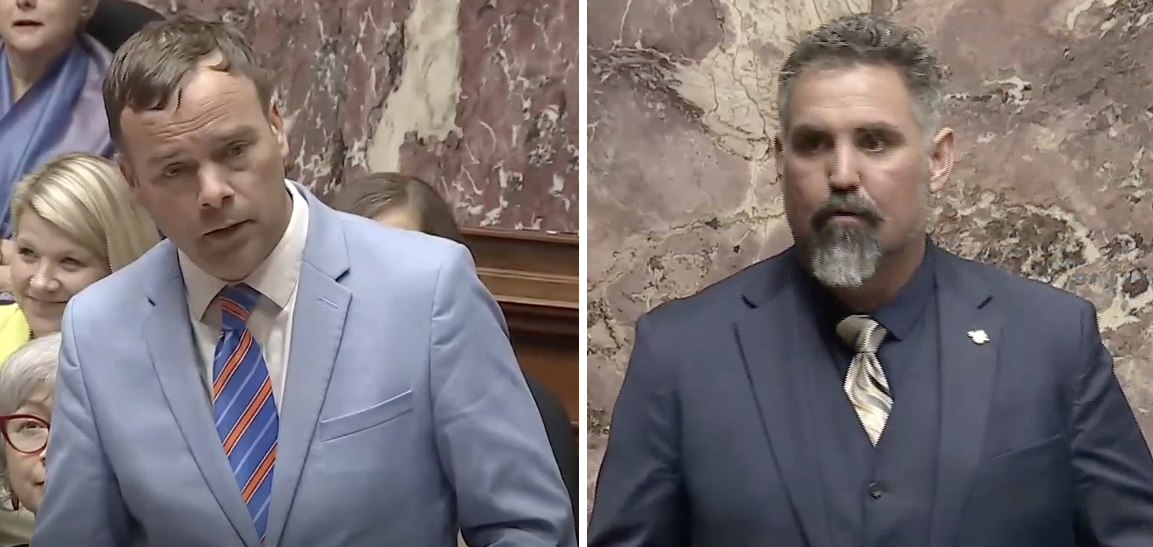
Watch the Question Period exchange in May between Indigenous Relations Minister Spencer Chandra Herbet and Opposition critic Scott McIsaac on the foundation agreement.
In fact, when asked to share the supposedly public agreement, Herbert’s ministry and government withheld more than 400 pages in its FOI disclosure to the Public Land Use Society, including all records directly concerning title recognition. And the very limited and glancing references to the foundation agreement that are publicly accessible took much more than a Google search to find.
The only direct public reference to the agreement was in backgrounder attached to a press release from five years ago that characterized the foundation agreement as a “reconciliation agreement… to define the parties’ intergovernmental partnership and transparent ‘rules of the road.’”
The press release introduced a “shared prosperity agreement” signed 15 months earlier between the BC government and Tahltan that laid out the framework for getting to a foundation agreement. The agreement itself was dated Mar. 30, 2020, mere days after COVID pandemic measures shut down the entire economy, when legislature was not sitting, and media, Opposition legislators, and the public’s attention were elsewhere.
There was zero public notice, with not even an Order in Council from Cabinet authorizing it, as might be expected (and publicly available) to approve negotiations of this magnitude. And the agreement itself instructs signatories to “avoid the need for Provincial legislative changes to be made to implement the Interim Strategies.”
Another related press release was posted on June 15, 2021, again without fanfare. This one did not note the foundation agreement at all except via a link back to the first release. It did however announce two significant goals that would become key in negotiations towards the foundation agreement, namely seeking agreements with Tahltan on the Eskay Creek gold and silver mine and the Red Chris mine. It also mentioned consent decision-making under Section 7 of the Declaration Act, but did not link to the Declaration or explain what consent-decision-making entails.
A second version of the so-called prosperity agreement, with an amendment dated July 28, 2021, does not appear to have been publicized in any way, with the first appearance captured on the government website at its current url on June 4, 2024. The main difference between this version and the March 2020 original lies in the scale of decision-making. The 2020 version talked about “collaboration” between governments and “shared decision-making,” where the July 2021 update referenced “joint and consent-based decision-making—” essentially a transfer of governance authority from the province to Tahltan.
This amendment is significant. From collaborating on decisions, to handing over governance authority. The amendment was no doubt a nod to another deal former premier John Horgan was working on that time under the guidance of then attorney general David Eby—an agreement to give Tahltan consent-based decision-making over the Eskay Creek gold and silver mine, which Horgan and several ministers signed on June 6, 2022.
The Tahltan are running land-use show in northwest
Six years into negotiations on a foundation agreement with massive public policy and democratic governance implications, Tahltan’s authority appears to have expanded to what amounts to veto or de facto veto powers over select mining projects, mineral exploration permitting, and the land-use planning table. Many in the industry characterize land use planning and permitting processes under joint control of government and Tahltan as amateurish, rushed, and structurally biased with preconceived outcomes stacked against proponents.
Meanwhile the provincial government and Tahltan Nation are one year behind on their commitment to share a land-use plan for public engagement and all new mineral exploration permitting has been paused in the northwest until 2028, with the province reportedly saying it needed time to complete land-use planning and provide long-term certainty for First Nations and industry.
Why has the province put the Tahltan in charge of land use planning for the whole region, asked the CEO of a mineral exploration company who declined to be identified out of fear of reprisal from the Tahltan. The owner of a company he said has spent $6 million over several years, working and employing residents in the region, he described one land-use planning meeting, billed as public consultation, a sham. Industry participants were not allowed to speak because the decisions had already been made behind closed doors, he said. He also questioned why the province was only consulting with Tahltan and not industry and community members and then putting together a plan that works for everybody.
“It’s just Tahltan Central Government and the B.C. government putting together what works for the Tahltan.”
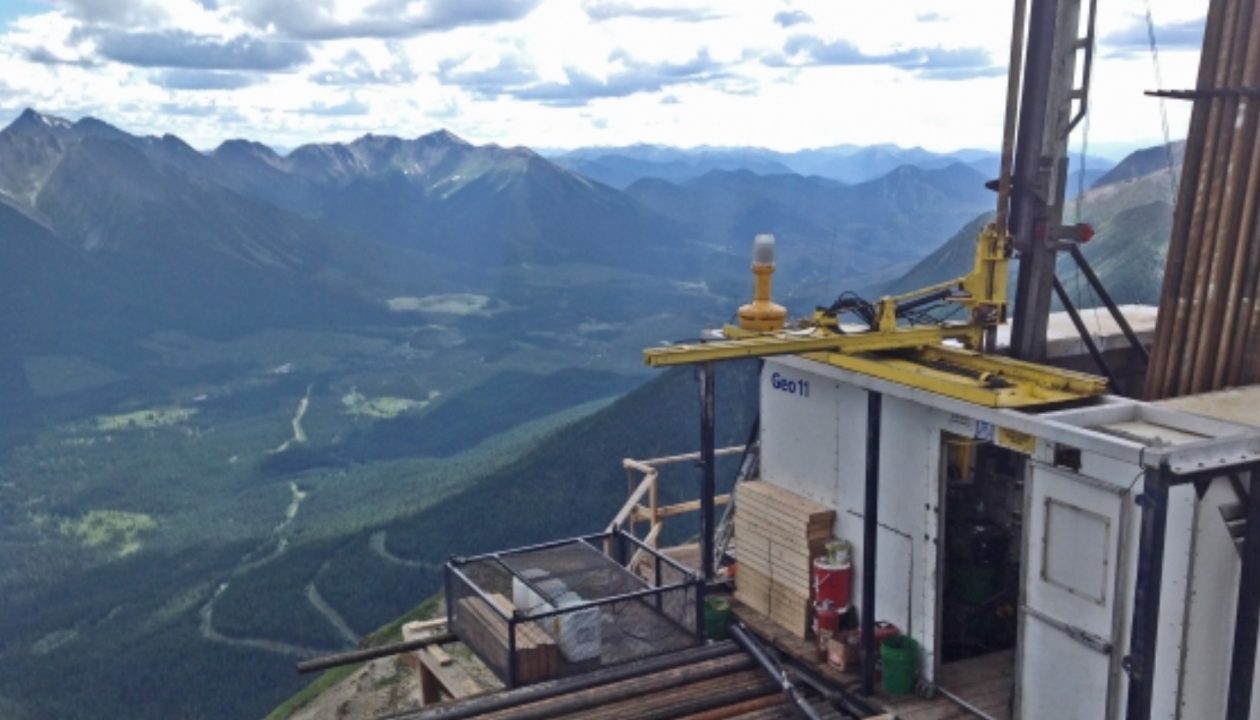
The Association for Mineral Exploration recently withdrew from a northwest land-use planning engagement session run by the provincial government and Tahltan, calling for transparency on agreements between Tahltan and the provincial government related to land-use planning. The organization continues to participate in the planning process but is calling for disclosure of a land-use planning map—already one year overdue—so its members can see which areas are proposed for conservation and which are open for mineral exploration.
“The fact that the public, communities and industry were shut out of that [land-use planning] process for literally years and were only invited into the process at the 11th Hour is totally unacceptable,” association president Stone said. “We need the province to step up and assert its authority as the Crown in defense of the public interest, and anything less than that is, frankly, a dereliction of responsibility on the part of the provincial government.”
The consequences are reaching the courts, where it has been alleged the province “impermissibly delegated” authority to the Tahltan. In a 2024 petition filed in the Supreme Court of British Columbia, Torr Metals Inc accused the province’s then-chief inspector of mines of delegating decision-making authority to the Tahltan when she denied an exploratory drilling permit for copper and gold within the Golden Triangle. The company stated the chief inspector “erred in law by failing to undertake the required balancing of aboriginal and non-aboriginal interests, as mandated by the Supreme Court of Canada in Haida Nation v. Canada…” and that there were no terms under which the B.C. government would issue a permit without Tahltan consent “regardless of the merits… thereby giving the [Tahltan Central Government] a de facto veto.”
The judge dismissed the petition earlier this year, refusing to compel the ministry to divulge more records or open the mines inspector to cross examination over her decision to refuse to issue a permit. The court concluded that the province followed lawful procedures “absent evidence to the contrary.”
However, Northern Beat has spoken directly with other mineral exploration operators from across the province who report similar conditions of a prejudiced permitting process, consisting of endless delays, where decision-makers are paralyzed, awaiting de facto consent from Indigenous communities that sometimes never comes. Some proponents have compared the new regulatory set up they encountered as a pay-to-play extortion-type scheme enabled by government where indigenous groups demand payments upfront before they will even commit to consulting on a permit application, let alone approve it. Meanwhile, mineral prospectors, many small operators, try to hang on financially long enough to get approvals for notice of work permits just to drill a hole to see if there are minerals worth mining.
“It’s important that [prospectors] are successful, but it’s also equally important that when a mine is in its earliest stages that there’s a good relationship with the local First Nation,” said the premier when asked in April about the de facto veto mineral exploration operators were encountering. Two months later, his government extended its pause on new mineral exploration permitting in the northwest and north-central B.C.
Mineral permitting process mired in confusion and uncertainty
The mineral prospecting sector has been in upheaval since a 2024 BC Supreme Court decision found the mineral claims process was in breach of the province’s duty to consult and ruled Indigenous communities need to be consulted prior to a claim being staked. Previously, a prospector could go online, pick a site and stake a claim in minutes. Then in November 2025, the BC Appeal Court struck down the Mineral Tenure Act itself for breaching the Declaration Act, leaving open the possibility that any B.C. law could be similarly challenged.
Since then, parties on all sides grapple with ‘consult’ versus ‘consent,’ how to properly adhere to the requirement and whether that means government or Indigenous groups are the final decision-makers.
Mineral exploration operators say consent-based decision-making leads to conflicts-of-interest when the decision-makers are equity shareholders in the mines, employee suppliers, priority contractors, community benefit recipients, Crown land-use planning partners, and the final governmental authority signing off on their own project’s environmental assessment.
“There is an inherent bias in having an interested party – the Tahltan Nation, which is directly involved in several mining projects in the area – co‑develop a plan that will govern third‑party interests,” wrote Brixton Metals in a letter cc’d to the premier last December. Brixton Metals said it has spent $70 million developing a mineral site in Tahltan’s asserted territory, including direct payments to the Tahltan Central Government and jobs to members.
“The Tahltan Nation must act in the interests of its members, not the general public; this creates obvious concerns for third parties seeking impartial processes for decisions affecting their operations. Failure to address this perceived impartiality undermines democratic principles and erodes investor confidence.”
The Tahltan model is not confined to the northwest. Similar pockets of consent-based arrangements have been signed or are in the works across the province through landscape planning, conservation agreements, resource project vetos, provincial park closures, land title deals, forestry tenure transfers, archeology requirements, development permitting, and more, all in the name of reconciliation and the Declaration Act.
One agent who represents dozens of mineral prospectors in British Columbia said certainty is what’s missing in the permitting process. He said several of his clients have been well into the permitting process when they were hit with a slate of new conditions for approval because the Indigenous group asserting claim over the territory where the work was located had suddenly signed a land use agreement with the province.
“They’re popping up all the time,” said Nicholas Gust. “Once [the First Nation] has the agreement in place, then they have all these new obligations that the government has agreed to with the Indian band that didn’t exist before.”
Gust says the deals are done before the public or the proponents are even aware the agreements were being negotiated. “It’s strictly between government, Indigenous relations staff and the bands.”
Sector representatives call out corrupted regulatory system
By granting the Tahltan governance authority — including the power to approve or block projects and shape the rules that regulate them — over territory from which they stand to substantially profit, the B.C. government has abandoned the fundamental principle that decision-makers should not have a direct financial interest in the outcomes they control. This creates a clear and structural conflict of interest that would be unacceptable in virtually any other regulatory context.
In Eskay Creek, the community benefits agreement from Skeena Resources was approved by Tahltan following a $40 million up front payment to the community, including $10,000 payments to each member whose consent the province had made necessary for the project to proceed.
Critics say payments to statutory decision-makers to gain permitting approvals are extortion and bribery, and that just because an agreement is advanced in the name of reconciliation, should not mean it gets a pass on the standards and ethics guiding the governance of all our democratic institutions.
The similarities to the SNC-Lavalin affair are striking.
SNC made payments to government officials to obtain commercial advantage in high value projects. In British Columbia, mining companies are making substantial payments — including direct cash transfers and long-term benefit agreements — to a so-called Indigenous government that now holds the power to craft land use planning in the region and approve or veto resource projects. The distinction in B.C. is that the provincial government is both granting and enforcing this process.
Attorney general dismisses $40 million upfront payment to Tahltan as ‘terms of cooperation‘
Mineral exploration and mining executives worry privately that B.C. is creating a resource-approval system where the success of a proponent negotiating a multi-billion-dollar project that powers the province’s economy hangs on the whim of a small community with no duty to the public interest. A system where only the biggest players can afford to play by the increasingly exorbitant rules of consent. And that land-use approval for Crown-land development is now associated with private payments to the political community whose permission is required.
The Extractive Sector Transparency Measures Act fights corruption by forcing transparency around payments to “any government in Canada or in a foreign state.” But mere disclosure does not address the complex capture issues when the payee is also the decision-maker authority for the project.
In an interview in January, B.C. Attorney General Niki Sharma rejected the characterization of conflict-of-interest on the part of Tahltan and dismissed the $40 million upfront payment from Skeena Resources to Tahltan as business-as-usual.
“Those are things that are negotiated between industry and the First Nations governments. It’s not an uncommon thing for there be terms of cooperation, and sometimes the payments flow throughout different levels of steps and processes and procedures in the permitting and process of projects.”
Even when the entity whose consent is required is also statutory decision maker who will profit from the decision? Is that not buying the vote of the statutory decision-makers, she was asked.
“I disagree with that assessment,” Sharma said, shrugging it off as “a very common practice for industry and First Nations to sit down and have an economic benefits agreements for the work that’s happening on the land and that’s something that’s been a practice for probably decades in B.C.”
Sharma expressed no concern about mulitple reports from the mining exploration industry that Tahltan were charging up to $40,000 to just to consider an application for a mineral claim permit and that some proponents in the northwest and elsewhere said they were facing seemingly endless demands in pursuit of permit approvals that never materialize.
“I don’t know the details of the particular arrangement, so I can’t comment on the particulars…” the attorney general said. “We think that the DRIPA has the framework for reconciliation through section 7 agreements that actually help to sort out decision-making from all parties and get to a yes quicker.”
Reaction on the ground suggests otherwise.
All these secret land-use negotiations between the provincial government and First Nations are scaring investment away from B.C. and industry is hurting, said exploration agent Gust, who also works in other Canadian and International jurisdictions.
“If this was being done in a way where the people knew about it, where they were consulted, they knew the outcome—if that’s what the people want, that’s fine,” he said.
“That’s not what’s happening here.”