

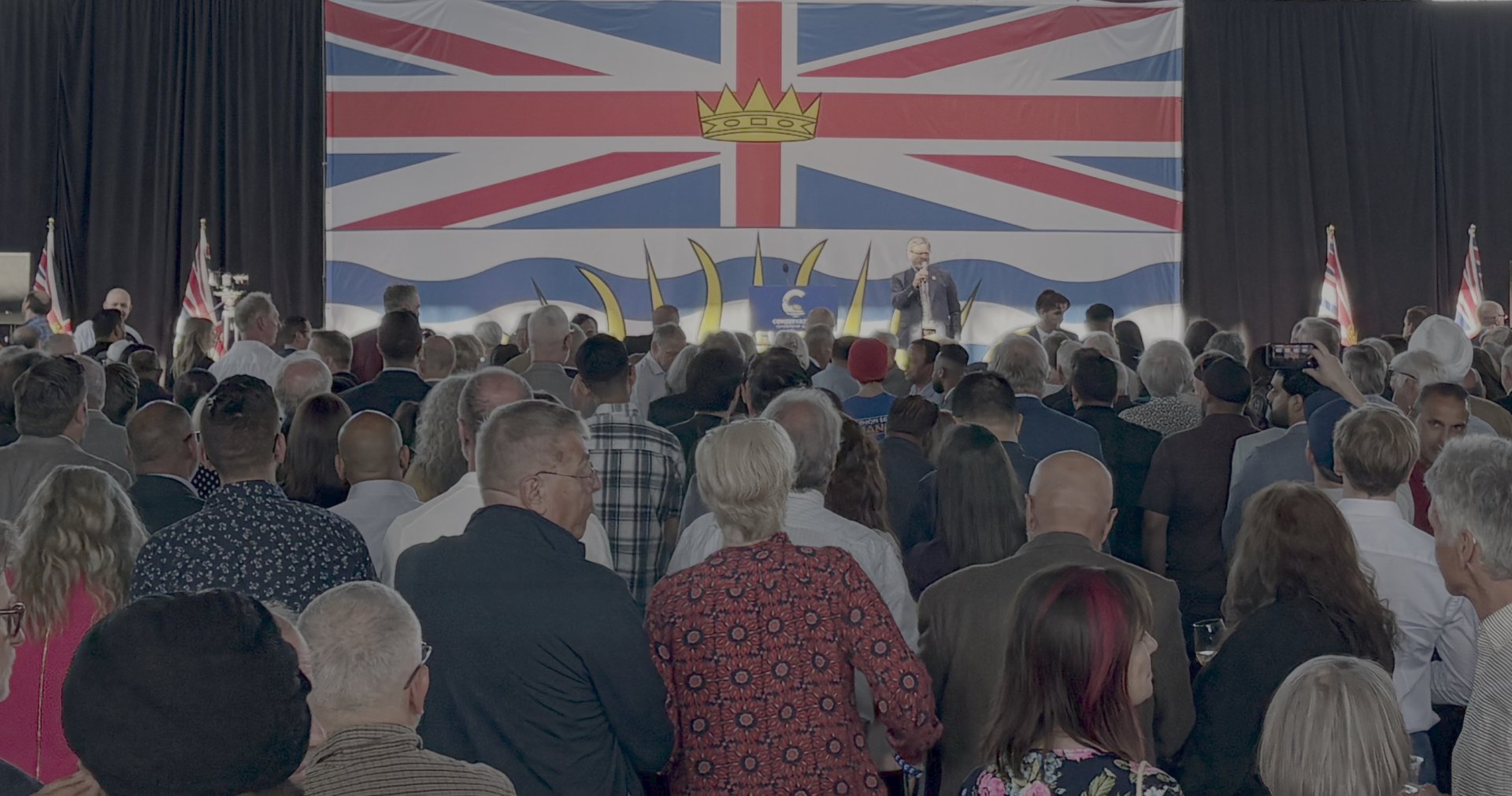
Is the Conservative Party of British Columbia really going to spend another legislative session engaged in a civil war?
By Wednesday, all sane BC Conservatives were hoping the week would end already.
By Wednesday’s close, three MLAs had quit caucus for the Independent ranks of the legislature, joining Peter Milobar, who had kicked off the exodus a week-and-a-half earlier. Agriculture critic Ian Paton dropped the bomb on Monday, Rosalyn Bird the next day, with Teresa Wat and Brennan Day the following afternoon.
Wednesday also delivered the revelation that party leader Kerry-Lynne Findlay had fired the party’s director of caucus operations, Apollo Chung, with no official explanation. Not that one was needed. A circulated audio clip reportedly contained Chung’s voice as he demanded $500,000, castigated “f*ing white people” for being “weird” and urged his compatriots to “steal everything” regarding party donations.
Thursday delivered another body blow to the Conservatives, when former deputy leader Bruce Banman headed out the caucus door as well, bringing the number of defectors to six (as of press time).
And Friday is still to come. More MLAs will likely follow.
Less than six months after a contentious leadership race that Findlay won by a sliver, the BC Conservative Party is in its gravest crisis since being revived in 2023. A resolution has to be found before Christmas, or even Halloween, if the party is to survive intact as a viable alternative to the NDP.
Ethical questions about Findlay’s tenure remain
Chung’s dismissal was necessary, but it does not answer the serious questions about ethics, discipline, and Findlay’s leadership. Findlay personally hired Chung to be one of the party’s most senior staffers after he worked on her leadership campaign.
Who vetted Chung, and who was he speaking to on the tape that prompted his dismissal? His dismissal will not stop the bleeding, nor can it heal the wound.
Six MLAs have gone in under two weeks. Combined with the departures for various reasons of Dallas Brodie, Tara Armstrong, Jordan Kealy, Elenore Sturko, Amelia Boultbee and Hon Chan last year, the party has lost 13 of the 44 MLAs elected under its banner in the 2024 provincial election.
One explanation put forward by some is that, as former BC Liberals under the Christy Clark government, Milobar, Paton and Wat were unwilling to accept a right-wing leader like Findlay. Well, Milobar and Paton never served in government, let alone under Clark, and Bird and Day were both tapped by Findlay’s predecessor, John Rustad, to run in 2024, vapourizing that argument.
All six defectors on Findlay’s watch have cited ethical concerns with her leadership, while noting a range of different incidents or behaviours that contributed to their decisions to leave. Milobar said there were too many issues to mention but spoke of a misalignment of values, including a caucus and party staffing “purge.” Paton took issue with caucus management and pressure on him to resign his seat that he says came with an ethically questionable job offer.
Bird cited Findlay’s anger and “tantrum” over Bird’s refusal to resign her seat so that Findlay could try to claim it in a byelection. Wat said she suffered reputation damage when a text by Findlay recently surfaced calling Wat “CCP” (Chinese Communist Party), and Findlay refused to apologize publicly. Courtney-Comox MLA Day left hours after the release of the Chung tape, saying he had “lost confidence in the judgment, conduct, and ethical standards of her leadership and those she has chosen to surround herself with.”
Successful political parties are coalitions
Findlay did not win the leadership in a landslide akin to Pierre Poilievre’s victory in the 2022 federal Conservative leadership contest. She won by two points over Caroline Elliott, 51 per cent to 49 per cent. A good comparison to Findlay’s win is the 2018 Ontario Progressive Conservative leadership contest, when Doug Ford barely squeaked past Christine Elliott (no relation to Caroline). Ford won by less than one per cent, yet he managed to keep his caucus united and firmly behind him, with no defections until the COVID-19 pandemic.
Political parties are coalitions, not conquered parcels of land. A leader elected by half the party must reassure the other half, recruit rivals, and preserve what institutional memory exists, which is very limited in the case of the BC Conservatives.
Instead, Milobar, the former Opposition finance critic and one of those rivals, is now building a competing party, with 11 of his previous Conservative colleagues sitting alongside him in the Independent section of the legislative chamber. No broad unity team has yet emerged from the contest.
In the span of months, the entire backroom team that built the Conservatives from a fringe party into the Official Opposition has been pushed out. Party executive director Angelo Isidorou, president Aisha Estey, and vice-president Sharon White are gone, along with many more senior staff.
It is inevitable that a new party leader will bring change, and the new leader is entitled to choose a team they trust. They also have to own the consequences of making the wrong choices, such as hiring Apollo Chung.
Some of the new hires under Findlay are laudable, such as tapping former Caroline Elliott supporter Mauro Francis for party president, however, those additions have not halted the exodus. Milobar and Paton especially present a problem, and not only because with two of them, their new party will now qualify for official status, with resources and a daily presence in question period. They are veteran members of the legislature, not freshly elected MLAs, with a wealth of Opposition experience, significant name recognition and a solid grasp of their portfolios.
More MLAs are likely to leave, and it would be shocking if at least one did not join Milobar and Paton, which would vault them to Third Official Party, ahead of the two-MLA Greens. The parallels to the rise of the Conservatives at the expense of BC United should be a cautionary tale for Findlay, Back in 2023, the BC Conservatives gained official party status when Independent John Rustad was joined by Bruce Banman, followed by a wave of BC United floor-crossers.
Two months truly is an eternity in politics. As recently as June, Angus Reid gave the Conservatives an 11-point lead among decided voters, only for that lead to collapse this month, with the NDP regaining the lead.
Instead of capitalizing on a weak NDP government that is tired, out of ideas, and bogged down in crises of its own making, the Opposition is tearing itself apart, one departure, firing, and resignation at a time.
And that’s just this week.
Mistrust won’t command widespread confidence
The solution should not be to revive the BC Liberals or abandon conservative politics, for conservatism is not the issue.
Right now, the problem is pervasive mistrust and the equation of critique with betrayal. Purging the party of dissent is not strength, nor is surrounding the leader with loyalists a substitute for commanding widespread confidence, especially among those within the tent who are willing to disagree without abandoning ship.
By Christmas, the party has to provide a full public account of the Chung affair and undertake genuine, widespread reconciliation within caucus. The BC Conservatives can ill afford to waste another legislative session mired in internal battles and intrigue.
Whether it was the slow toppling of former leader John Rustad during last fall’s session or the leadership race to succeed him during the spring session, the BC Conservatives cannot keep allowing themselves to be consumed by conflict about their differences. They need to identify the problems quickly, for all to see, and get rid of them.