

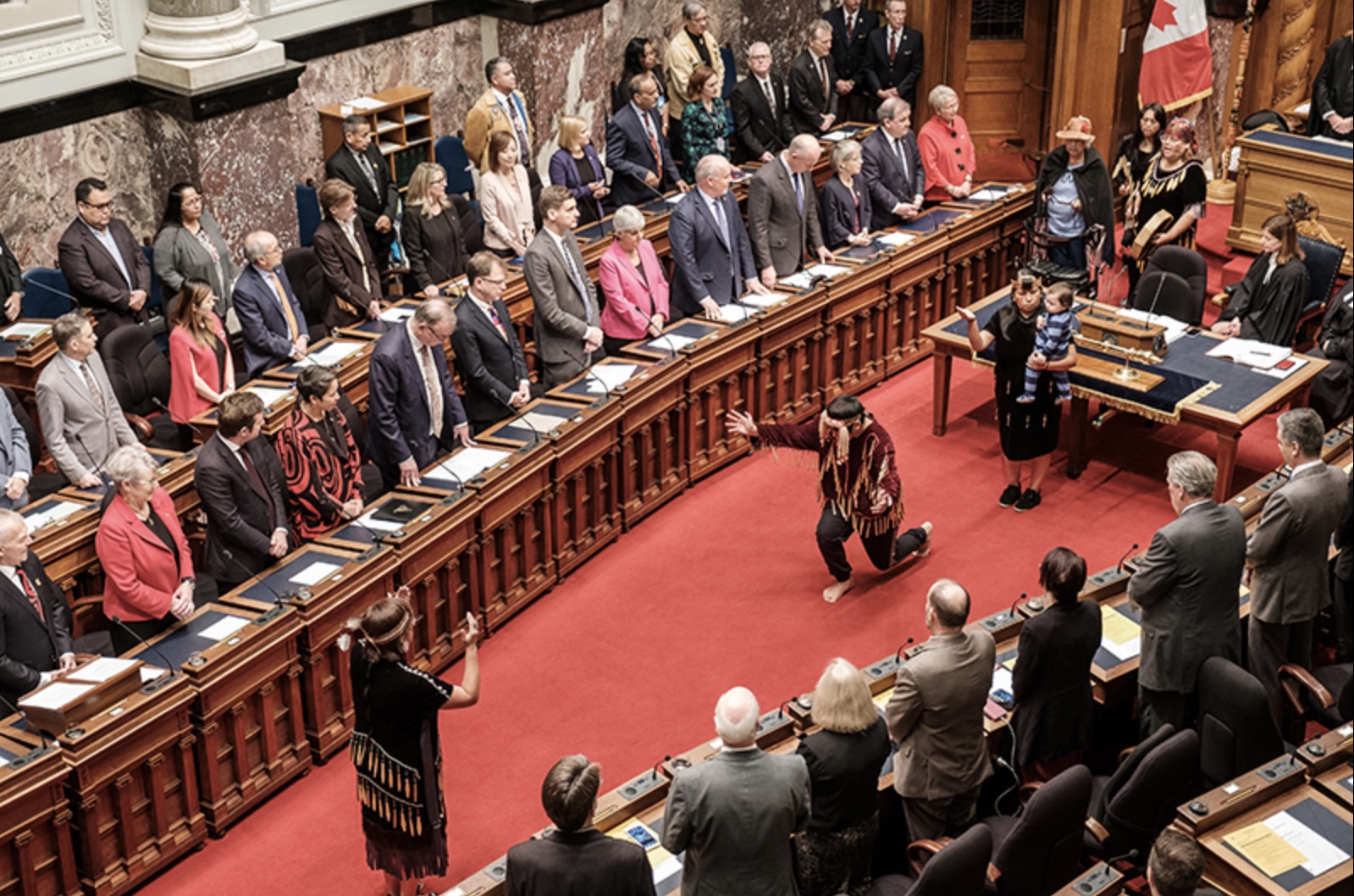
“A modified DRIPA, enacted by the same government that believes the settlement of Canada was a sin and that the drastic re-shaping of society is a moral imperative, will be no saving grace.”
—Werner Stump
The Dec. 5 court ruling of Gitxaala v British Columbia adds further instability to the future of the province and moves us sharply away from genuine reconciliation.
The BC Court of Appeal ruled that consistency with the provisions of the United Nations Declaration on the Rights of Indigenous Peoples (UNDRIP) are justiciable, meaning that B.C. statutes must conform with UNDRIP’s binding international rights, obligations and principles.
The Gitxaala decision gives B.C. courts the jurisdiction to assess whether the level of compliance with UNDRIP, as mandated by the provincial legislation, the Declaration on the Rights of Indigenous Peoples Act (DRIPA), is acceptable.
This does not mean that DRIPA creates substantive new legal rights or obligations arising from UNDRIP. But it does stipulate all laws in the province are to be interpreted through an UNDRIP lens and the government must now consult and cooperate with First Nations for practically every move.
UNDRIP requires undemocratic co-governance with First Nations
The potential consequence of this ruling is to make B.C. non-governable.
Effectively, all decisions about B.C. laws must be made in consultation and in cooperation with over 200 First Nation governments. The province and the First Nations will form a collective government that the people of B.C. do not elect.
First Nations leaders have a responsibility to their members only, and so they should. But if half of the ‘governing body’ that drafts and has final approval of our laws has no duty to the public interests and can’t be held accountable by our vote, B.C. will be a non-democratic society.
The Gitxaala decision may also bring into question the validity of fee simple lands in B.C. If all B.C. statutes are subject to UNDRIP, where does that leave the Land Title Act, which contains our fundamental protections of private property rights.
If all laws must be interpreted through an UNDRIP lens and courts can assess and even dictate compliance, how might this be applied in an appeal of the Cowichan Tribes v. British Columbia ruling? Especially since the Cowichan Tribes appeal will be heard by justices of the same appeal court which ruled on the Gitxaala appeal.
Legal implications of DRIPA were downplayed
The Gitxaala chief councillor Linda Innes said the ruling is an “exciting victory” for all nations in B.C. One might have expected a more guarded response that did not so pointedly disclose their winner/loser mentality, and instead also considered societal balance, equality among people, and the best interests of British Columbians.
In 2019, the NDP government sold DRIPA as a virtue signaling document that provided guidance towards the achievement of reconciliation. The legal implications were downplayed by the various ministers’ commitments it would be applied consistently with the Constitution of Canada.
At the time, B.C. was the only jurisdiction in the world that had adopted the aspirational United Nations document known as UNDRIP, largely created so Indigenous people in less developed parts of the world would have the same protections that already existed in Canada.
What we did not fully understand at the time of the development of DRIPA was the radical ideology of its proud master, David Eby, and this is critical to appreciate where we are heading with reconciliation.
Colonial redemption requires ‘turbulent transition
Eby and his inner circle of advisers, by their own admission, believe that Canada’s formation was a sin and redemption will require a “turbulent transition,” “radical change,” and the utter transformation of human affairs “requiring immense personal and collective sacrifice” and the destruction of the current economic system.
Eby has consistently upheld DRIPA as the legislation that will guide the formation of our future and the road to reconciliation. It is hard to imagine how his government could survive what is essentially the delivery of a self-inflicted death blow to democracy in B.C.
Eby may attempt to ‘tweak’ DRIPA to save face when in fact DRIPA needs to be repealed entirely. A modified DRIPA, enacted by the same government that believes the settlement of Canada was a sin and that the drastic re-shaping of society is a moral imperative, will be no saving grace.
In 2020, Dr. Roshan Danesh, a close adviser to Eby, wrote, “the history of colonialism has created what might be called the “domino effect” among property rights in Canada. The original sin of ignoring Indigenous title, and as such denying Aboriginal title, knocks down much of what has been presumed to be aspects of Crown title in Canadian history, which then knocks down much of the foundation for certainty of fee simple property title.”
Keep that in mind when the Premier says he will vigorously uphold fee simple title.
British Columbians deserve transparency and truth
Talk is cheap.
Consider the Premier’s double talk with Haida and Cowichan, and his government’s recent defeat of a bill to protect fee simple rights in B.C. through a constitution amendment.
The Eby government has demonstrated disregard for true reconciliation by orchestrating a plan, without a public mandate, that has driven a wedge between British Columbians. The Premier believes that DRIPA is about correcting the “original colonial mistake” and his advisors are quoted as saying reconciliation “will require affairs to be utterly re-organized” rather than building positive relations in a balanced manner.
Reconciliation is important work that needs to be pursued, but the pathway we are on, including DRIPA, needs to be abandoned. It is time for a made-in-B.C. solution that is workable for all parts of society.
British Columbian’s deserve transparency, truth and open dialogue. The conversations may be difficult, but we deserve straight-talk on reconciliation. The B.C. government must define clear steps with a well-articulated vision for a balanced end result that is socially and economically rounded.
We need a fresh start in more ways than one.