

Little by little, one logging truck at a time, there’s a revolution in forest management unfolding on the shores of Kootenay Lake.
Harrop-Procter Community Forest is challenging the old volume-based models of industrial forestry. It’s run as a co-op, with a volunteer board of directors overseeing a small sawmill and a logging operation on 11,000 hectares of Crown land.
“If one of the goals is local employment, you know, this is a great thing, and it’s a great service, because this stuff is not available anywhere else.” says co-founder Rami Rothkop, the longtime manager of the sawmill. “People love coming here.”
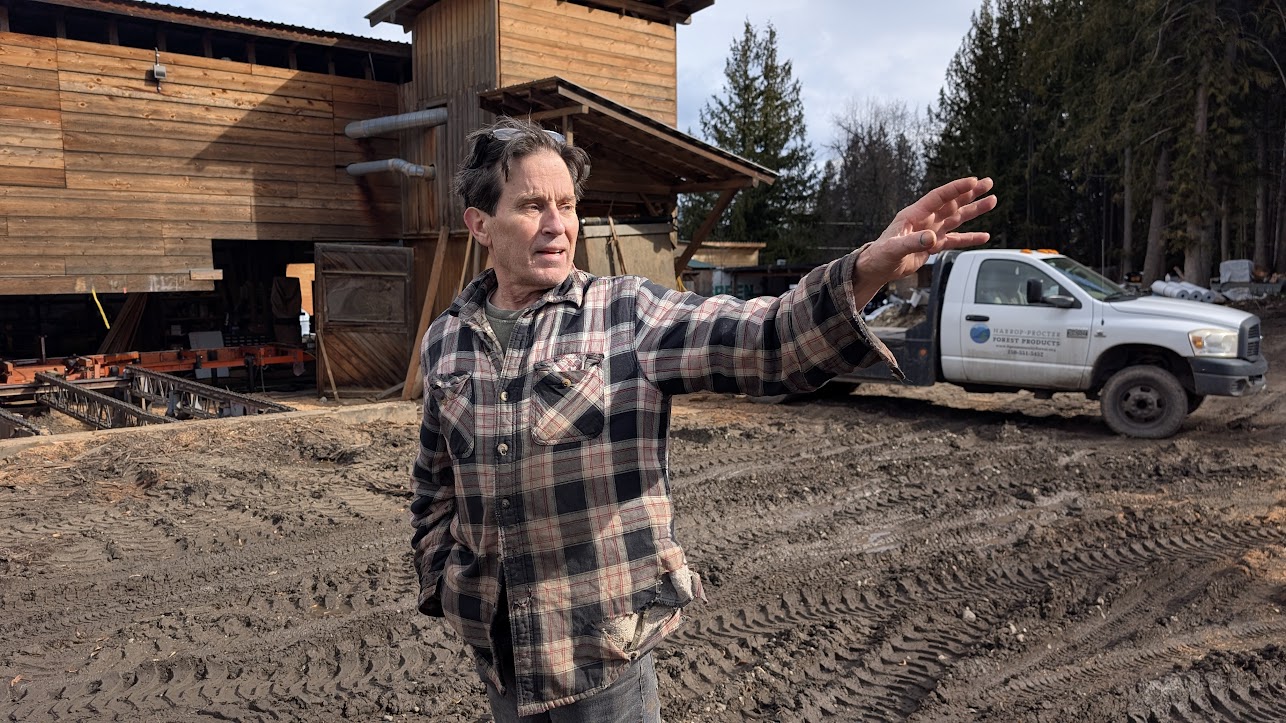
Rothkop is a wiry man with a shock of dark hair and a face that’s often creased with a smile. As he tours the mill, with its heavy equipment and hard-hatted workers, there’s a stack of freshly cut logs sitting near the office and an active cutblock on the hillside in the background.
“You go to Home Depot, you have no idea where your wood is coming from, and then… I take customers and say, ‘That’s where your product comes from.’ That feels good.”
Now, with B.C.’s Provincial Forestry Advisory Council recommending a move towards regional management of forests, the community forest may serve as a model.
The PFAC report, entitled From Conflict to Care: BC’s Forest Future, was released in early February. It was the latest in a series of blunt assessments of the state of B.C. forestry at a time when mills are closing and hundreds of workers being laid off: “Decades of layered rules and centralized, top-down decision making have created a system that lacks the predictability and flexibility needed to respond to today’s ecological, economic, legal and social realities.”
It recommends what it calls a shift towards land care: “Moving away from managing forests primarily through timber harvest targets toward regionally grounded, area-based decision-making about forests.”
BC government still reviewing forestry report
The early response from the B.C. government, the big forest companies, and media commentators was muted. One more report, according to critics. More reorganization. More bureaucracy. Because of its complexity, the B.C. government is still reviewing the report.
“It’s going to take time for government to carefully review the recommendations, given the comprehensive nature of this report,” according to a ministry of forests statement.
During a debate on spending estimates in the legislature, nearly two months after the report was released, Forests Minister Ravi Parmar gave strong indications the B.C. government wants to proceed with the transition from volume-based to area-based management, and has promised a cross-ministry working group to look at how to develop long-term forestry while maintaining functioning ecosystems.
The BC Truck Loggers Association said it supports the overall direction of the report, “including the shift from volume to area-based management, adopting regional forest management areas, increased community engagement, First Nations co-management, and improved focus and alignment across the sector.”
Meanwhile, the largely volunteer-driven BC Community Forest Association welcomed the PFAC recommendations, saying they’ve already been doing this work for the better part of three decades, with little fanfare. The association has long recommended supporting local, community-based decision-making.
Community forest grew from public protests and high expectations
The Harrop-Procter Community Forest is one of many that grew out of the preservation movement in the 1990s, when the NDP was in power in Victoria. Rothkop and Kootenay activist Ramona Faust, who went on to serve as general manager, were among the prime movers.
Those were days of high expectations for environmentalists in BC. Mike Harcourt’s government was elected in 1991 with a promise to double the amount of provincial parkland and introduce the Forest Practices Code to reduce clearcuts and make the industry more sustainable. It launched the Commission on Resources and Environment (CORE) to bring all user groups to the table to negotiate a resolution to land disputes.
But there was conflict. Conservationists accused the government of talking too much and preserving too little. Industry feared burgeoning regulations and loss of access to valuable timber. Rural residents were caught in the middle, and politicians tried to keep everyone happy. There were protests, setbacks, and disappointment on all sides.
In the West Kootenay, hundreds of people held demonstrations, demanding the B.C. government protect their water supplies from clearcut logging. They won a partial victory when the government created a new park on the mountainsides above the west arm of Kootenay Lake.
“What ended up happening was the West Arm Park was proclaimed, and they left our watersheds out,” says Faust. “We were, of course, on the ground with the 600-person blockade to try to get the whole thing protected, because it’s interior rain forest. There was caribou habitat and grizzly bear habitat. There’s a historic grease trail that goes over to the Cranbrook area up Mill Creek. And so, there are a lot of reasons to protect the entire land base. But that’s not what the CORE process and the government chose to do.”
Harrop-Proctor is born
The community enlisted the help of professional foresters to develop ways of harvesting that protected watersheds. At the same time, the government was under pressure to create community forest tenures because of sawmill closures.
So began Harrop-Proctor in 1999. One of 60 community forests operating in the province, today it is one of only two with its own sawmill, Harrop-Procter Forest Products. Rothkop calls it a micro-mill.
“We do 2,000 meters a year here. That’s 50 logging trucks. The big mills do that in a day or two with the same amount of people,” says Rothkop. “So, we’re doing about 600 per cent higher jobs per cubic meter than the industrial average.”
Up to 10 employees work at the mill and 30 contractors are in the forest. The organization sells about three-quarters of its harvested logs to other mills, including the Mercer Celgar pulp mill in Castlegar. The logging operation made $600,000 in profit last year. The mill breaks even most years.
“I can’t think of another mill in the province doing what we’re making,” says Rothkop. “Flooring, siding, paneling, rough boards, timbers, decking, what else?”
The mill sells directly to the public on site, or by delivery to buyers farther afield. Rothkop says the margins aren’t big enough to allow them to sell through commercial lumber yards.
Public support is as broad and deep as Kootenay Lake. At a public panel discussion in Nelson in February, residents packed the local theatre to applaud presentations by celebrity scientist Dr. Suzanne Simard and others on the future of forestry. The loudest cheers were for those who argued for an expansion of community forestry to keep the benefits at home, and to end industry-driven, volume-based management.
Employees share collaborative spirit in cooperatively run operation
The employees of the Harrop-Procter Community Forest seem to share that collaborative spirit. Talk to anyone at the mill – from managers to heavy equipment operators – and you’ll hear similar stories.
Sawyer Jon Simington says the workplace is like a community. “We’ve got local loggers doing the work, old timers that have now retired, and newer people coming on. Everybody knows each other.”
Harrop-Proctor Faces
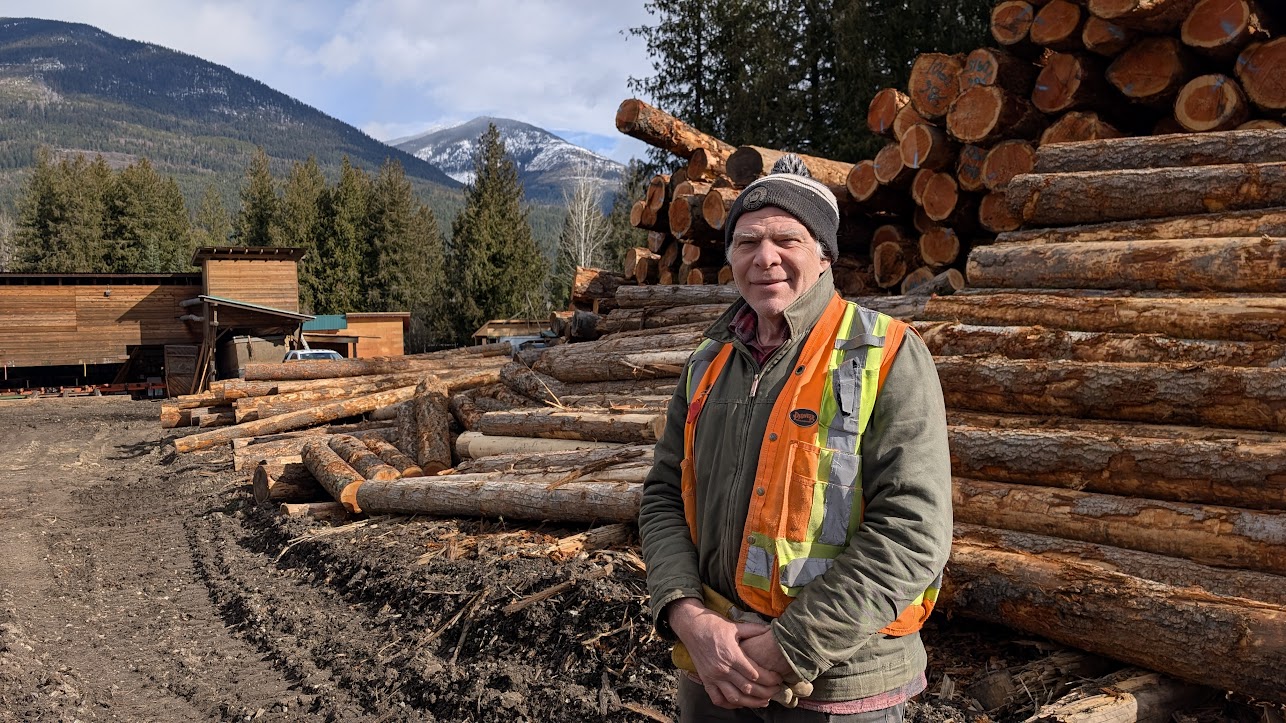
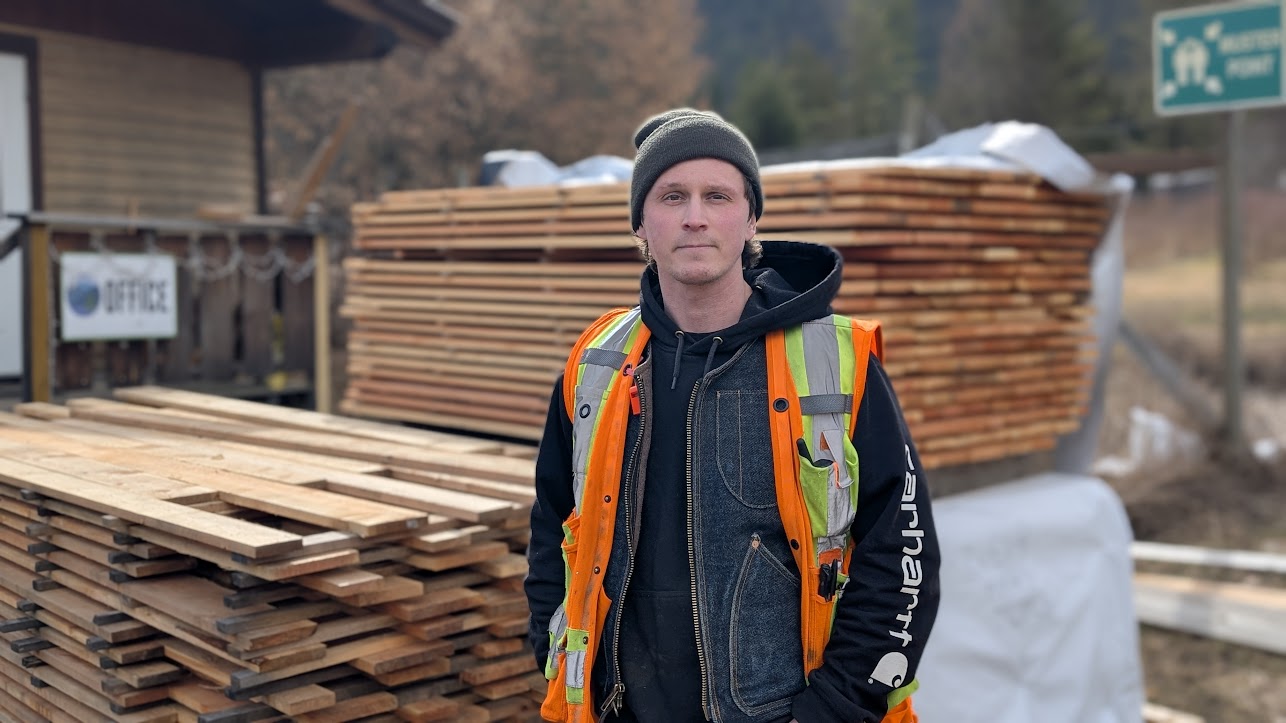
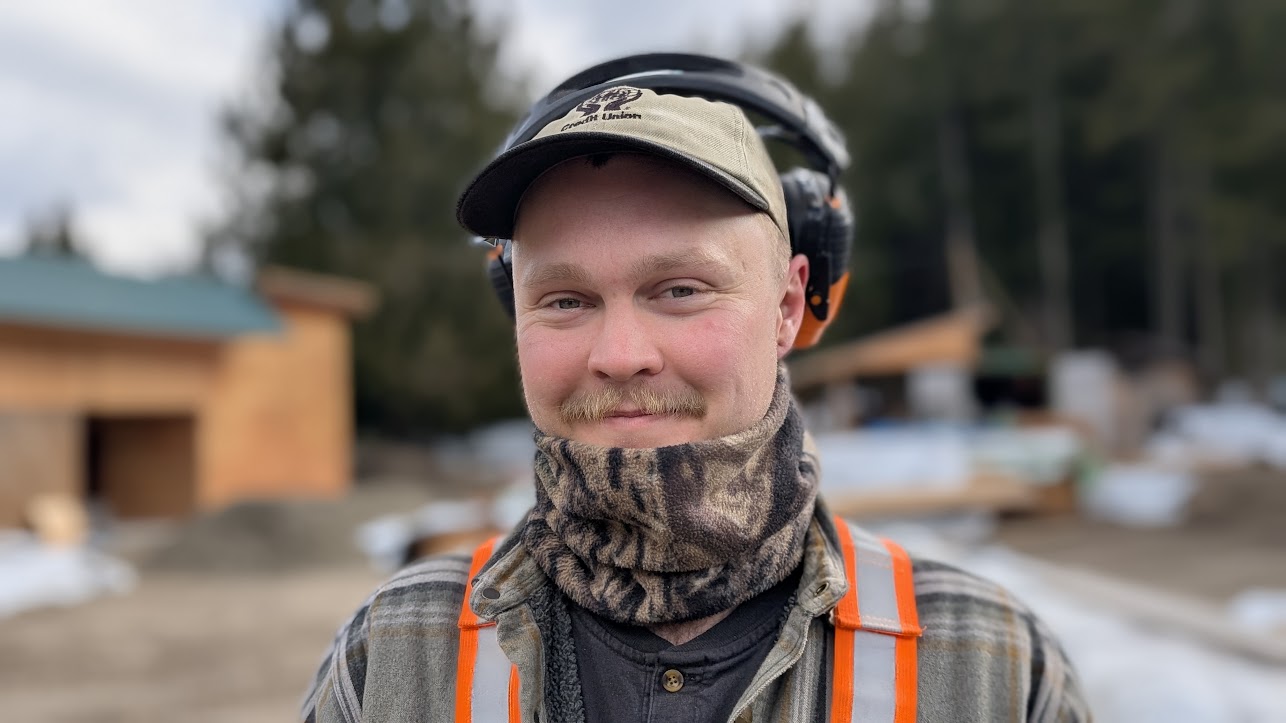
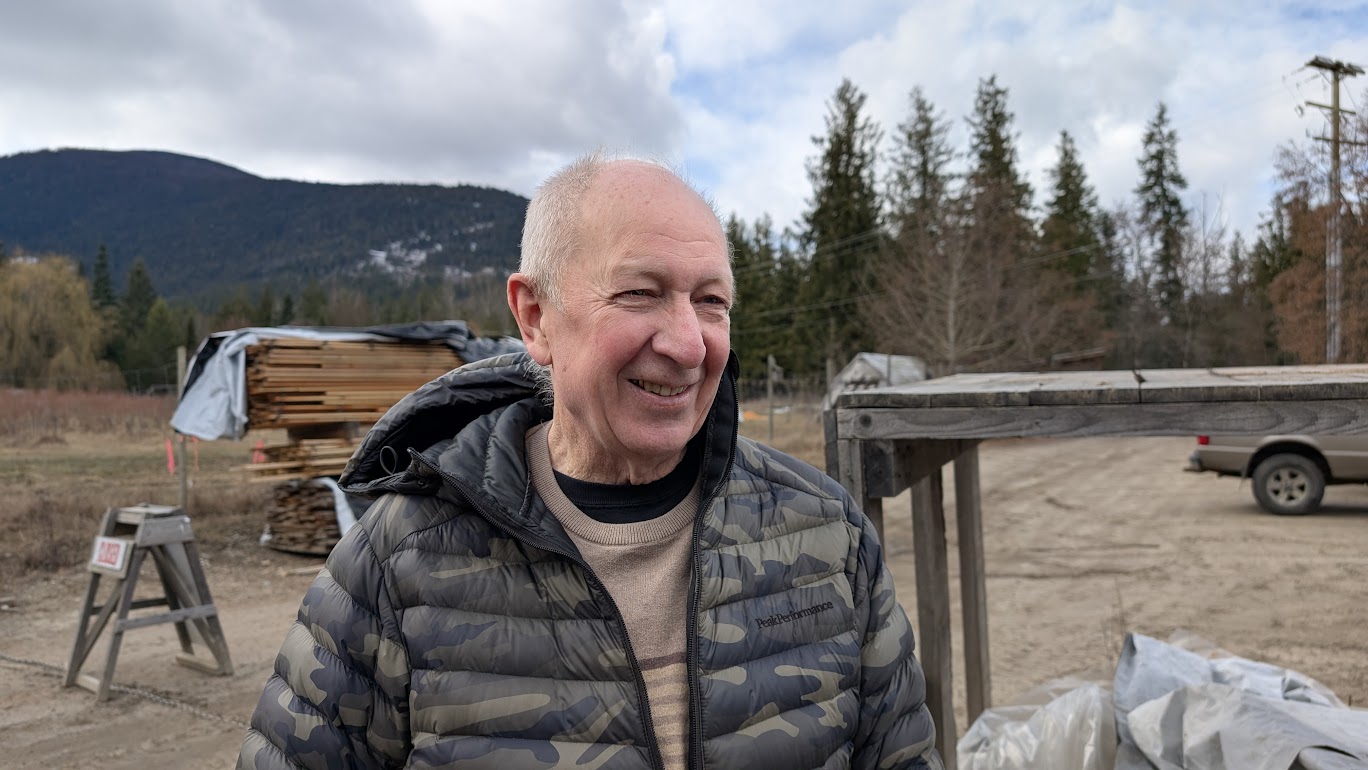
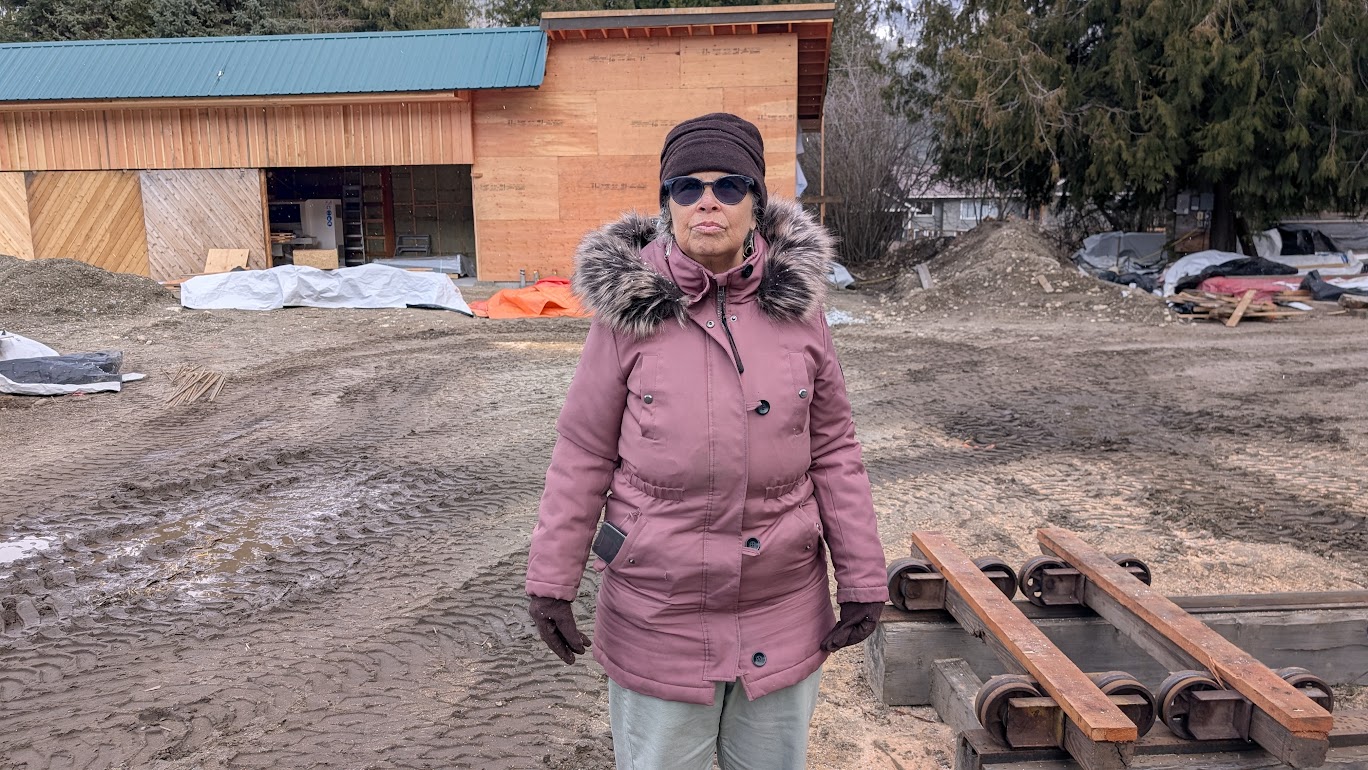
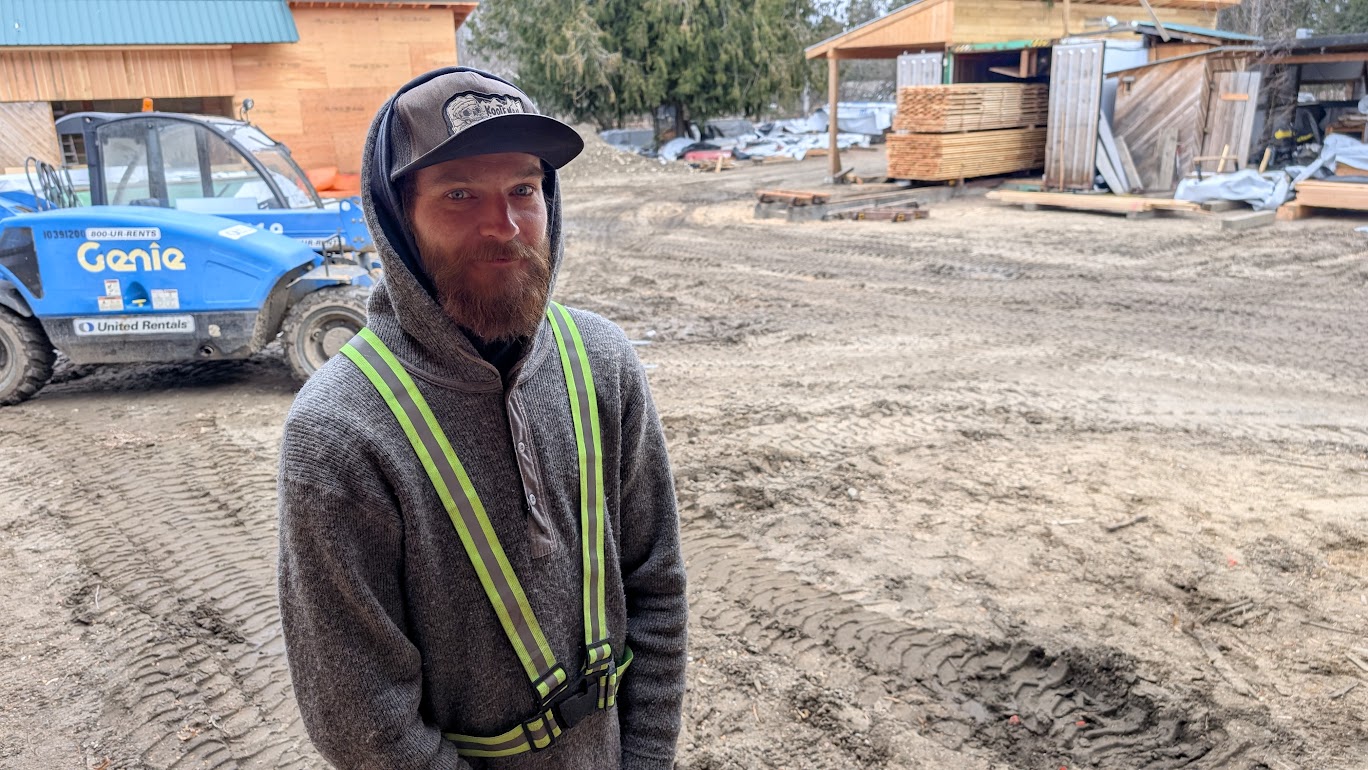
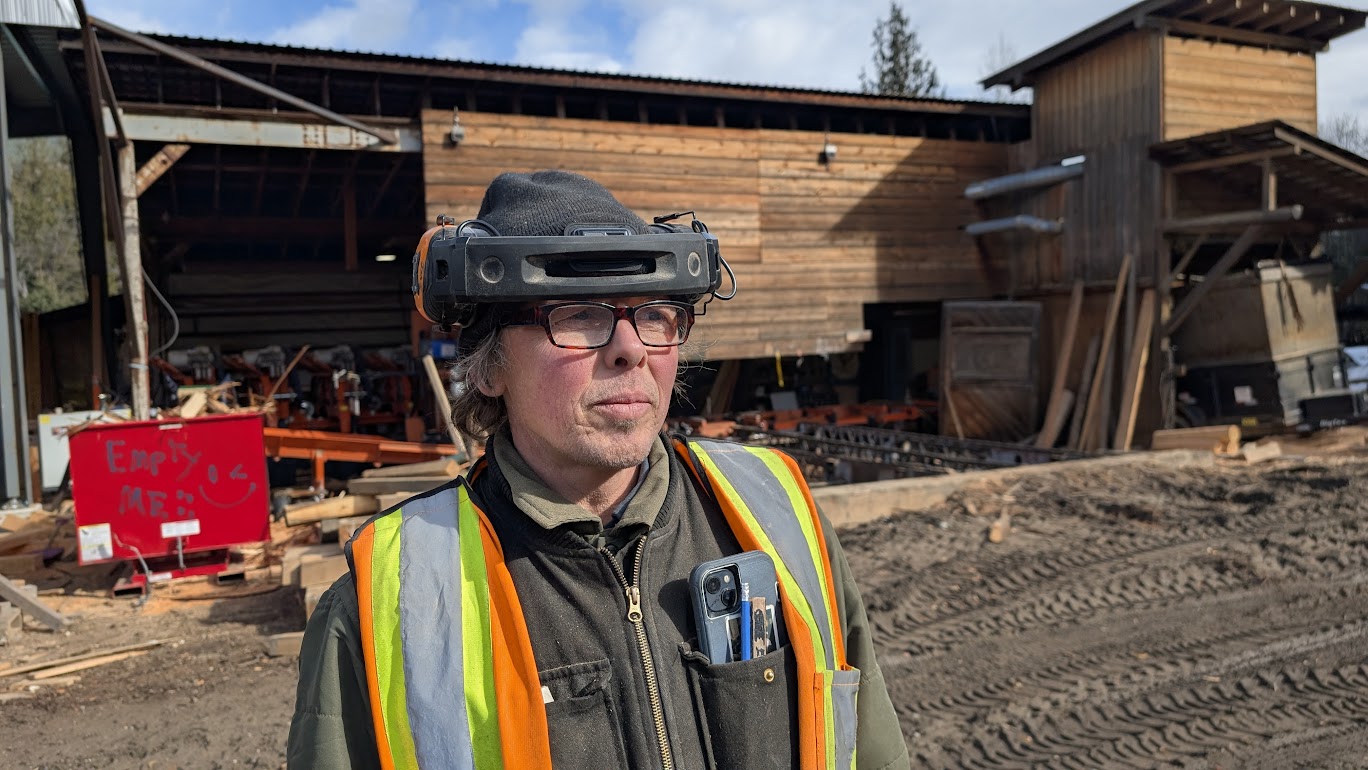
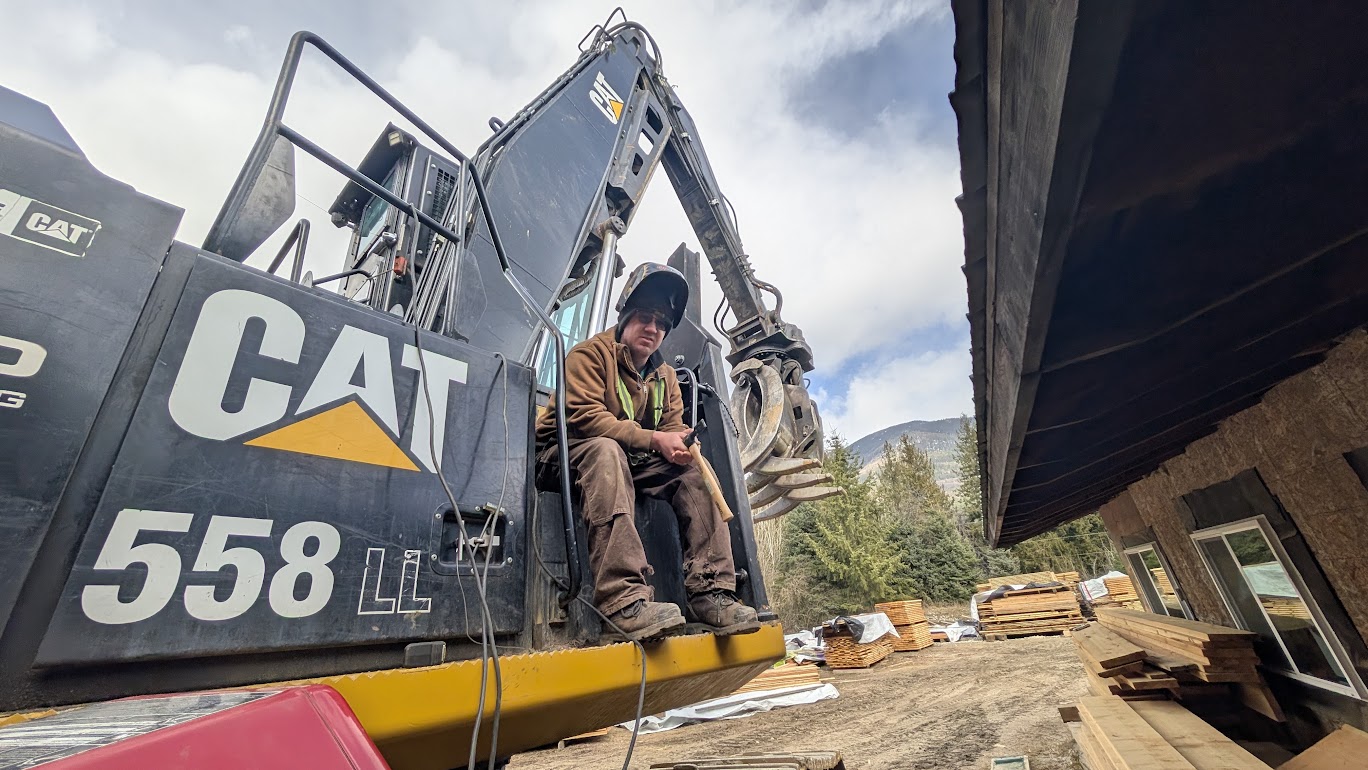
Thirty-year-old Jonathan Hansen came to Harrop-Procter as mill manager after working in industrial forestry in northern B.C.
“Up north, you see the immense scale of it,” says Hansen, who left in disgust “because of my inability to make decisions based on my schooling and my professional designation as an RFT (Registered Forest Technologist). I just felt like I was up against an endless wall of bureaucracy, but bureaucracy backed by a very hungry economic system.”
There’s a lot that separates the cooperatively run Harrop-Procter Community Forest and sawmill from the bigger operators.
“It all flows from the governance, and who’s making the decisions” says Erik Leslie, a registered professional forester and the forest manager. Anyone who lives in the community can become a member, and 300 local residents each own a $25-share and elect the board. Leslie reports to the board of directors, as does the sawmill operation.
Community forest takes eco-system-based approach
The operation has always been ecosystem-based, arising from the need to find an alternate path to business-as-usual logging and the creation of a park, says Leslie.
Like any forestry operation, Harrop-Proctor pays stumpage fees to the B.C. government and adheres to provincial laws, such as the Forest and Range Protection Act.
But its objectives include protection of watersheds and ecosystems, sensitive areas, like steep slopes, potentially unstable slopes, old growth forest, caribou habitat, and an extra-large riparian zone. “So, we have a number of things we do that are well in excess of what’s legally required,” he says.
The group also manages wildfire risks, including a strategic fuel break area, and has been using its forest to study drought and hydrological concerns, and climate change adaptation.
Overall, says Leslie, “we have as much flexibility as anyone can have on public land in B.C. in that we write our own management plan, we do our own harvest level calculations, subject to approval by the Ministry of Forests, but we’re given a certain amount of leeway to address community needs and expectations.”
Decision-making would shift from province to First Nations
The word “flexibility” is also one frequently used by Garry Merkel, a registered professional forester, and the co-chair, with Shannon Janzen, of the Provincial Forestry Advisory Council, which issued the report in February recommending a shift to regional forest management.
Merkel has a lot of experience handling tough files. He also co-authored the Old Growth Strategic Review, which called for a paradigm shift from managing forest for timber harvest to protecting biodiversity through an eco-system-based approach. The transition envisioned in his latest report might be even more difficult to pull off.
It proposes replacing the existing Timber Supply Areas with up to 100 regional forest management areas, that would essentially take on many of the decisions currently made by the provincial government.
Merkel says Harrop-Procter, which already practices area-based management, would see few differences. Those community forests would work within the framework of new regional bodies, but that doesn’t mean they’d be taking direction from them. “Regions would sort out amongst themselves what their priorities were and how to mesh and harmonize land stewardship across tenure boundaries within the region,” says Merkel, adding the model would also have to mesh across regional boundaries.
“So, the difference would be, who ultimately determines what’s best for the region, and all of it is approved at that level there. For many things, some things are set at the provincial level, but much of the customization and applying it to regions happens at the regional level.”
The new system would also have to conform with the contentious Declaration on the Rights of Indigenous Peoples Act, which intends to align provincial laws with the UN Declaration on the Rights of Indigenous People, and allows the province to confer statutory decision-making over land use to Indigenous communities over their claimed territory.
“And my personal feeling is because we’re still struggling with, how do we maintain public accountability in that system? How do we avoid a situation where we’re delegating authority to a group where they have no requirements for the broader public, the duty to public trust, the broader accountability, not that they aren’t, but it’s not clear to a lot of folks how that happens.”
Stakeholders welcome local control, but worry on other fronts
While most stakeholders welcomed the idea of more local decision-making, they voiced a range of concerns over overlapping land claims, disparity in standards across regions, confusion over government as statutory decision-maker, and criticisms it doesn’t protect old growth or respect nature or industry, and it’s no surprise some stakeholders worry it will be a tangled web of competing agendas and jurisdictions, with the province surrendering too much of its authority to new regional bodies and first nations.
Ted Dergousoff, the president of the Independent Lumber Manufacturers, which represents mid-sized mills, welcomes the move towards local management and a land-based management system, particularly if it helps level the playing field between the ‘haves’ and ‘have-nots’ and to reduce the level of corporate concentration.
“I think there’s a need to manage at the local level. I feel that decisions made at a local level, there’s more understanding with the local issues and then from afar, than from Victoria.”
But he also has some concerns about the structure: “I’m not in favor of having two dozen local areas or regions or districts and each, each of them duplicating overhead. That’s crazy. Yeah. So, somewhere, somewhere in the middle, how do you have regional decision-based work being done without duplicating effort. That has to be discussed.”
Dergousoff says this report is aspirational, and there’s an opportunity to work out a system that works well for everyone.
Report author says new forestry model would ‘reconcile differences’
Merkel shares that hope: “Delegated authority doesn’t mean you get to go rogue. Delegated authority means you have the decision-making authority under provincial legislation.”
He laments B.C.’s forest policy has become so polarized and politicized, with swings between ecologically–based and industry-driven models. He argues the new regional bodies will allow parties to reconcile differences and avoid confrontation and any governance model needs a built-in dispute resolution mechanism.
“There are always disputes in every system,” says Merkel, dismissing the idea of a “Nirvana system where everybody gets along, all the time.”
In the Kootenays, meanwhile, the people at the Harrop-Procter Community Forest are following the debate with interest. “What PFAC [the Provincial Forest Advisory Council] is calling for is pretty radical. That makes people nervous, because it’s not clear exactly what they’re calling for, right? The broad shape is there, but the specifics are not,” says forest manager Erik Leslie.
“My fear is that it will just go on the shelf, like a lot of other good reports.”
Whatever the outcome, community forests like Harrop-Procter will continue to do what they’ve quietly been doing for more than two decades, one logging truck at a time.