

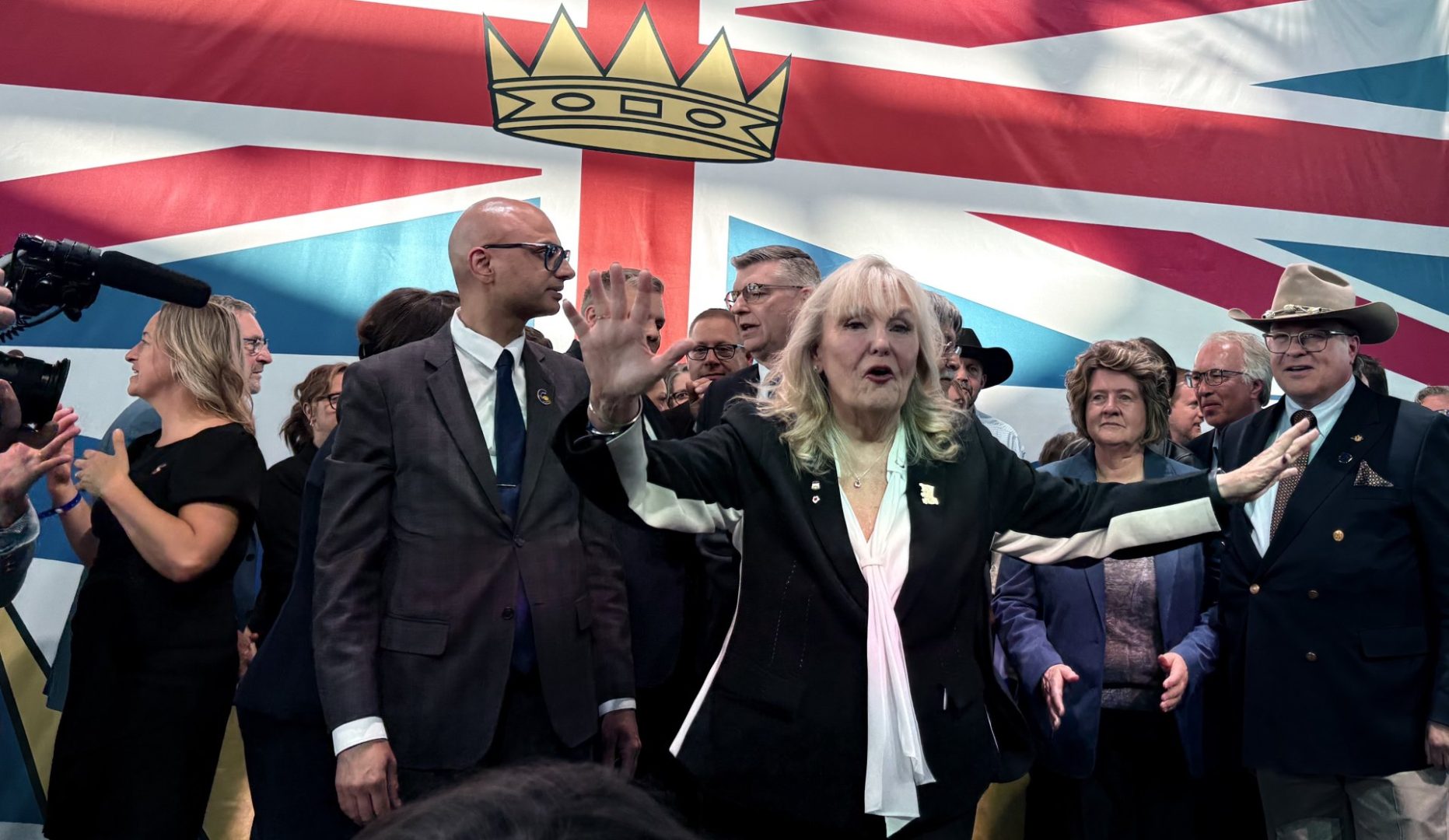
Throughout the BC Conservative leadership race, senior party and caucus members repeatedly asserted the winner will go on to become the next premier of the province.
With the election of Kerry-Lynne Findlay from a field of five candidates on Saturday, it’s hard to tell whether those odds improved or not.
A former three-term Conservative Member of Parliament, a revenue minister and party whip, Findlay is trained as a lawyer, with some experience in Aboriginal law. Described as a polarizing figure by some pundits, Findlay seems to be viewed by Conservative members as either the change agent needed to overturn NDP policy badly gone wrong, or an extremist who will splinter the party into non-functioning shards in pursuit of a radical social conservative agenda.
Time will tell if she is either, both or none of those things.
Her leadership campaign touted her as the only true blue candidate in a sea of former BC Liberal contenders. While their platforms were similar, Findlay’s sometimes scrappy delivery style bore some resemblance to the federal Conservative campaign run by her former boss, Pierre Poilievre. She, like most of the other candidates called for the repeal of the Declaration Act and an end to sexual orientation and gender ideology curriculum in schools, as well as protection of personal rights and private property, punishment of repeat offenders, and vowed to prioritize resource development.
Findlay drew heat for suggesting fellow candidate Peter Milobar was in a conflict of interest on Aboriginal rights and title issues because his wife and children are Indigenous. And she denied being under investigation by Elections Canada for breaking rules in her 2025 unsuccessful federal election campaign.
Whether Findlay’s messaging and persona will resonate with the general public as it did with half of voting BC Conservative members is anyone’s guess. Findlay ultimately prevailed over a strong field of candidates, but just barely, winning 60 more votes than her runner-up Caroline Elliott, a social commentator and political scientist, on the fourth ballot. Elliott held second place from the outset, ahead of former BC Liberal cabinet minister and tech CEO, Iain Black; former university channcellor and fast-food owner, Yuri Fulmer, and BC Conservative MLA and Opposition finance critic, Peter Milobar.
Like the leadership race itself—which, to organizers’ credit, was a true race, right to its squeaker ending—the next general election has too many outstanding variables to be able to call the outcome. Not the least is whether Findlay can overcome her strident anti-BC Liberal rhetoric to unify a fractured BC Conservative caucus towards the singular goal of working together to defeat the NDP and form the next government.
At this point, that appears to be a tall order, considering Findlay practically built her campaign on villifying candidates who did not pass the Conservative purity test, which was everyone else but her. If she continues to apply that logic to her own MLAs, she may face an exodus from the Conservative caucus of disenfranchised members, taking with them the support she needs if she hopes to build a political alliance large enough to win a majority in the next election. Trevor Halford will stay on as interim Opposition leader until Findlay wins a seat in the legislature, unless she chooses to replace him before then.
Nothing would please the New Democrats more than an Opposition party in chaos. Under Halford, the Conservatives have been particularly effective holding the government to account for its dizzying array of missteps and policy failures. The NDP were already sharpening their knives in anticipation of Findlay’s arrival. They have a lot riding on painting her as a radical who is unfit to lead. Premier David Eby’s popularity has never been lower. His government has bungled a number of files, most recently and prominently, the Declaration on the Rights of Indigenous Peoples Act amendments/no amendments, leaving unresolved an unknown number of related court cases the premier said have created “significant legal liabilities.”
His party was already lagging 10 points behind the Conservatives before they’d chosen a new leader, in no small part thanks to the calm, constructive interim direction of Halford. The New Democrats, specifically Eby, now need to arrest any momentum the Opposition might otherwise gain from the political refresh of a leadership race. And this weekend, they came out swinging.
Findlay’s victory speech was still hanging in the air when the Premier congratulated her on X and advised her that “British Columbians are served by thoughtful debate, principled leadership, and a commitment to public service.” Minutes later, his party posted an attack ad, calling Findlay an extremist.
The next B.C. election is set for October 2028. Right now the ball’s in Findlay’s court. If the BC NDP gain traction on the narrative that the Conservative leader is a dangerous element who can’t be trusted—and they’ll need her help to make it stick—they may just turn their numbers around. If that happens, British Columbians should brace for an early return to the polls and the Conservatives will have hard sell on their hands convincing voters they’re a viable alternative to the NDP.