

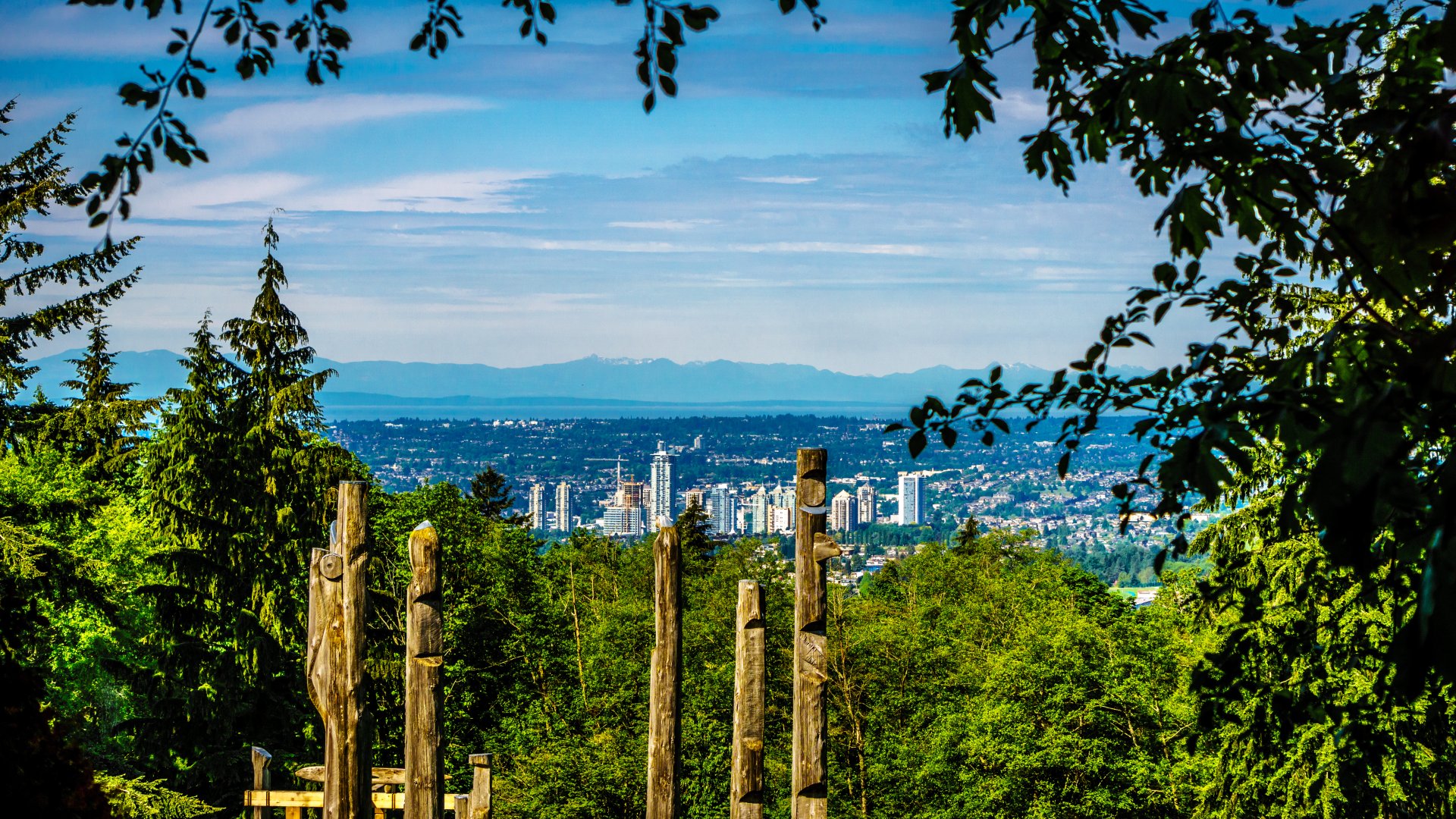
For decades, British Columbia has been divided into two economies and two cultures, but a common foe might unite urban and rural once again, and together, maybe they can bring about a reckoning that ultimately rebuilds the province into something better than before.
Wealth in the Lower Mainland comes from real estate, the financial sectors, public administration, technology and elsewhere. Pay cheques and enterprise in the rest of the province are largely related to extracting and moving materials for export, and rely on major projects that can be built. Industries like forestry, energy, and mining have long been the rural economic lifeblood in communiites in the interior, the north, upper Vancouver Island, and most of the coast.
This is a problem, because no place should have its metropolis and hinterland divorced from each other as if they were different countries. Vancouver presents as a Pacific-facing cluster of skyscrapers rising above the rest of B.C., but as a port city, it needs exports. Any robust downtown in a country like Canada requires a reliably productive province alongside it.
The resource sector has always been B.C.’s best engine for generating income, exports, and tax revenue. Regardless of where we live, it’s to everyone’s detriment if we cease to think of ourselves as parts of a larger, mightier whole.
The feeling of disconnect is recent, but not inevitable
Fortunately, there’s nothing inevitable about this estrangement, and it’s a relatively recent phenomenon. For most of the province’s history, Vancouver was closely tied to the rest of British Columbia. The city hosted mills, shipyards, and terminals for the export of natural resources.
Thousands of city residents worked jobs in logging, fishing, and processing, especially on the east side in places like False Creek. Unions also kept blue-collar British Columbians institutionally connected.
Then, as Vancouver’s de-industrialization really took hold in the late twentieth century, it made room for real estate, developers, and the modern managerial classes, while the rest of the province remained bound to the bounty of the land.
Now political incompetence is forcing a reconnection.
Uncertainty is the new unifying force
Rather than prosperity or celebration of common culture being the unifying force, a very particular uncertainty is drawing Vancouver and rural B.C. back together again.
Poor governance, secrecy, if not outright dishonesty, from those elected to lead the province and country, have turned the so-called reconciliation file into a bouncing hand grenade, and each new expansion of Aboriginal title or rights agreement threatens to shake the pin loose.
Mounting worry over land security and regulatory predictability make for untenable investment conditions. Common concern could unite British Columbians from the Vancouver suburb of Richmond to the Golden Triangle in the remote northwest.
Landowners are rightfully spooked
When last summer’s Cowichan Tribes decision from the B.C. Supreme Court ruled that Aboriginal title held “a senior interest” to fee simple private property, a shockwave detonated through financial and real estate markets. The practical consequences remain unresolved. It is a remarkable precedent for the whole of B.C., potentially affecting most, if not all, private lands originally sold or transferred by the Crown.
On the other end of the country, the New Brunswick Court of Appeal found the opposite to be true regarding an Aboriginal title case. The Irving v, Wolastoqey Nation ruling found that Aboriginal title could not be declared senior to fee simple, because the two forms of exclusive ownership are irreconcilable. According to the decision, “…a declaration of Aboriginal title over privately owned lands, which, by its very nature, gives the Aboriginal beneficiary exclusive possession, occupation, and use would sound the death knell of reconciliation with the interests of non-Aboriginal Canadians.”
Expert legal commentary has been unable to reach a conclusion about what the future holds for British Columbians (let alone, Canadians) as a result of the Cowichan ruling, apart from a general consensus that people have a right to be concerned.
For certain, the indefeasibility of private land rights have been pushed into a legally murky realm in B.C., suddenly potentially fatally vulnerable to court-rulings, Crown-dictated “reconciliation agreements,” legislative amendments, or other as yet unforeseen legal manoeuvres.
While elected officials at provincial, federal and Indigenous government levels have tried to assure landowners there were “no impacts” and that recent Aboriginal title announcements have “nothing to do with” private property, reality disagrees.
Money markets and legal ambiguity do not mix. Businesses in Richmond report stalled or cancelled projects after banks declined financing, and Vancouver appraisers are now noting in their valuations whether properties are likely to be subject to Aboriginal title claims or not.
Landowners have good reason to be spooked.
The provincial NDP government’s offer of up to $150 million in loan guarantees to backstop landowner mortgages was a bad sign.
No government volunteers buckets of cash to the private sector unless confidence has dangerously wobbled. Those are the desperate actions of a government mismanaging an emergency, particularly since it’s an unsustainable solution that doesn’t solve the problem. Never mind the province is broke and in no position to be fronting mortgages enough to house 5.7 million citizens.
Regulatory unpredictability the norm for resource sector
For those watching the Lower Mainland from the outside, it’s not an unfamiliar development.
Junior mining firms, prospectors, and other rural industries have long been made to endure uncertainty over regulation and land use as if it were a way of life. Under the current government, reconciliation under the framework of DRIPA (Declaration on the Rights of Indigenous Peoples) has translated into permitting delays, uncertain access to land, and sweeping policy changes being undertaken with no transparency.
Within the mineral and mining sector, established players have reaped whirlwind profits from the renewed push by provincial and federal authorities to advance major projects. However, smaller mineral prospectors face a different landscape. Juniors are always the first to feel instability in the system. Fewer claims were registered last year, and the industry has repeatedly warned that an unstable process, late-stage consultations, unclear policy direction and “consent-based decision-making” are choking confidence and causing hardship.
Former AME president Keerit Jutla argued in 2024 that stability and certainty of process were indispensable to attracting and sustaining investment. His successor, Todd Stone, has now warned that without grassroots prospecting, there will be no next wave of mines in the near future.
“The smaller projects, the prospecting community, are struggling like they haven’t struggled before,” said Stone.
Permitting itself is in a state of crisis.
Exploration permits once had a 60-day target, and the premier promised last month his government would speed that process to 40 to 140 days. Notice-of-work permits currently take an average of 270 days to obtain, but many simple drilling applications take years to clear, with others paralyzed in permitting limbo and no end in sight.
Every missed season results in more lost capital, lost work, and weakened communities in rural B.C. Each exploration project typically employs about 38 people, from drillers to contractors to equipment suppliers, affecting Indigenous and non-Indigenous businesses alike.
Another crisis is the status of Crown land, which covers 95 per cent of the province. Agreements with the Haida, Musqueam, and Cowichan nations have thrust the use of Crown land, private property and Aboriginal title into on big messy mix.
The whole of B.C. is being remade behind closed doors, and it affects the homeowners from Richmond and Metro Vancouver, the prospectors of the Northwest, the drillers in the Montney and everyone in between. Even First Nations themselves will feel the effects as they try to raise money for equity stakes in projects that will not have the confidence of investors to get off the ground.
Unity could rise from the ashes of disorder
Who will have ultimate authority, and who will have their thumb on private industry and landowners when the dust settles?
No one knows.
But maybe a potential for renewed unity lies within this charged turmoil.
Vancouver and the rest of B.C. are bound by the same land use regime and the same investment climate, all made possible by a failure of governance. Because reconciliation is a falsehood when nearly everyone in B.C. wakes up to learn the value of their property has dropped—or wait, their ownership is in question—all without their consent, or even their knowledge.
Expecting our governments behave honourably, to genuinely protect public interests and defend private property is surely a campaign the white-collar manager in Coal Harbour, the fishermen on Vancouver Island, and the gas worker in the Northeast can all agree upon.
And who knows, a unified demand for a transparent, democratic, and open reconciliation process could bring the whole province together again.