

“Large hydro is good for the climate, large hydro is good for the economy, and we have proven it in B.C. in the past decades, and I believe we can prove it again.”
—Adrian Dix
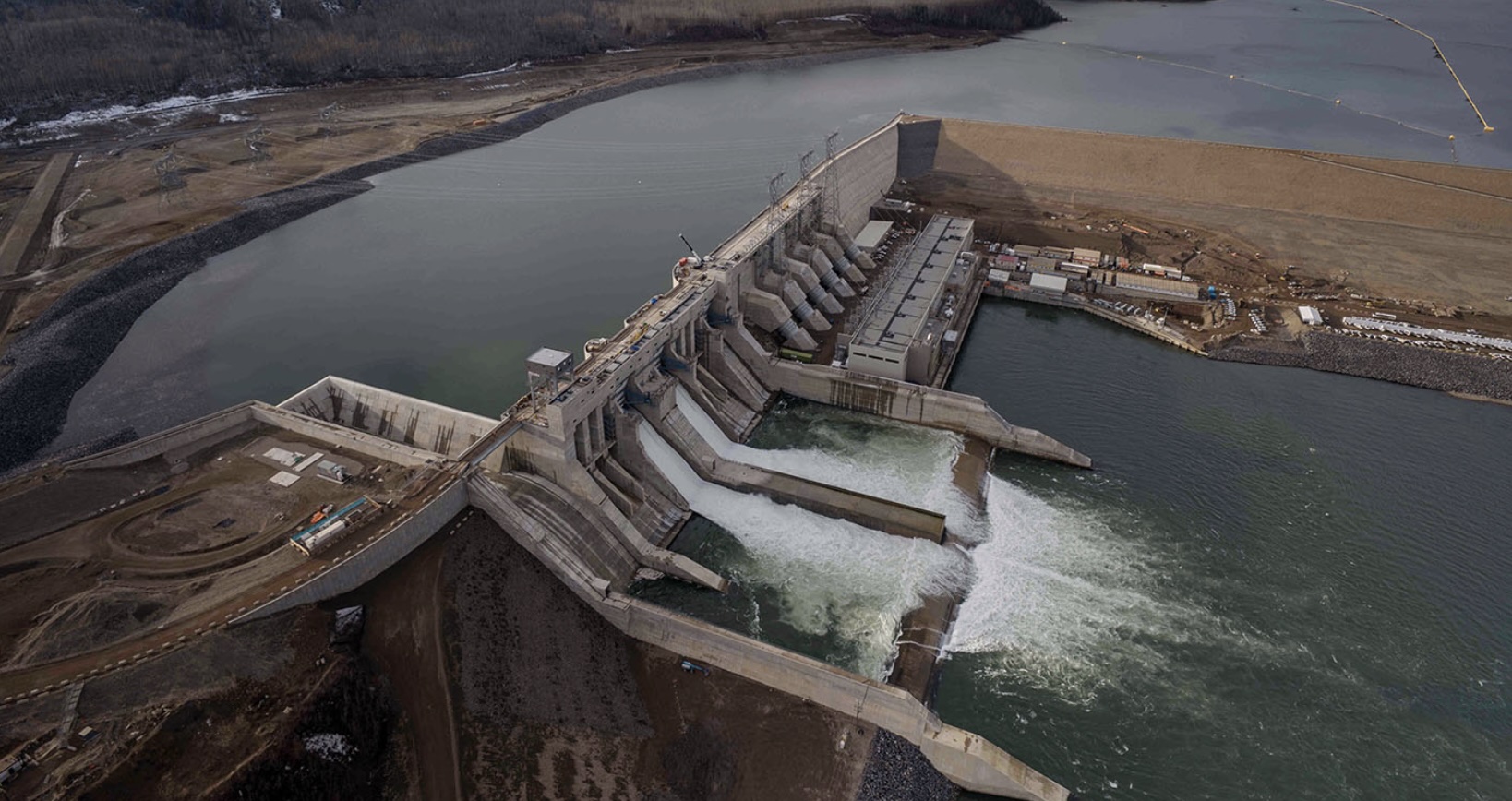
Just ten months after the enormous Site C dam came fully online in B.C.’s northeast, Energy Minister Adrian Dix says the province is exploring not one, but two, additional hydroelectric dams to keep up with rising demand for electricity.
The proposal, announced this week, marks the most ambitious ramp up of energy policy since the 1960s, said Dix.
Though it also comes at a time when the NDP government grapples with the environmental impact of encouraging more mines and LNG facilities, while hoping to dampen the damage to its CleanBC plan by rapidly ramping up electrification.
“Our province is growing in an unprecedented way, equivalent and more to what we saw in the 1960s which means the need for our clean electricity is soaring,” said Dix.
BC Hydro will now explore the feasibility of the Homathko River dam, located in the Homalco First Nation territory near Bute Inlet. The project, which involves more than a dozen interconnected run-of-river facilities, is being promoted by the First Nation to the government, and not the other way around, said Dix.
The second dam would be Site E, located east of Fort St John, near where the Peace River crosses the Alberta border.
Together, the two dams could provide somewhere between 1,250 and 1,650 megawatts of power, or the equivalent of more than one million homes. Site C, which cost $16 billion and came fully online last August, generates around 1,100 megawatts.
“Large hydro is good for the climate, large hydro is good for the economy, and we have proven it in B.C. in the past decades, and I believe we can prove it again,” said Dix. “It doesn’t mean we’re proceeding with these projects at this stage, we’re gathering the information we need to make the well-informed decisions on how best to meet the province’s energy needs.”
Dam power electricity could backstop wind and solar
Both dams are prohibited under the Clean Energy Act, which Dix said will be altered this fall to allow for project exploration and then amended further if the province decides to go forward.
The so-called ‘firm’ power provided by dams will backstop the government’s continued expansion into smaller intermittent projects like wind and solar, he added.
The public can be forgiven for perhaps not quite understanding how and why the province needs more hydroelectric dams.
It was barely nine years ago the BC NDP took power on promises to potentially scrap Site C, calling it a boondoggle that would produce expensive and unneeded electricity.
Partly that’s because BC Hydro has confused the heck out of the public with its up and down swings on energy projections. It overestimated demand in 2013, underestimated it in 2021, then updated forecasts in 2023 after a drought shock-forced the purchase of power.
Its latest numbers are driven by expected power demands of LNG facilities, new mines and resource projects, while counterbalanced by the collapse of the forestry sector and stalled population growth due to a crackdown by Ottawa on immigration.
Government support for LNG sacrifices CleanBC targets
Environmental groups have warned the government’s encouragement of LNG Canada phase two, Ksi Lisims LNG, Cedar LNG and other natural gas projects will blow apart the GHG reduction targets set in the NDP’s CleanBC plan.
Dix has already said the government will not meet those targets, but hopes to mitigate the pollution impact by building the North Coast Transmission Line to the region, giving new LNG and mining projects the ability to connect to the electricity grid and cut pollution. But increasing the energy capacity to the area is expensive and will take until 2032.
“We expect electricity demand to grow by about 20 per cent by 2030 and roughly 50 per cent by 2050,” said BC Hydro CEO Charlotte Mitha.
“And it’s not just energy, we also need to look at capacity, those peak moments on our system, like the coldest winter night, when the power demand on the system is very high.
“In B.C., peak demand is expected to grow by over 40 per cent by 2050. So that’s the situation. The scale of what we are planning for is significant, and it requires a clear and long-term approach.”
Door opens on natural gas-fired power production
Although the two new dams dominated the coverage, technically the government’s “Powering Growth, Fueling Opportunity” plan has two additional pillars: conservation and optimization.
Dix said BC Hydro hopes to save 800 megawatts of power with new Power Smart conservation efforts, including LED lighting and smart thermostats, and another 1,000 megawatts of power by upgrading existing transmission lines and facilities, including a sixth generating station unit at the 1980s era Revelstoke Dam.
The new BC Hydro plan would cost tens of billions of dollars, with the potential to drive up electricity rates in the future. It would be cheaper to burn natural gas for power instead, given B.C.’s vast deposits of natural gas.
While the idea would have been unthinkable in the early stages of the BC NDP’s CleanBC plan, the door is opening for changes in that area under the late-stage David Eby government.
BC Hydro was recently authorized by Dix to extend contracts for two natural gas plants in Campbell River and Taylor, which were otherwise set to shut down.
Dix said burning natural gas to cover “peak” demand in the 15 coldest days of the year makes more economical sense than buying that power on the market at a premium. Instead of spending major money to cover that shortfall, it can redirect funds towards overall clean power, he said.
“We are using, and going to continue to use, our peaking resources for natural gas,” he said.
“It makes sense, makes sense for ratepayers, it makes sense for everybody else.”
But he’s stopped short, so far, of opening up wider scale natural gas plants to cover electricity demands.
For now anyways. The NDP’s plans on power production are evolving rapidly. There’s no file more active, or ambitious, inside government currently.