

Pushing back on government’s improbable narrative
Did the BC government order Dr. Julian Somers to destroy vital scientific data? If so, why? If not, then where is it?
That was the crux of contention between Opposition critic Claire Rattée and BC Health Minister Josie Osborne during several question periods last week.
For four consecutive days, Rattée pressed Osborne for answers.
“Why did this government order the destruction of critical addiction and public safety data right before launching its decriminalization experiment, and will [the minister] release all underlying data for independent review today?” asked Rattée on Apr. 1.
Osborne dismissed the assertion as “false and absolutely misleading,” saying Somers had been a mere government contractor who was simply asked to “transition his data” to a new government database so it could be more widely accessible to researchers.
“The data that Dr. Somers collected was not destroyed,” Osborne said, as former health minister Adrian Dix, on whose watch the order-to-destroy was issued, nodded and clapped in agreement. Then in a classic relationship-gone-bad fight-club pivot, Osborne resorted to a personal attack on Somers, accusing the distinguished professor and renowned addiction researcher of peddling misinformation.
Retorical deflections aside, the directive Somers received from government rang with chilling clarity.
“… all data must be destroyed and all media storage devices that housed Ministry data must be sanitized,” writes a BC government official in a letter addressed to Somers, dated Mar. 5, 2021.
Despite this documentary evidence, the minister insists the data survives.
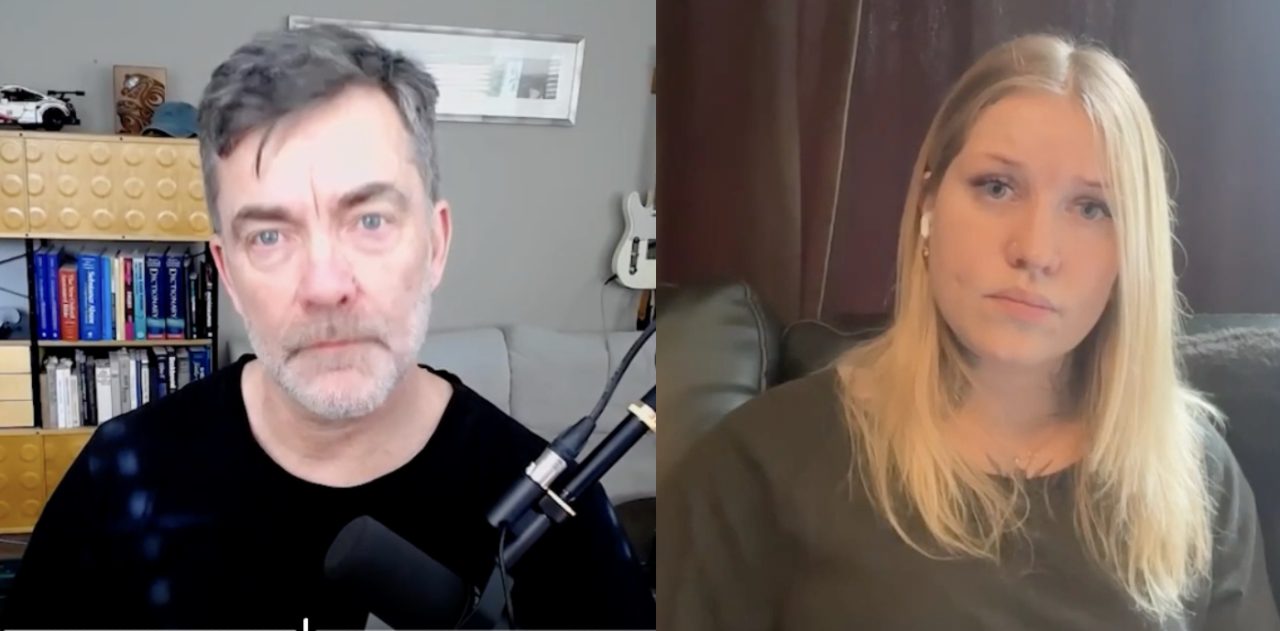
Podcast excerpt: ‘An orchestrated campaign’
If the data lives on, then where is it?
Northern Beat reached out to Minister Osborne for an interview but her office demurred, citing a lack of time. In response to a follow up request for access to the database the minister says now contains Dr. Somers’ research, government communications staff emailed a light description, with a link to the Data Innovation Program.
Upon review, it’s difficult to understand which data the minister believes represents Dr. Somers’ unique body of research.
His team’s data was the culmination of more than two decades of collaboration with researchers around the world, underwritten by tens of millions of federal government dollars. While various provincial ministries permitted access to certain records, the BC government did not design the group’s studies and provided only minimal funding for a fraction of them, Somers said.
Much of the research his team had accumulated was specialized, requiring consent from participants and hard-won approvals from multiple ministries and ethics boards. Even if he’d wanted to, Somers lacked authorization to share or use his team’s data for any purpose beyond the strict parameters of the original studies.
“We were an arm’s length, independent entity expected to design research to the highest standard,” said Somers, who was running a renowned mental health and addictions research centre at Simon Fraser University at the time.
“There’s no way we could simply turn those data over to another party, another research group, let alone the BC government… that is a preposterous statement by the minister.”
All research is not equal
In one seminal study, Somers and his co-investigators followed 500 British Columbians who gave consent for the group to monitor their ongoing interactions with health, social services, homelessness, employment and the justice system over five years. Researchers also tracked as far back as 15 years to understand the trajectory of their interactions and intervention outcomes over time.
By contrast, in the government’s database, the supposed current repository of Dr. Somers’ research, available data sets on homelessness are entirely “de-identified,” showing shelter use, social assistance payments and healthcare visits from 2019 to 2022.
Somers’ research also revealed risk factors that weighted individuals towards a probable future of severe homelessness, mental illness and addiction. It revealed the migration of people from across BC to the Downtown Eastside and why. It showed predictors of the future demographic who would one day make their way to the infamous neighborhood.
Crucially, his team’s research questioned the efficacy of major new, untested public policies the BC NDP government was in the midst of escalating.
In fact, the order to destroy his data arrived mere days after he presented senior government officials—including then Attorney General and Housing minister David Eby—with his team’s evidence-based plan for dealing with homelessness, addiction and mental illness.
Podcast excerpt: Inconvenient research
What harms might have been prevented?
For her part, Rattée questioned if the BC NDP administration implemented decriminalization and safe supply without adequate evidence and ignored Dr. Somers’ findings because they ran counter to government ideology.
If government officials had heeded Dr. Somers’ research, allowing his team to evaluate key programs it has since abandoned, the province would now be on a very different public health policy path, she said.
Instead, the BC NDP administration appears to have gone full steam on decriminalization and safe supply without adequate evidence or evaluation, which Rattée speculated was because Somers’ analysis ran counter to government ideology.
All of which raises troubling questions:
What kind of regime tells a scientist to destroy years of valuable data underpinning all their ground-breaking research?
How many people could have been helped, and how much harm prevented if the BC government had genuinely considered the findings of Dr. Somers and his team?
Capping the legislative debate last week, Rattée raised what’s called a question of privilege, asking the Speaker to determine whether the Health minister deliberately misled the house, and thus the public, in her statements about Dr. Somers’s data.
The Speaker will consult with government to hear its arguments, before ruling on whether the minister breached her privilege, or essentially committed contempt of parliament. He will likely deliver his decision next week when session resumes.
Podcast Producers: Rob Shaw and Zach Proulx