

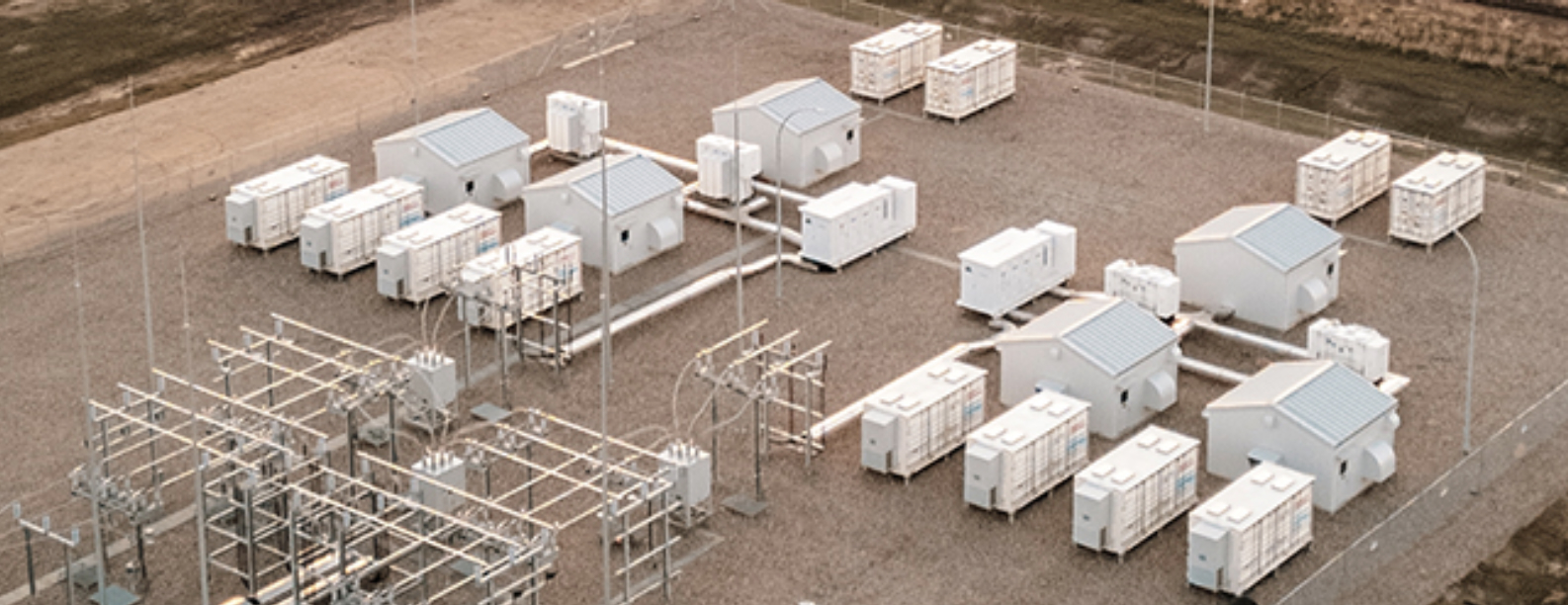
As B.C. breaks records for summer electricity usage this week, the government says large utility-scale batteries could be the future of handling peak demand.
Energy Minister Adrian Dix unveiled plans for the province’s first battery storage facility in Cowichan on Vancouver Island, saying it will serve as a model for BC Hydro expansion across the province.
“It allows you to have capacity in our system to respond to peak days, that really cold day in winter — every electricity system needs, of course, the electricity use all the time, but also needs to meet peak demand,” said Dix.
“It doesn’t do any good to have an electricity system where on December 15th and it’s really cold you’re not serving people when they need the electricity arguably the most.”
Hot weather caused B.C. to hit a new summer peak hourly electricity demand July 21, at 8,715 megawatts, breaking a record set in August 2025, says BC Hydro.
The new record stood for one day before it was then broken July 22, during a heat wave, with 8,870 megawatts.
The summer numbers are still lower than the peak winter demand of 11,363 megawatts during a cold snap in January 2024.
Whether the battery power is worth the cost, and whether the NDP government should instead direct BC Hydro to lean into cheap natural gas powered generating facilities for peak demand, is an open political question. However, Opposition BC Conservative energy critic David Williams did not respond to an interview request about the issue.
In the absence of an Opposition position, the NDP government has apparent free reign politically on the policy.
Utility-scale batteries to bring flexibility at peak power usage
George Anderson, Dix’s Parliamentary Secretary for Energy and Climate Solutions, said utility-scale batteries give flexibility to the system for instant draw at peak times when power is most expensive.
“Battery energy systems can store electricity when demand is low, like overnight, and send it back to the grid when demand is at its highest,” he said. The transfer can occur within seconds.
The batteries are part of an increasingly-complex series of investments BC Hydro is making into the grid, including 14 new wind and solar projects, to meet a projected 20 per cent demand in electricity by 2030.
“This is the first time BC Hydro is putting a utility-scale battery on the system,” said vice-president Ajay Kumar. “So we have to gain operational experience as we start implementing this on the system.”
Province will re-activate LNG plants for intense energy demand
But the province is now turning back to some natural gas to address peak demand as well.
BC Hydro is looking to re-activate deals with two natural gas power generating facility, in Campbell River on the Island and in Taylor in northeastern B.C., to backstop moments of intense draw upon the grid in the summer and winter.
Together, they’d produce 400 megawatts of power at peak moments using B.C. natural gas, which Dix has said would be significantly cheaper than BC Hydro purchasing that brief excess power need on the energy market.
New battery facilities, it would appear, are intended to operate in tandem with the natural gas plans, offering rechargeable blasts of peak power at needed moments during the hottest and coldest days of the year when the need is highest.
Typically, large utility-scale battery facilities are actually a system of interconnected smaller batteries that form a kind of battery plant.
BC Hydro has put out a call for proposals to provide battery technology, but expects to own and operate the Cowichan system near a critical substation where it can be discharged directly into the grid.
California is a North American leader in battery storage. Ontario is pursuing 2,800 megawatts, and Alberta 600 megawatts. B.C.’s goal is 500 megawatts at different locations throughout the province, said Dix.
The Island facility will have 100 megawatts, or the equivalent storage to provide electricity to power the entire Island for up to four hours, according to Hydro.
The use of utility-scale battery plants in cold climates, like B.C.’s north, would depend on where they are located, how they are stored, and if they are close to transmission hubs.
Hydro did not disclose a cost for the battery project during the tendering process.