

The B.C. government is heading for another showdown over the Heritage Conservation Act, after the latest revisions to the controversial law were soundly rejected by municipalities, the construction sector, developers and the business community.
The groups are all calling on Premier David Eby’s administration to step back from its third attempt at forcing through reforms to archeological rules they say will slow down housing construction, and add both uncertainty and delay to building approvals.
“It just seems like they’re really interested in moving forward on this without considering the feedback,” Cori Ramsay, president of the Union of BC Municipalities (UBCM), said in an interview.
“Local governments are on the front lines. We’re on the ground, having to do this work every single day. And I just don’t think as an order of government in our own jurisdiction, that we’ve been properly consulted on this.”
The NDP government argues the current law must be changed to better protect First Nations cultural and historical artifacts found on the land, and that the current set of rules is too slow and unclear.
But its reforms, crafted with Indigenous leaders in secret and sprung on the public last spring, met with fierce opposition.
Almost all the changes were already finalized between First Nations and the province by the time the public was consulted, leading to extraordinary pushback by UBCM last fall that forced Eby to pause.
A revised version failed to bring critics on board, and so the law was pushed off again earlier this spring. A third version, released last month, incited similar concerns.
Proposed changes will strengthen protections, says minister
“We have seen a pattern with the current government, where they rush to legislate without doing thorough policy work first,” said Ramsay.
“And the idea is always: we’ll fix it later. But now we’re seeing the consequences of that with DRIPA [Declaration on the Rights of Indigenous Peoples Act] as an example. And so the pushback from local governments is really to make sure we get it right the first time.”
“We have seen a pattern with the current government, where they rush to legislate without doing thorough policy work first.”
Cori Ramsay
UBCM requested government run pilot projects to test the scope of the heritage changes before unfurling them across the province.
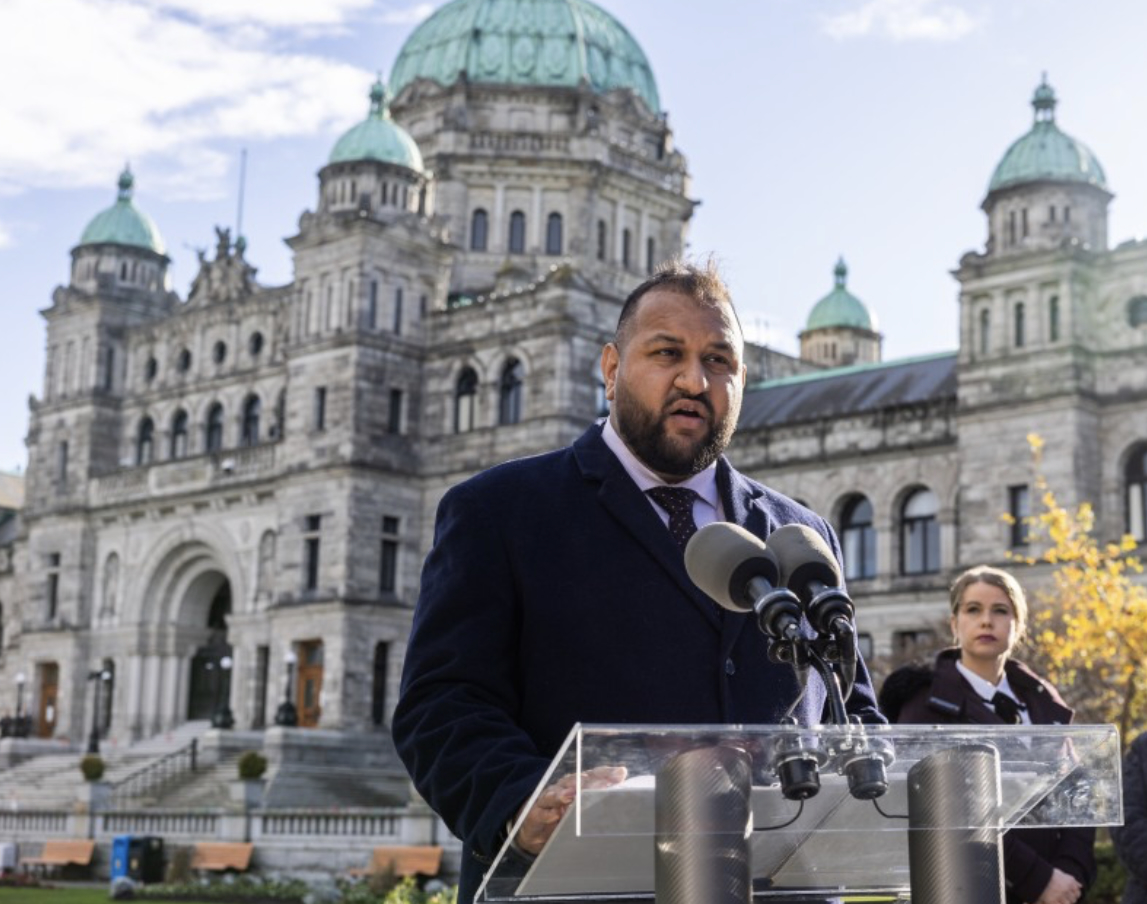
No, said Forests Minister Ravi Parmar.
“I think it’s important for them to understand what they are suggesting isn’t legally possible,” said Parmar on Wednesday. “We can’t pilot something unless we make amendments to the legislation.”
He said the current version, which strengthens protections and involves Indigenous communities, is based on feedback from First Nations, industry, local governments and others engaged on the topic.
“If there’s one thing I’ve learned over the course of the last year, it is there is unanimous consent that this current piece of legislation is archaic and it’s not serving the interests of British Columbians,” he said.
Heritage Act revisions will muddy the rules: development group
The Urban Development Institute said the government’s changes worsen unclear rules, archaeological requirements and a permitting system that is already slow and unpredictable by layering in more checks and broader definitions of conservation.
“There has already been a tremendous amount of economic uncertainty within our sector, and this has been increased with concerns about private property rights and the implementation of the Declaration Act [DRIPA],” vice president Jeffrey Fisher wrote to the province.
“Development is already a high-risk enterprise. There is a genuine across the board concern amongst our membership that the risk tolerance for investment in British Columbia is too high. Implementing the HCA would only add to this insecurity and potentially curtail development here as builders seek safer jurisdictions to invest in projects.”
The BC Business Council said the heritage changes further move the province down a path of consent and co-decision-making with First Nations. While government has removed some controversial sections like “intangible heritage” protections for Indigenous artifacts and oral history sites, there is still too much uncertainty, it wrote in its response.
‘This sequencing is backwards,’ says ICBA CEO
The Independent Contractors and Businesses Association, which represents 4,500 construction companies, said the changes embed parts of DRIPA inside the Heritage Conservation Act at a time when changing or suspending parts of DRIPA due to court cases is under active consideration by government.
That raises the same concerns about “granting broad regulatory, governance, or consent rights to bodies that are not accountable to the legislature or to the public,” wrote ICBA CEO Chris Gardiner in his response to Parmar
“This sequencing is backwards,” wrote Gardiner.
“We cannot provide meaningful input on an [Heritage Act] that is built on a DRIPA framework that is itself under active review.”
Chris Gardner
The City of Kelowna provided its own assessment to council, saying the changes risk undermining the province’s own housing and infrastructure goals because they will slow small-scale housing projects and delay infrastructure expansion already underway.
It said a single archeological find on the site of a new provincial complex care facility in Kelowna has already been months under the existing law.
Why push legislation most stakeholders oppose, asks critic
Opposition critic Scott McInnis said he’s baffled at why Parmar and Eby are pushing so hard for the changes when almost everyone is against them.
“If you are creating legislation that makes a large number of key stakeholders unhappy, then what is the purpose of the legislation,” he asked.
“I think this is firmly an exercise to align with the Declaration Act, because of a promise to do so. So it’s too-bad-so-sad for everybody else.”
Parmar reiterated Wednesday he’s willing to try and listen to ideas. But the province rushed this most recent consultation into a 30-day window to hit a deadline to craft legislation for the fall sitting of the legislature.
“It’s a very important piece of legislation to First Nations.”
Ravi Parmar
“It’s a very important piece of legislation to First Nations, it’s important for communities that want to rebuild faster from wildfires like Lytton, and it’s also important for $88 billion worth of major projects that the Premier is leading to create jobs and prosperity for British Columbians,” said Parmar.
“We’re going to continue engaging, we’re going to continue ensuring that we get this right,” he added.
So far though, the opposite has happened. The province appears to have got it wrong on the Heritage Conservation Act, three times in a row.